Department of Medicine, Section of Allergy and Immunology, The Pennsylvania State University Milton S, Hershey Medical Center, 500 University Dr,, Hershey, PA 17033, USA.
Allergy Asthma Clin Immunol. 2011 Nov 13;7(1):18. doi: 10.1186/1710-1492-7-18.
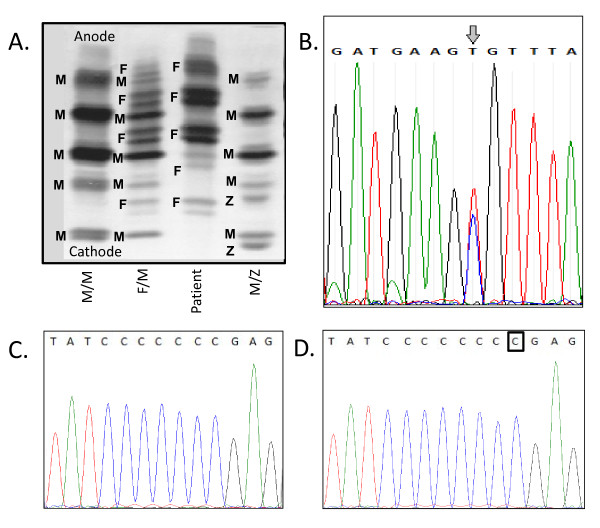
Alpha-1-antitrypsin (A1AT) deficiency is a genetic disease characterized by low levels and/or function of A1AT protein. A1AT deficiency can result in the development of COPD, liver disease, and certain skin conditions. The disease can be diagnosed by demonstrating a low level of A1AT protein and genotype screening for S and Z mutations, which are the most common. However, there are many genetic variants in A1AT deficiency, and this screening may miss rarer cases, such as those caused by dysfunctional protein. We identified a patient with a previously unreported F/null phenotype that was missed by routine screening. This case highlights the wide variation in possible mutations, limitations in diagnostics, and the importance of combining clinical suspicion with measurement of protein levels, phenotypic analysis, and in appropriate cases expanded genetic analysis.
α-1-抗胰蛋白酶(A1AT)缺乏症是一种遗传性疾病,其特征为 A1AT 蛋白水平低和/或功能丧失。A1AT 缺乏症可导致 COPD、肝脏疾病和某些皮肤状况的发生。该疾病可通过检测 A1AT 蛋白水平降低和 S 和 Z 突变的基因型筛查来诊断,这些突变是最常见的。然而,A1AT 缺乏症存在许多遗传变异,这种筛查可能会遗漏更罕见的病例,如由功能失调的蛋白引起的病例。我们鉴定了一例以前未报道的 F/null 表型患者,该患者被常规筛查漏诊。该病例突出了可能的突变存在广泛的变异,诊断存在局限性,以及将临床怀疑与蛋白水平测量、表型分析相结合并在适当情况下进行扩展基因分析的重要性。