Sanford-Burnham Medical Research Institute, La Jolla, CA 92037, USA.
J Neuroinflammation. 2011 Nov 13;8:158. doi: 10.1186/1742-2094-8-158.
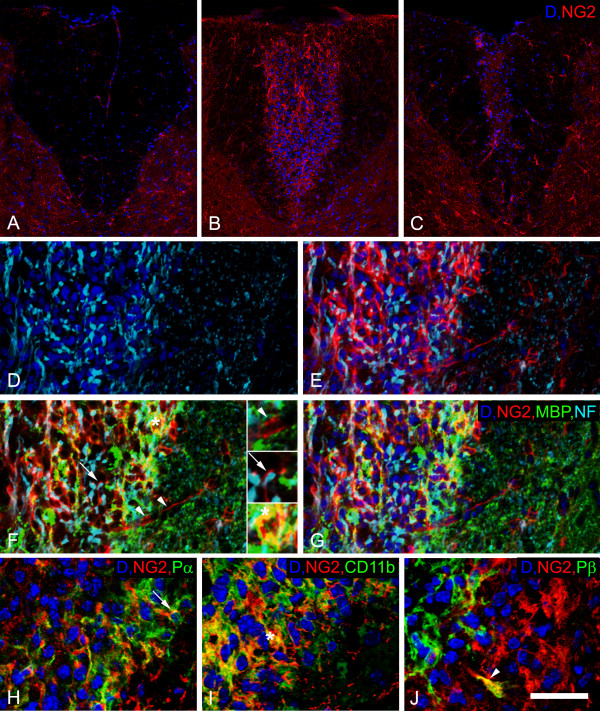
Multiple sclerosis (MS) is a demyelinating disease in which blood-derived immune cells and activated microglia damage myelin in the central nervous system. While oligodendrocyte progenitor cells (OPCs) are essential for generating oligodendrocytes for myelin repair, other cell types also participate in the damage and repair processes. The NG2 proteoglycan is expressed by OPCs, pericytes, and macrophages/microglia. In this report we investigate the effects of NG2 on these cell types during spinal cord demyelination/remyelination.
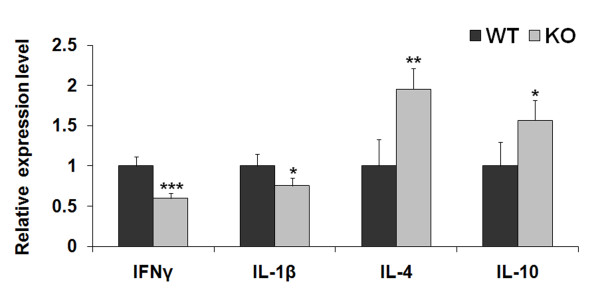
Demyelinated lesions were created by microinjecting 1% lysolecithin into the lumbar spinal cord. Following demyelination, NG2 expression patterns in wild type mice were studied via immunostaining. Immunolabeling was also used in wild type and NG2 null mice to compare the extent of myelin damage, the kinetics of myelin repair, and the respective responses of OPCs, pericytes, and macrophages/microglia. Cell proliferation was quantified by studies of BrdU incorporation, and cytokine expression levels were evaluated using qRT-PCR.
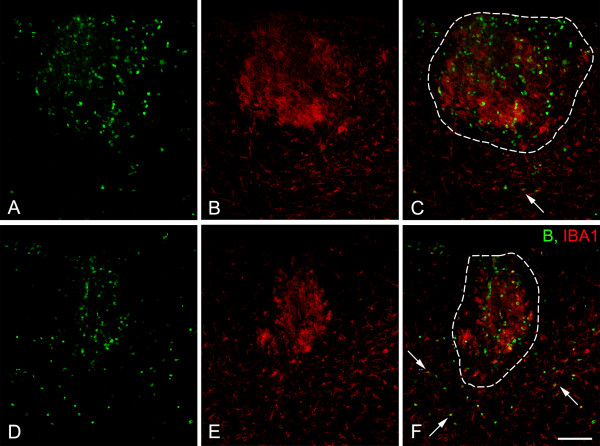
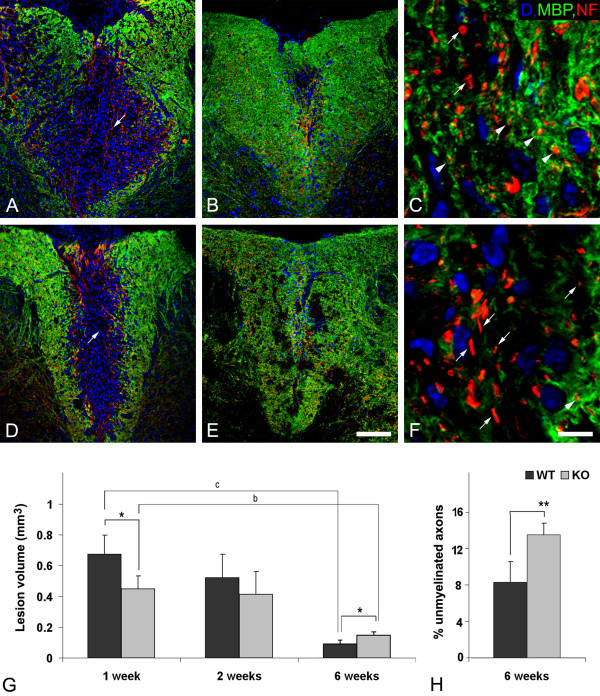
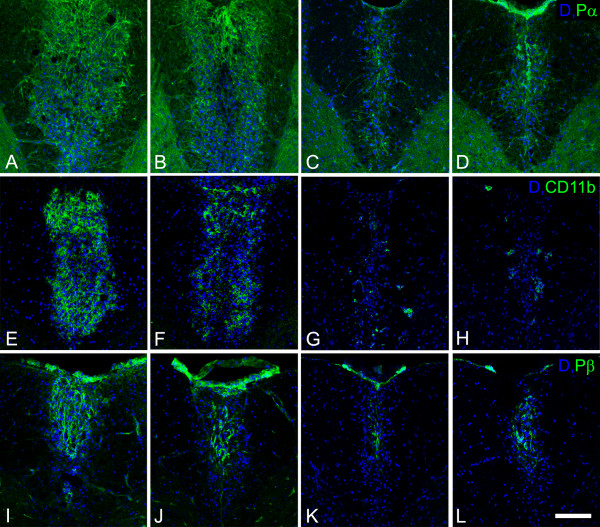
The initial volume of spinal cord demyelination in wild type mice is twice as large as in NG2 null mice. However, over the ensuing 5 weeks there is a 6-fold improvement in myelination in wild type mice, versus only a 2-fold improvement in NG2 null mice. NG2 ablation also results in reduced numbers of each of the three affected cell types. BrdU incorporation studies reveal that reduced cell proliferation is an important factor underlying NG2-dependent decreases in each of the three key cell populations. In addition, NG2 ablation reduces macrophage/microglial cell migration and shifts cytokine expression from a pro-inflammatory to anti-inflammatory phenotype.
Loss of NG2 expression leads to decreased proliferation of OPCs, pericytes, and macrophages/microglia, reducing the abundance of all three cell types in demyelinated spinal cord lesions. As a result of these NG2-dependent changes, the course of demyelination and remyelination in NG2 null mice differs from that seen in wild type mice, with both myelin damage and repair being reduced in the NG2 null mouse. These studies identify NG2 as an important factor in regulating myelin processing, suggesting that therapeutic targeting of the proteoglycan might offer a means of manipulating cell behavior in demyelinating diseases.
多发性硬化症(MS)是一种脱髓鞘疾病,其中血液来源的免疫细胞和激活的小胶质细胞破坏中枢神经系统中的髓鞘。虽然少突胶质前体细胞(OPC)对于产生用于髓鞘修复的少突胶质细胞是必不可少的,但其他细胞类型也参与了损伤和修复过程。NG2 蛋白聚糖由 OPC、周细胞和巨噬细胞/小胶质细胞表达。在本报告中,我们研究了 NG2 在脊髓脱髓鞘/髓鞘再生过程中对这些细胞类型的影响。
通过将 1%溶血卵磷脂微注射到腰椎脊髓中来创建脱髓鞘病变。在脱髓鞘后,通过免疫染色研究野生型小鼠中的 NG2 表达模式。还在野生型和 NG2 缺失型小鼠中使用免疫标记来比较髓鞘损伤的程度、髓鞘修复的动力学以及 OPC、周细胞和巨噬细胞/小胶质细胞的各自反应。通过 BrdU 掺入研究来量化细胞增殖,并且使用 qRT-PCR 评估细胞因子表达水平。
野生型小鼠脊髓脱髓鞘的初始体积是 NG2 缺失型小鼠的两倍大。然而,在接下来的 5 周内,野生型小鼠的髓鞘形成有 6 倍的改善,而 NG2 缺失型小鼠仅有 2 倍的改善。NG2 缺失也导致三种受影响的细胞类型数量减少。BrdU 掺入研究表明,细胞增殖减少是导致三种关键细胞群中每一种细胞数量减少的重要因素。此外,NG2 缺失减少了巨噬细胞/小胶质细胞的迁移,并将细胞因子表达从促炎表型转变为抗炎表型。
丧失 NG2 表达导致 OPC、周细胞和巨噬细胞/小胶质细胞增殖减少,从而减少脱髓鞘脊髓病变中所有三种细胞类型的丰度。由于这些依赖于 NG2 的变化,NG2 缺失型小鼠的脱髓鞘和髓鞘再生过程与野生型小鼠不同,NG2 缺失型小鼠的髓鞘损伤和修复均减少。这些研究表明 NG2 是调节髓鞘处理的重要因素,表明针对蛋白聚糖的治疗性靶向可能提供一种操纵脱髓鞘疾病中细胞行为的手段。