Department of Medicine, University of Vermont, Burlington, VT 05405, USA.
Cell Immunol. 2012;272(2):269-74. doi: 10.1016/j.cellimm.2011.10.004. Epub 2011 Oct 15.
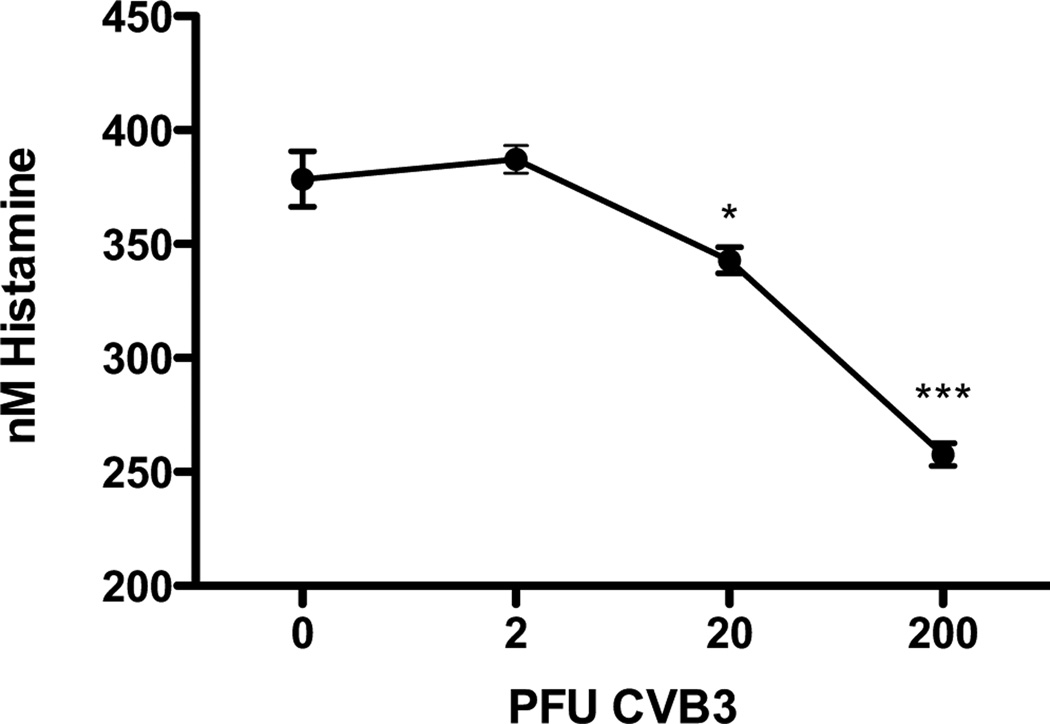
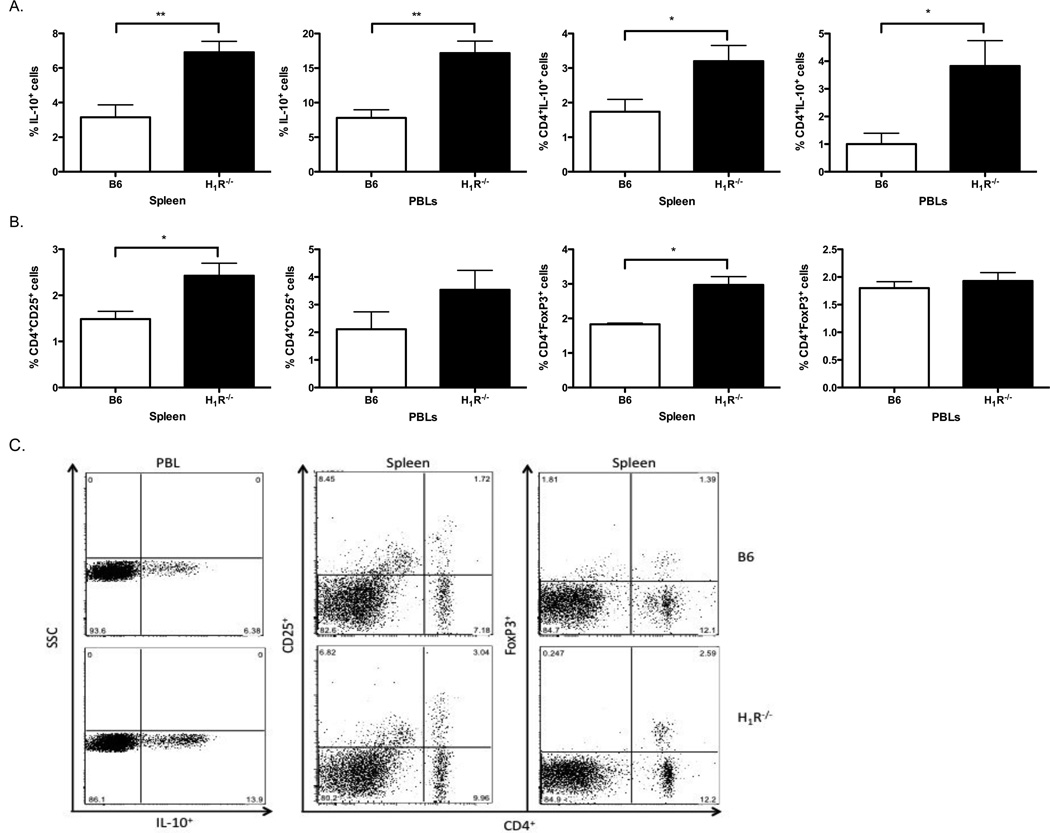
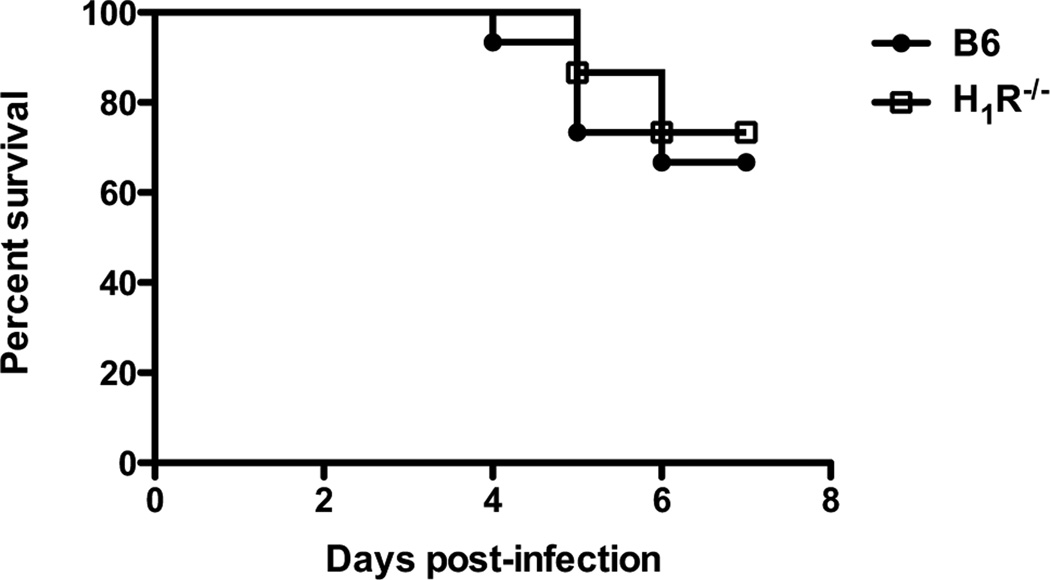
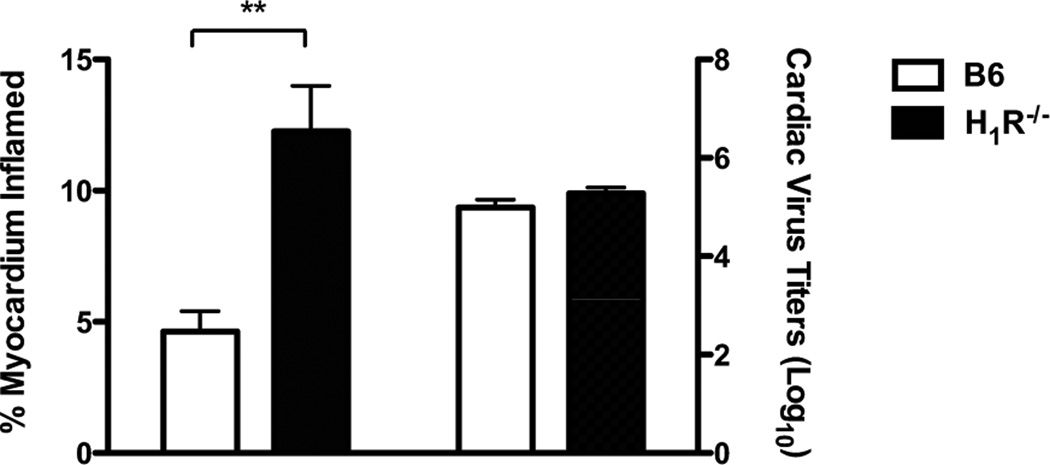
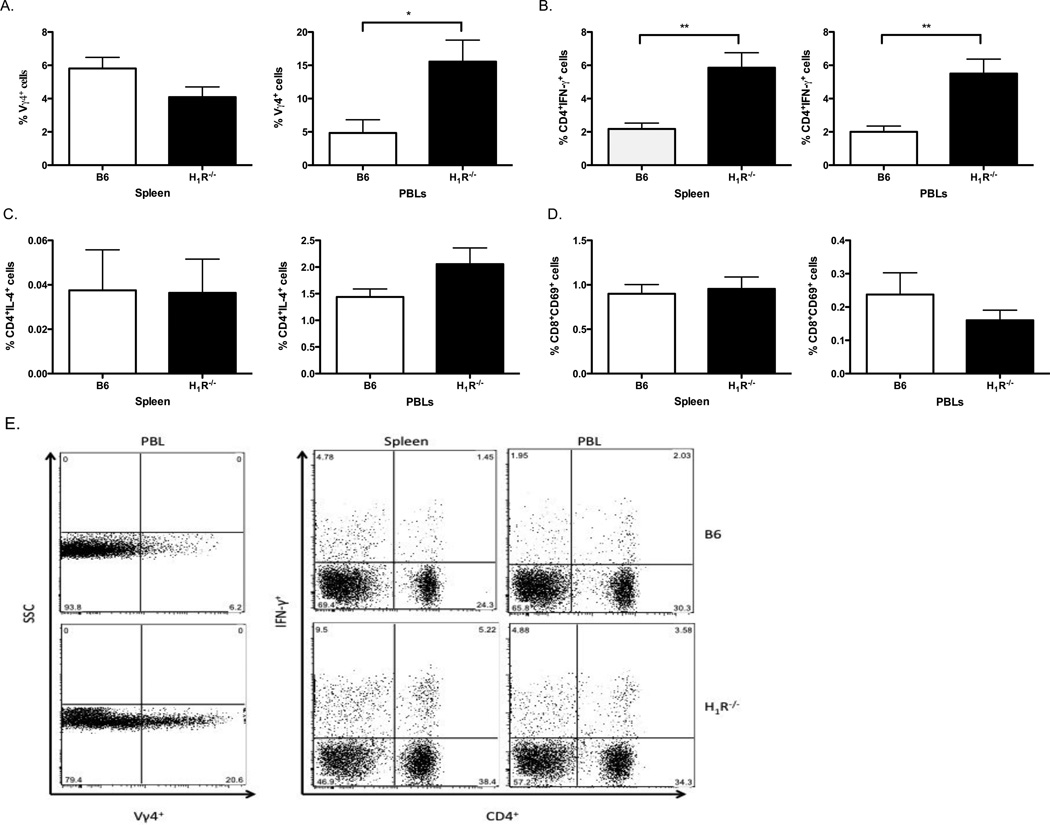
Susceptibility to autoimmune myocarditis has been associated with histamine release by mast cells during the innate immune response to coxsackievirus B3 (CVB3) infection. To investigate the contribution of histamine H(1) receptor (H(1)R) signaling to CVB3-induced myocarditis, we assessed susceptibility to the disease in C57BL/6J (B6) H(1)R(-/-) mice. No difference was observed in mortality between CVB3-infected B6 and H(1)R(-/-) mice. However, analysis of their hearts revealed a significant increase in myocarditis in H(1)R(-/-) mice that is not attributed to increased virus replication. Enhanced myocarditis susceptibility correlated with a significant expansion in pathogenic Th1 and Vγ4(+) γδ T cells in the periphery of these animals. Furthermore, an increase in regulatory T cells was observed, yet these cells were incapable of controlling myocarditis in H(1)R(-/-) mice. These data establish a critical role for histamine and H(1)R signaling in regulating T cell responses and susceptibility to CVB3-induced myocarditis in B6 mice.
自身免疫性心肌炎的易感性与肥大细胞在柯萨奇病毒 B3(CVB3)感染的固有免疫反应期间释放组胺有关。为了研究组胺 H(1)受体(H(1)R)信号对 CVB3 诱导的心肌炎的贡献,我们评估了 C57BL/6J(B6)H(1)R(-/-)小鼠对该疾病的易感性。在感染 CVB3 的 B6 和 H(1)R(-/-)小鼠之间未观察到死亡率的差异。然而,对它们的心脏进行分析表明,H(1)R(-/-)小鼠的心肌炎明显增加,而不是由于病毒复制增加所致。增强的心肌炎易感性与这些动物外周血中致病性 Th1 和 Vγ4(+)γδ T 细胞的显著扩增相关。此外,还观察到调节性 T 细胞增加,但这些细胞不能控制 H(1)R(-/-)小鼠的心肌炎。这些数据确立了组胺和 H(1)R 信号在调节 T 细胞反应和 B6 小鼠 CVB3 诱导的心肌炎易感性方面的关键作用。