Bleeker Jonathan S, Hogan William J
Division of Hematology, Department of Medicine, Mayo Clinic, 200 First Street SW, Rochester, MN 55905, USA.
Thrombosis. 2011;2011:536062. doi: 10.1155/2011/536062. Epub 2011 Jun 8.
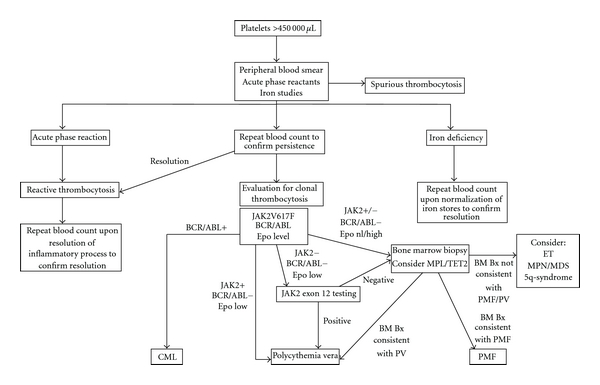
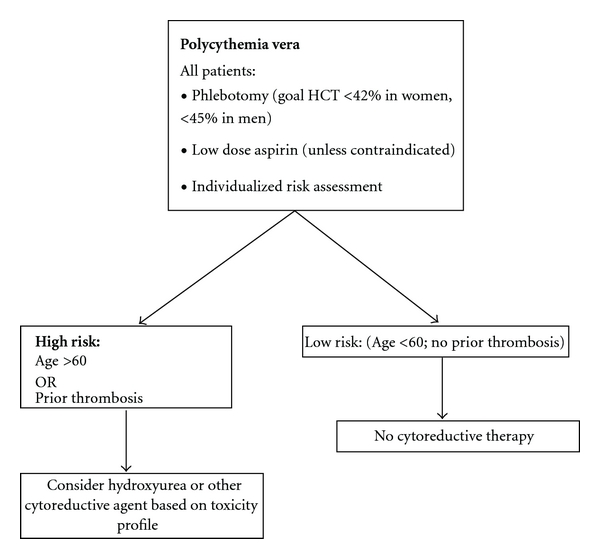
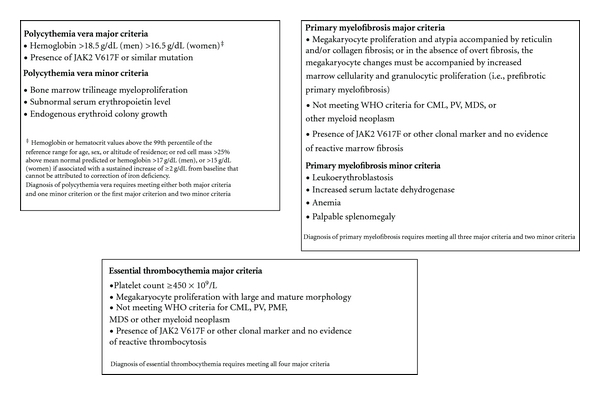
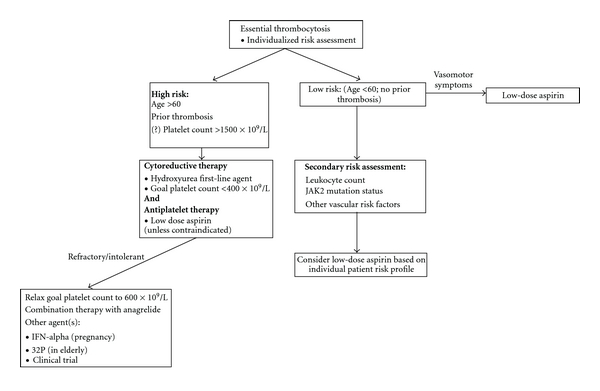
Thrombocytosis is a commonly encountered clinical scenario, with a large proportion of cases discovered incidentally. The differential diagnosis for thrombocytosis is broad and the diagnostic process can be challenging. Thrombocytosis can be spurious, attributed to a reactive process or due to clonal disorder. This distinction is important as it carries implications for evaluation, prognosis, and treatment. Clonal thrombocytosis associated with the myeloproliferative neoplasms, especially essential thrombocythemia and polycythemia vera, carries a unique prognostic profile, with a markedly increased risk of thrombosis. This risk is the driving factor behind treatment strategies in these disorders. Clinical trials utilizing targeted therapies in thrombocytosis are ongoing with new therapeutic targets waiting to be explored. This paper will outline the mechanisms underlying thrombocytosis, the diagnostic evaluation of thrombocytosis, complications of thrombocytosis with a special focus on thrombotic risk as well as treatment options for clonal processes leading to thrombocytosis, including essential thrombocythemia and polycythemia vera.
血小板增多症是一种常见的临床情况,很大一部分病例是偶然发现的。血小板增多症的鉴别诊断范围广泛,诊断过程可能具有挑战性。血小板增多症可能是假性的,归因于反应性过程或克隆性疾病。这种区分很重要,因为它对评估、预后和治疗都有影响。与骨髓增殖性肿瘤相关的克隆性血小板增多症,尤其是原发性血小板增多症和真性红细胞增多症,具有独特的预后特征,血栓形成风险明显增加。这种风险是这些疾病治疗策略的驱动因素。利用靶向疗法治疗血小板增多症的临床试验正在进行中,还有新的治疗靶点有待探索。本文将概述血小板增多症的潜在机制、血小板增多症的诊断评估、血小板增多症的并发症,特别关注血栓形成风险,以及导致血小板增多症的克隆性疾病(包括原发性血小板增多症和真性红细胞增多症)的治疗选择。