Children's Cancer Institute Australia for Medical Research, Lowy Cancer Research Centre, University of New South Wales, Randwick, NSW 2031, Australia.
BMC Genomics. 2011 Nov 17;12:565. doi: 10.1186/1471-2164-12-565.
Glucocorticoids such as prednisolone and dexamethasone are critical drugs used in multi-agent chemotherapy protocols used to treat acute lymphoblastic leukemia (ALL), and response to glucocorticoids is highly predictive of outcome. The NOD/SCID xenograft mouse model of ALL is a clinically relevant model in which the mice develop a systemic leukemia which retains the fundamental biological characteristics of the original disease. Here we report a study evaluating the NOD/SCID xenograft mouse model to investigate glucocorticoid-induced gene expression. Cells from a glucocorticoid-sensitive xenograft derived from a child with B-cell precursor ALL were inoculated into NOD/SCID mice. When highly engrafted the mice were randomized into groups of 4 to receive dexamethasone 15 mg/kg by intraperitoneal injection or vehicle control. Leukemia cells were harvested from mice spleens at 0, 8, 24 or 48 hours thereafter, and gene expression analyzed on Illumina WG-6_V3 chips, comparing all groups to time 0 hours.
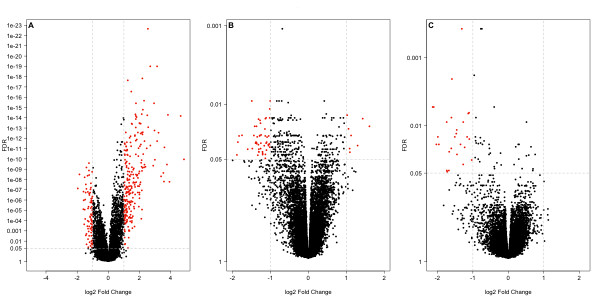
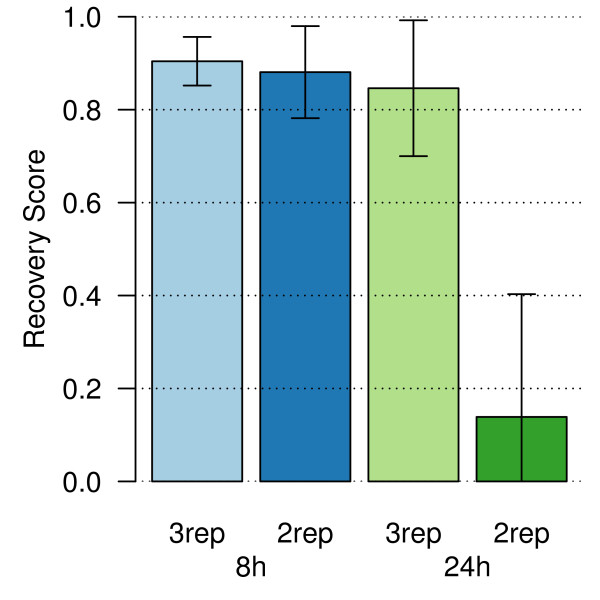
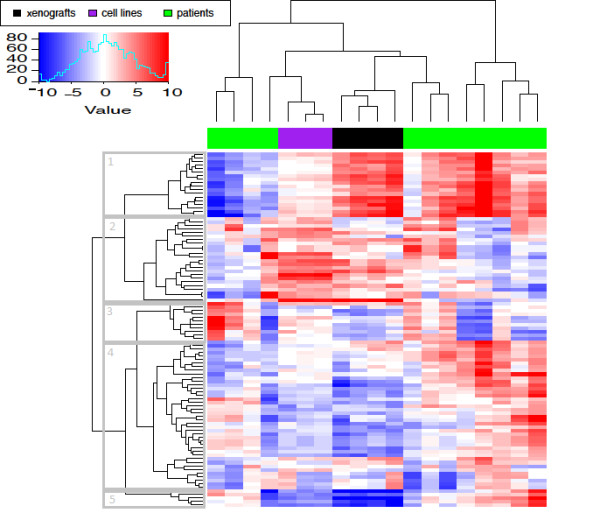
The 8 hour dexamethasone-treated timepoint had the highest number of significantly differentially expressed genes, with fewer observed at the 24 and 48 hour timepoints, and with minimal changes seen across the time-matched controls. When compared to publicly available datasets of glucocorticoid-induced gene expression from an in vitro cell line study and from an in vivo study of patients with ALL, at the level of pathways, expression changes in the 8 hour xenograft samples showed a similar response to patients treated with glucocorticoids. Replicate analysis revealed that at the 8 hour timepoint, a dataset with high signal and differential expression, using data from 3 replicates instead of 4 resulted in excellent recovery scores of > 0.9. However at other timepoints with less signal very poor recovery scores were obtained with 3 replicates.
The NOD/SCID xenograft mouse model provides a reproducible experimental system in which to investigate clinically-relevant mechanisms of drug-induced gene regulation in ALL; the 8 hour timepoint provides the highest number of significantly differentially expressed genes; time-matched controls are redundant and excellent recovery scores can be obtained with 3 replicates.
泼尼松龙和地塞米松等糖皮质激素是治疗急性淋巴细胞白血病(ALL)多药化疗方案中的关键药物,对糖皮质激素的反应高度预测预后。NOD/SCID 异种移植小鼠模型是一种临床相关模型,其中小鼠会发生全身性白血病,保留了原始疾病的基本生物学特征。在这里,我们报告了一项研究,评估 NOD/SCID 异种移植小鼠模型以研究糖皮质激素诱导的基因表达。将来自对糖皮质激素敏感的 B 细胞前体 ALL 衍生的异种移植的细胞接种到 NOD/SCID 小鼠中。当高度植入时,将小鼠随机分为 4 组,每组接受腹腔注射地塞米松 15mg/kg 或载体对照。此后 0、8、24 或 48 小时从小鼠脾脏中采集白血病细胞,并在 Illumina WG-6_V3 芯片上分析基因表达,将所有组与 0 小时时间点进行比较。
地塞米松处理的 8 小时时间点具有最多的显著差异表达基因,24 小时和 48 小时时间点观察到的基因较少,与时间匹配的对照相比变化最小。与来自体外细胞系研究和 ALL 患者体内研究的糖皮质激素诱导基因表达的公开可用数据集相比,在途径水平上,8 小时异种移植样本中的表达变化与接受糖皮质激素治疗的患者的反应相似。重复分析表明,在 8 小时时间点,使用来自 3 个重复的数据而不是 4 个重复的数据,具有高信号和差异表达的数据集导致>0.9 的优异恢复评分。然而,在其他信号较弱的时间点,使用 3 个重复则获得非常差的恢复评分。
NOD/SCID 异种移植小鼠模型提供了一种可重复的实验系统,可用于研究 ALL 中药物诱导基因调节的临床相关机制;8 小时时间点提供了最多的显著差异表达基因;时间匹配的对照是多余的,并且可以使用 3 个重复获得优异的恢复评分。