Department of Nutrition, University of California Davis, Davis, California, United States of America.
PLoS One. 2011;6(11):e26583. doi: 10.1371/journal.pone.0026583. Epub 2011 Nov 11.
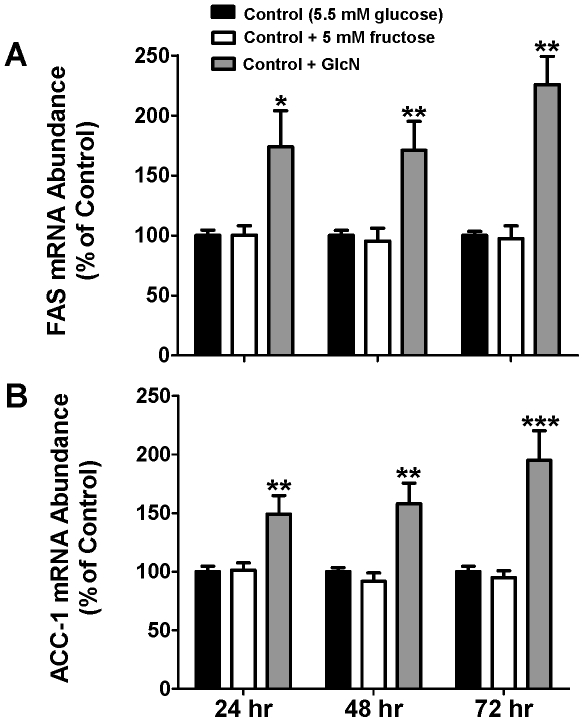
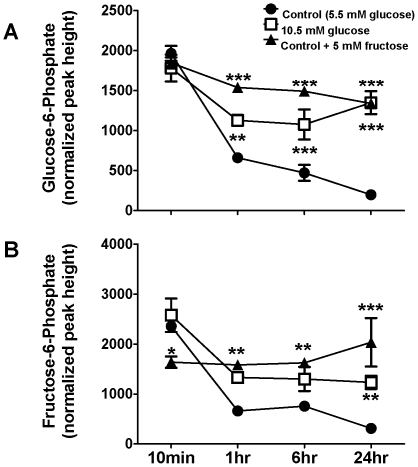
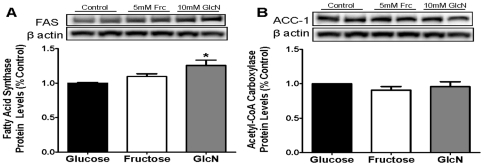
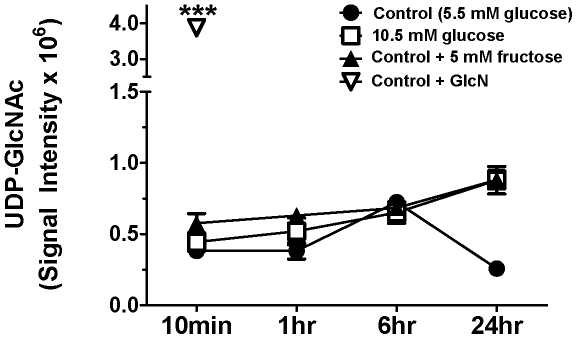
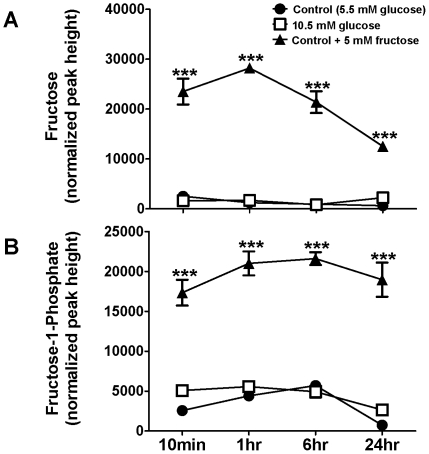
Consumption of large amounts of fructose or sucrose increases lipogenesis and circulating triglycerides in humans. Although the underlying molecular mechanisms responsible for this effect are not completely understood, it is possible that as reported for rodents, high fructose exposure increases expression of the lipogenic enzymes fatty acid synthase (FAS) and acetyl-CoA carboxylase (ACC-1) in human liver. Since activation of the hexosamine biosynthesis pathway (HBP) is associated with increases in the expression of FAS and ACC-1, it raises the possibility that HBP-related metabolites would contribute to any increase in hepatic expression of these enzymes following fructose exposure. Thus, we compared lipogenic gene expression in human-derived HepG2 cells after incubation in culture medium containing glucose alone or glucose plus 5 mM fructose, using the HBP precursor 10 mM glucosamine (GlcN) as a positive control. Cellular metabolite profiling was conducted to analyze differences between glucose and fructose metabolism. Despite evidence for the active uptake and metabolism of fructose by HepG2 cells, expression of FAS or ACC-1 did not increase in these cells compared with those incubated with glucose alone. Levels of UDP-N-acetylglucosamine (UDP-GlcNAc), the end-product of the HBP, did not differ significantly between the glucose and fructose conditions. Exposure to 10 mM GlcN for 10 minutes to 24 hours resulted in 8-fold elevated levels of intracellular UDP-GlcNAc (P<0.001), as well as a 74-126% increase in FAS (P<0.05) and 49-95% increase in ACC-1 (P<0.01) expression above controls. It is concluded that in HepG2 liver cells cultured under standard conditions, sustained exposure to fructose does not result in an activation of the HBP or increased lipogenic gene expression. Should this scenario manifest in human liver in vivo, it would suggest that high fructose consumption promotes triglyceride synthesis primarily through its action to provide lipid precursor carbon and not by activating lipogenic gene expression.
大量摄入果糖或蔗糖会增加人体的脂肪生成和循环中的甘油三酯。尽管导致这种效应的潜在分子机制尚未完全阐明,但与啮齿动物的报告一样,高果糖暴露可能会增加人肝中脂肪生成酶脂肪酸合酶 (FAS) 和乙酰辅酶 A 羧化酶 (ACC-1) 的表达。由于己糖胺生物合成途径 (HBP) 的激活与 FAS 和 ACC-1 表达的增加有关,因此,它提出了这样一种可能性,即在果糖暴露后,HBP 相关代谢物可能会导致这些酶在肝中的表达增加。因此,我们比较了在含有葡萄糖或葡萄糖加 5mM 果糖的培养基中孵育的人源性 HepG2 细胞中的脂肪生成基因表达,用 HBP 前体 10mM 氨基葡萄糖 (GlcN) 作为阳性对照。进行细胞代谢产物谱分析以分析葡萄糖和果糖代谢之间的差异。尽管有证据表明 HepG2 细胞主动摄取和代谢果糖,但与单独用葡萄糖孵育的细胞相比,这些细胞中 FAS 或 ACC-1 的表达并没有增加。UDP-N-乙酰葡萄糖胺 (UDP-GlcNAc) 的水平,HBP 的终产物,在葡萄糖和果糖条件之间没有显著差异。暴露于 10mM GlcN 10 分钟至 24 小时会导致细胞内 UDP-GlcNAc 水平升高 8 倍(P<0.001),FAS 表达增加 74-126%(P<0.05),ACC-1 表达增加 49-95%(P<0.01)高于对照。结论是,在标准条件下培养的 HepG2 肝细胞中,持续暴露于果糖不会导致 HBP 激活或脂肪生成基因表达增加。如果这种情况在人体肝脏中表现出来,它将表明高果糖消耗主要通过提供脂质前体碳而不是通过激活脂肪生成基因表达来促进甘油三酯合成。