
表达前肽 IGF-1Ea 的 P19-GFP 畸胎瘤细胞中的心发生增加。
Increased cardiogenesis in P19-GFP teratocarcinoma cells expressing the propeptide IGF-1Ea.
机构信息
Heart Science Centre, National Heart and Lung Institute, Imperial College, London, United Kingdom.
出版信息
Biochem Biophys Res Commun. 2011 Dec 16;416(3-4):293-9. doi: 10.1016/j.bbrc.2011.11.028. Epub 2011 Nov 12.
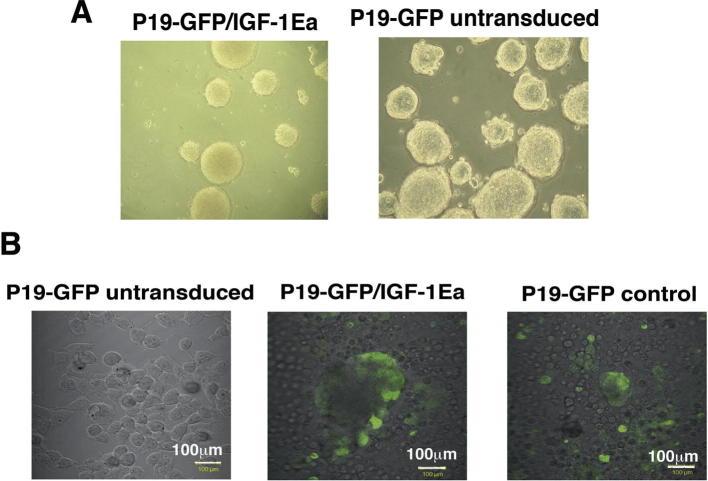
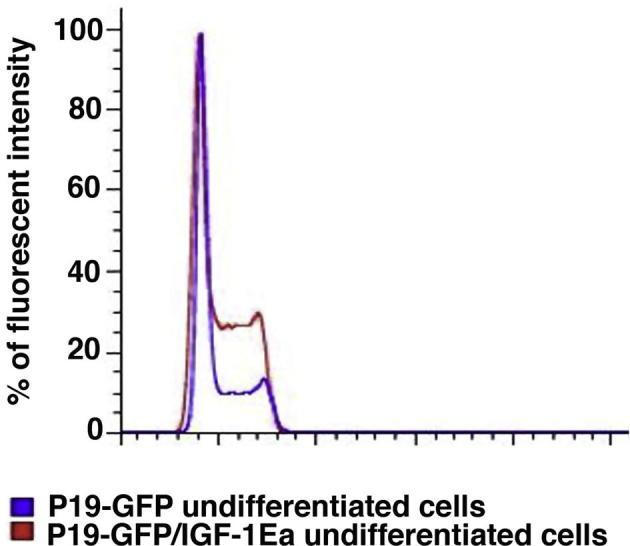
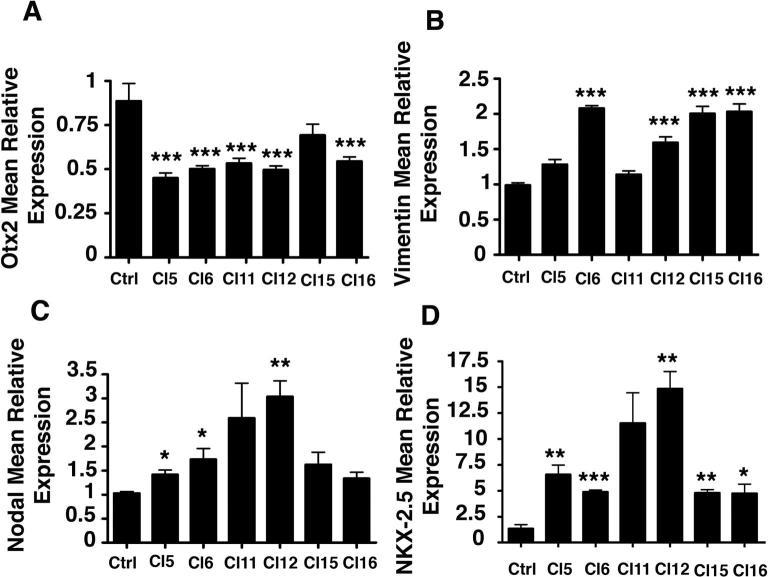
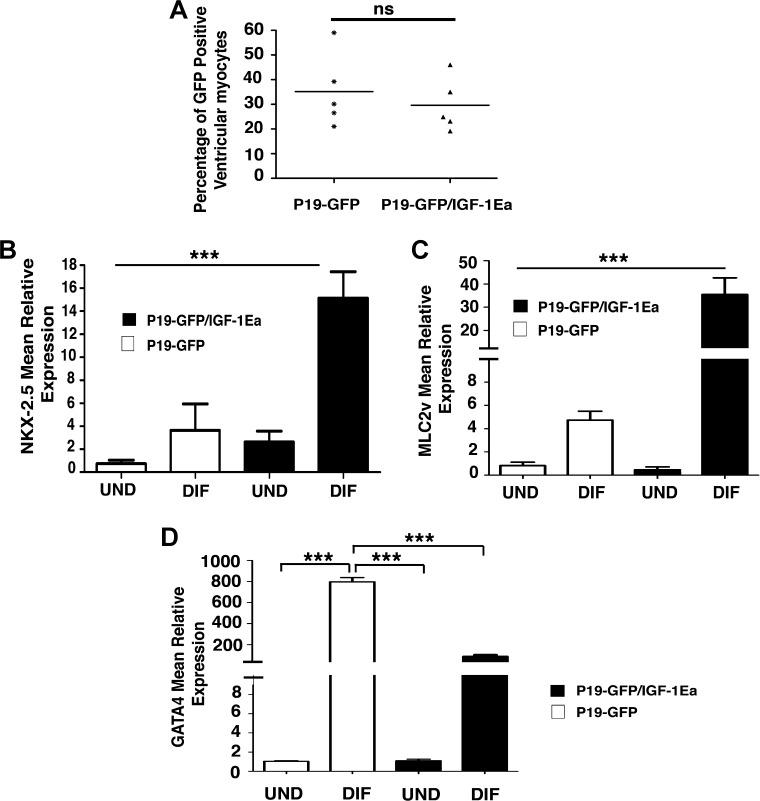
The mechanism implicated in differentiation of endogenous cardiac stem cells into cardiomyocytes to regenerate the heart tissue upon an insult remains elusive, limiting the therapeutical goals to exogenous cell injection and/or gene therapy. We have shown previously that cardiac specific overexpression of the insulin-like growth factor 1 propeptide IGF-1Ea induces beneficial myocardial repair after infarct. Although the mechanism is still under investigation, the possibility that this propeptide may be involved in promoting stem cell differentiation into the cardiac lineage has yet to be explored. To investigate whether IGF-1Ea promote cardiogenesis, we initially modified P19 embryonal carcinoma cells to express IGF-1Ea. Taking advantage of their cardiomyogenic nature, we analyzed whether overexpression of this propeptide affected cardiac differentiation program. The data herein presented showed for the first time that constitutively overexpressed IGF-1Ea increased cardiogenic differentiation program in both undifferentiated and DMSO-differentiated cells. In details, IGF-1Ea overexpression promoted localization of alpha-actinin in finely organized sarcomeric structure compared to control cells and upregulated the cardiac mesodermal marker NKX-2.5 and the ventricular structural protein MLC2v. Furthermore, activated IGF-1 signaling promoted cardiac mesodermal induction in undifferentiated cells independently of cell proliferation. This analysis suggests that IGF-1Ea may be a good candidate to improve both in vitro production of cardiomyocytes from pluripotent stem cells and in vivo activation of the differentiation program of cardiac progenitor cells.
内源性心脏干细胞分化为心肌细胞的机制尚不清楚,这限制了治疗方法仅限于外源性细胞注射和/或基因治疗。我们之前已经表明,胰岛素样生长因子 1 前肽 IGF-1Ea 在心脏特异性过表达可诱导损伤后有益的心肌修复。尽管该机制仍在研究中,但该前肽可能参与促进干细胞向心脏谱系分化的可能性尚未得到探索。为了研究 IGF-1Ea 是否促进心肌发生,我们最初将 P19 胚胎癌细胞修饰为表达 IGF-1Ea。利用其心肌生成特性,我们分析了这种前肽的过表达是否影响心脏分化程序。本文首次显示,在未分化和 DMSO 分化的细胞中,组成性过表达 IGF-1Ea 增加了心脏分化程序。具体而言,与对照细胞相比,IGF-1Ea 的过表达促进了α-辅肌动蛋白在精细组织的肌节结构中的定位,并上调了心脏中胚层标记物 NKX-2.5 和心室结构蛋白 MLC2v。此外,激活的 IGF-1 信号通路可独立于细胞增殖促进未分化细胞中心脏中胚层的诱导。该分析表明,IGF-1Ea 可能是改善多能干细胞体外产生心肌细胞和体内激活心脏祖细胞分化程序的良好候选物。



 Zotero 插件