Department of Pharmacology and Toxicology, University of Kansas, Lawrence, Kansas, United States of America.
PLoS One. 2011;6(11):e27798. doi: 10.1371/journal.pone.0027798. Epub 2011 Nov 16.
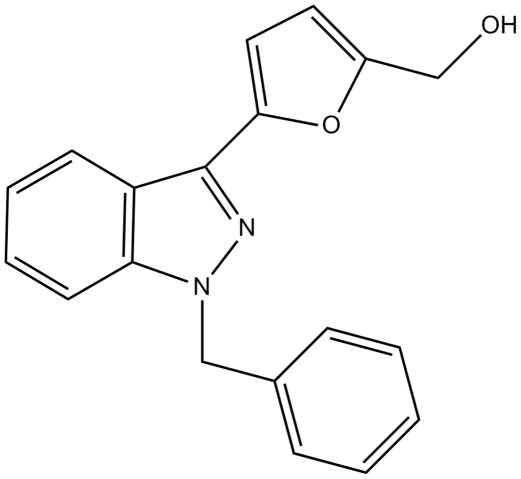
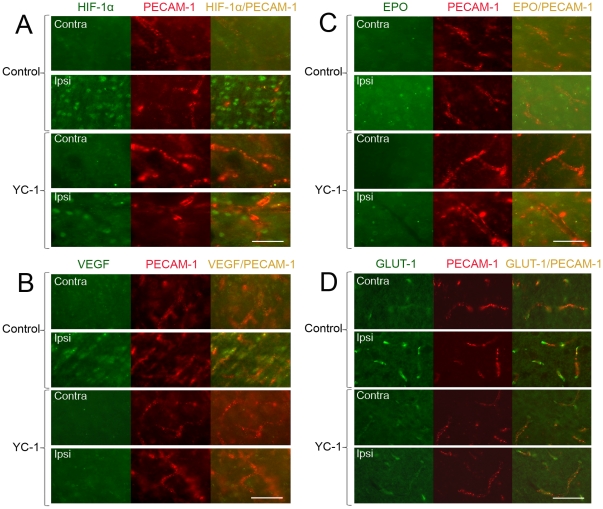
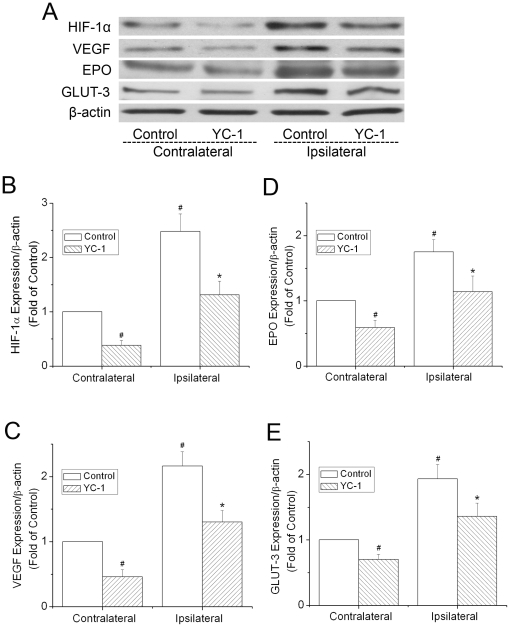
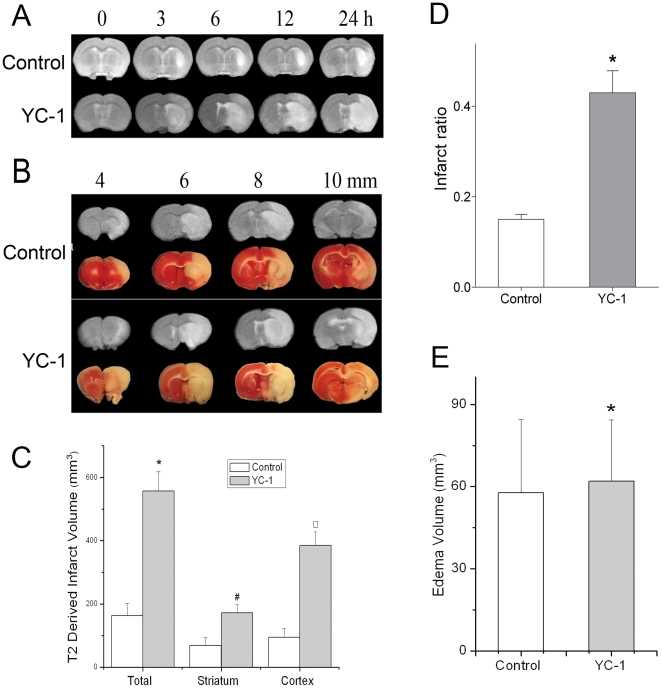
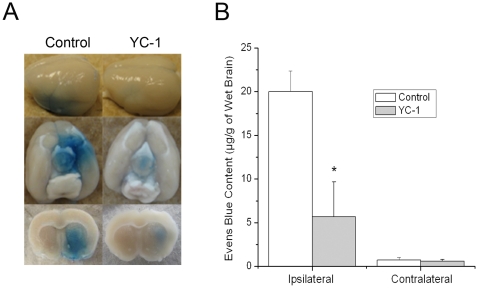
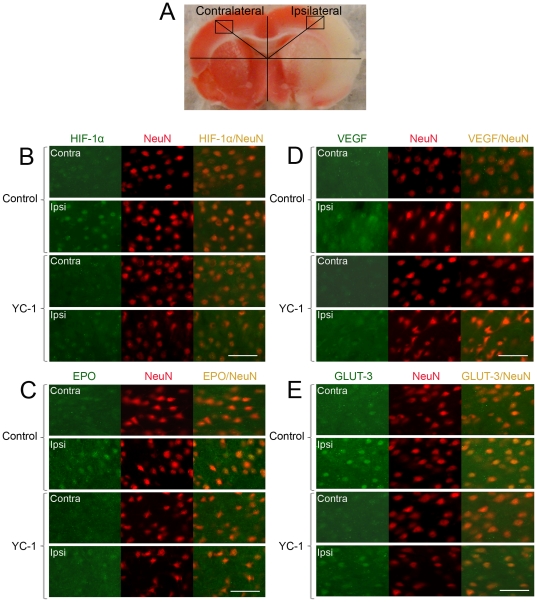
Hypoxia-inducible factor 1 (HIF-1) is a master regulator of cellular adaptation to hypoxia and has been suggested as a potent therapeutic target in cerebral ischemia. Here we show in an ischemic stroke model of rats that inhibiting HIF-1 and its downstream genes by 3-(5'-hydroxymethyl-2'-furyl)-1-benzylindazole (YC-1) significantly increases mortality and enlarges infarct volume evaluated by MRI and histological staining. Interestingly, the HIF-1 inhibition remarkably ameliorates ischemia-induced blood-brain barrier (BBB) disruption determined by Evans blue leakage although it does not affect brain edema. The result demonstrates that HIF-1 inhibition has differential effects on ischemic outcomes and BBB permeability. It indicates that HIF-1 may have different functions in different brain cells. Further analyses show that ischemia upregulates HIF-1 and its downstream genes erythropoietin (EPO), vascular endothelial growth factor (VEGF), and glucose transporter (Glut) in neurons and brain endothelial cells and that YC-1 inhibits their expression. We postulate that HIF-1-induced VEGF increases BBB permeability while certain other proteins coded by HIF-1's downstream genes such as epo and glut provide neuroprotection in an ischemic brain. The results indicate that YC-1 lacks the potential as a cerebral ischemic treatment although it confers certain protection to the cerebral vascular system.
缺氧诱导因子 1(HIF-1)是细胞对缺氧适应的主要调节因子,已被认为是脑缺血的潜在有效治疗靶点。在这里,我们在大鼠缺血性脑卒中模型中显示,通过 3-(5'-羟甲基-2'-呋喃基)-1-苯并吲哚(YC-1)抑制 HIF-1 及其下游基因,显著增加了死亡率,并通过 MRI 和组织学染色评估了梗死体积的扩大。有趣的是,尽管 HIF-1 抑制不影响脑水肿,但它显著改善了缺血诱导的血脑屏障(BBB)破坏,这由 Evans 蓝渗漏来确定。结果表明,HIF-1 抑制对缺血性结局和 BBB 通透性具有不同的影响。这表明 HIF-1 在不同的脑细胞中可能具有不同的功能。进一步的分析表明,缺血上调了神经元和脑内皮细胞中的 HIF-1 及其下游基因促红细胞生成素(EPO)、血管内皮生长因子(VEGF)和葡萄糖转运蛋白(Glut),而 YC-1 抑制了它们的表达。我们推测,HIF-1 诱导的 VEGF 增加了 BBB 的通透性,而 HIF-1 下游基因编码的某些其他蛋白质,如 epo 和 glut,在缺血性大脑中提供了神经保护作用。结果表明,尽管 YC-1 对脑血管系统具有一定的保护作用,但缺乏作为脑缺血治疗的潜力。