Leiden University Medical Center, University of Leiden, Leiden, The Netherlands.
Cell Mol Neurobiol. 2012 Jul;32(5):725-35. doi: 10.1007/s10571-011-9774-2. Epub 2011 Nov 24.
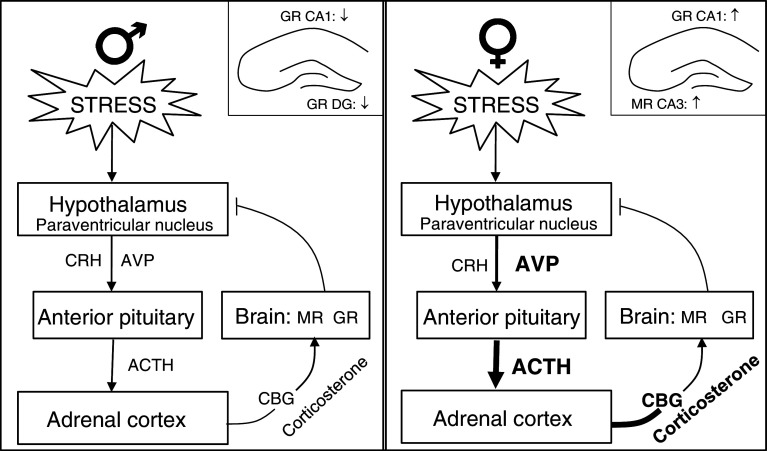
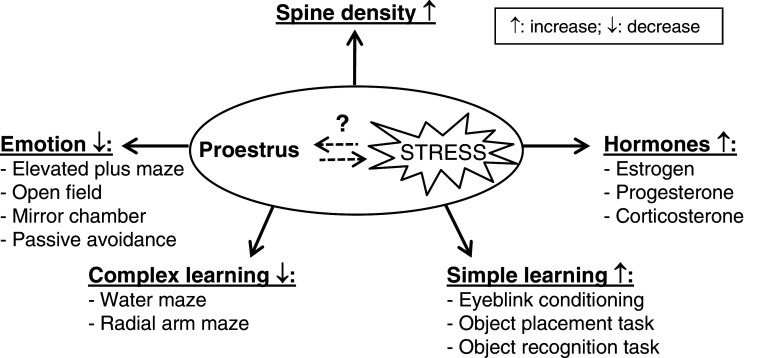
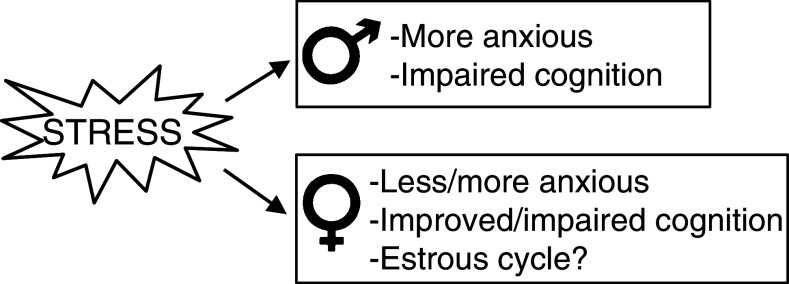
There are clear sex differences in incidence and onset of stress-related and other psychiatric disorders in humans. Yet, rodent models for psychiatric disorders are predominantly based on male animals. The strongest argument for not using female rodents is their estrous cycle and the fluctuating sex hormones per phase which multiplies the number of animals to be tested. Here, we will discuss studies focused on sex differences in emotionality and cognitive abilities in experimental conditions with and without stress. First, female sex hormones such as estrogens and progesterone affect emotions and cognition, contributing to sex differences in behavior. Second, females respond differently to stress than males which might be related to the phase of the estrous cycle. For example, female rats and mice express less anxiety than males in a novel environment. Proestrus females are less anxious than females in the other estrous phases. Third, males perform in spatial tasks superior to females. However, while stress impairs spatial memory in males, females improve their spatial abilities, depending on the task and kind of stressor. We conclude that the differences in emotion, cognition and responses to stress between males and females over the different phases of the estrous cycle should be used in animal models for stress-related psychiatric disorders.
在人类中,应激相关和其他精神障碍的发病率和发病时间存在明显的性别差异。然而,精神障碍的啮齿动物模型主要基于雄性动物。不使用雌性啮齿动物的最强理由是它们的发情周期和每个阶段波动的性激素,这会使需要测试的动物数量增加。在这里,我们将讨论在有和没有应激的实验条件下,情绪和认知能力的性别差异的研究。首先,雌激素和孕激素等女性性激素会影响情绪和认知,从而导致行为上的性别差异。其次,女性对压力的反应与男性不同,这可能与发情周期的阶段有关。例如,在新环境中,雌性大鼠和小鼠的焦虑程度低于雄性。发情前期的雌性比其他发情阶段的雌性更不焦虑。第三,雄性在空间任务中的表现优于雌性。然而,虽然压力会损害雄性的空间记忆,但女性会根据任务和应激源的不同提高她们的空间能力。我们的结论是,在发情周期的不同阶段,雄性和雌性之间在情绪、认知和对压力的反应方面的差异,应该在应激相关精神障碍的动物模型中得到利用。