Prathibha Rani S
Department of Pediatric and Preventive Dentistry, DAPMRV Dental College and Hospital, Bangalore, India.
Contemp Clin Dent. 2011 Jan;2(1):21-6. doi: 10.4103/0976-237X.79298.
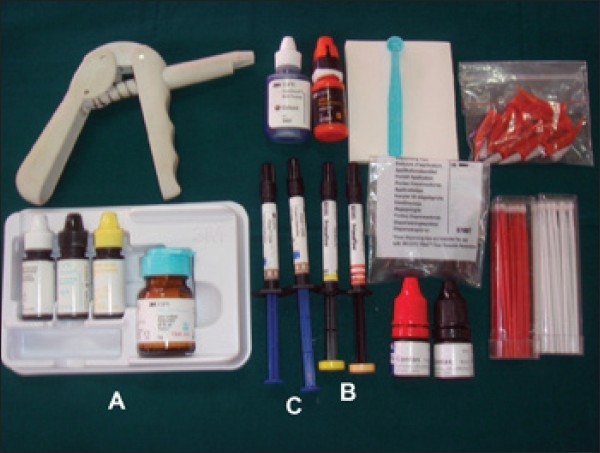
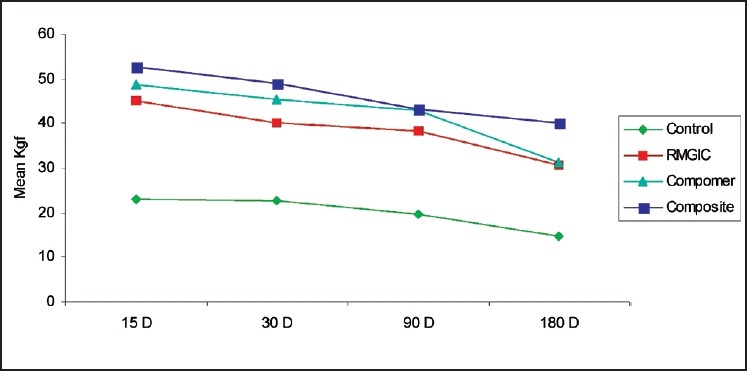
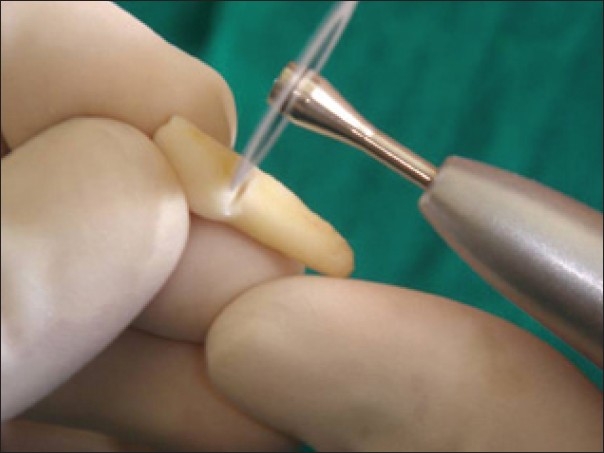
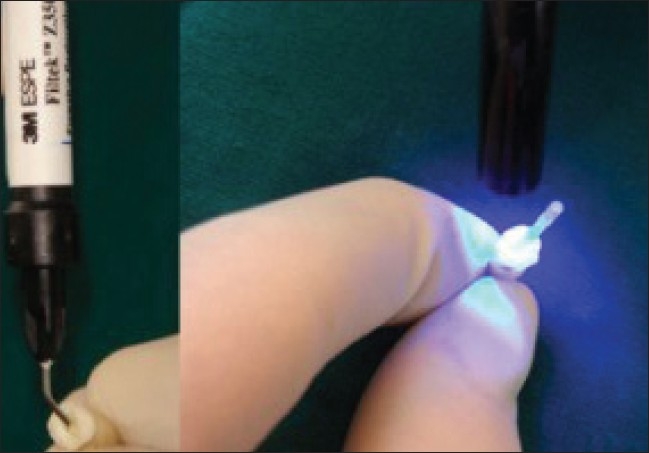
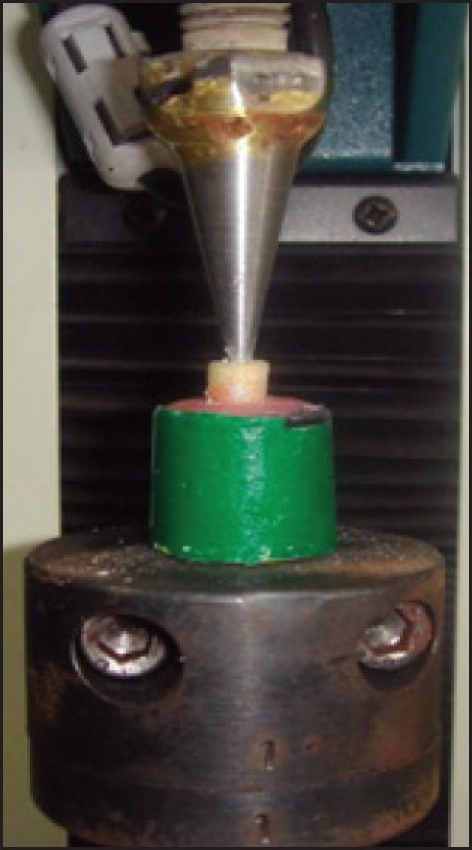
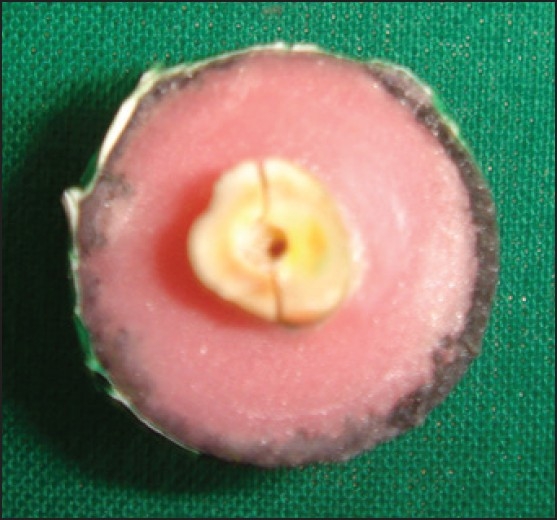
One hundred and sixty human permanent central incisors were enlarged to a 120 file size after crown removal procedure to simulate immature teeth. The root canals were filled with calcium hydroxide and stored for 15 days (phase I), 30 days (phase II), 90 days (phase III), and 180 days (Phase IV). At the end of these selected time periods, calcium hydroxide was cleaned off the root canals of forty teeth that were randomly selected and obturated with gutta-percha points in the apical 2 mm of the root canals with a sealer. The specimens were further equally divided into four groups. Unrestored Group I served as control and the root canals of teeth in the other three group specimens were reinforced with resin modified glassionomer cement (RMGIC) (Group II), Flowable Compomer (Group III), and Flowable Composite (Group IV), respectively, using a translucent curing post. All specimens were subjected to compressive force using an Instron Testing machine, until fracture occurred. All the materials evaluated substantially reinforced the root specimens compared to the control. At the end of 180 days, Flowable composites showed maximum reinforcement compared to the other groups; however, no significant differences were found between the reinforcement capabilities of Flowable Compomer and RMGIC.
在去除牙冠后,将160颗人类恒中切牙扩大至120号锉的尺寸,以模拟未成熟牙齿。根管内填充氢氧化钙并储存15天(第一阶段)、30天(第二阶段)、90天(第三阶段)和180天(第四阶段)。在这些选定的时间段结束时,从随机选择的40颗牙齿的根管中清除氢氧化钙,并用牙胶尖在根管根尖2mm处使用封闭剂进行充填。标本进一步平均分为四组。第一组未修复作为对照,其他三组标本中牙齿的根管分别用树脂改性玻璃离子水门汀(RMGIC)(第二组)、可流动复合树脂(第三组)和可流动树脂复合材料(第四组)进行增强,使用半透明固化桩。所有标本使用Instron试验机施加压缩力,直至发生断裂。与对照组相比,所有评估的材料都显著增强了牙根标本。在180天结束时,与其他组相比,可流动树脂复合材料显示出最大的增强效果;然而,可流动复合树脂和RMGIC的增强能力之间没有发现显著差异。