Madhusudhan K T, Huang G, Burns G, Sokatch J R
Department of Biochemistry and Molecular Biology, University of Oklahoma Health Sciences Center, Oklahoma City 73190.
J Bacteriol. 1990 Oct;172(10):5655-63. doi: 10.1128/jb.172.10.5655-5663.1990.
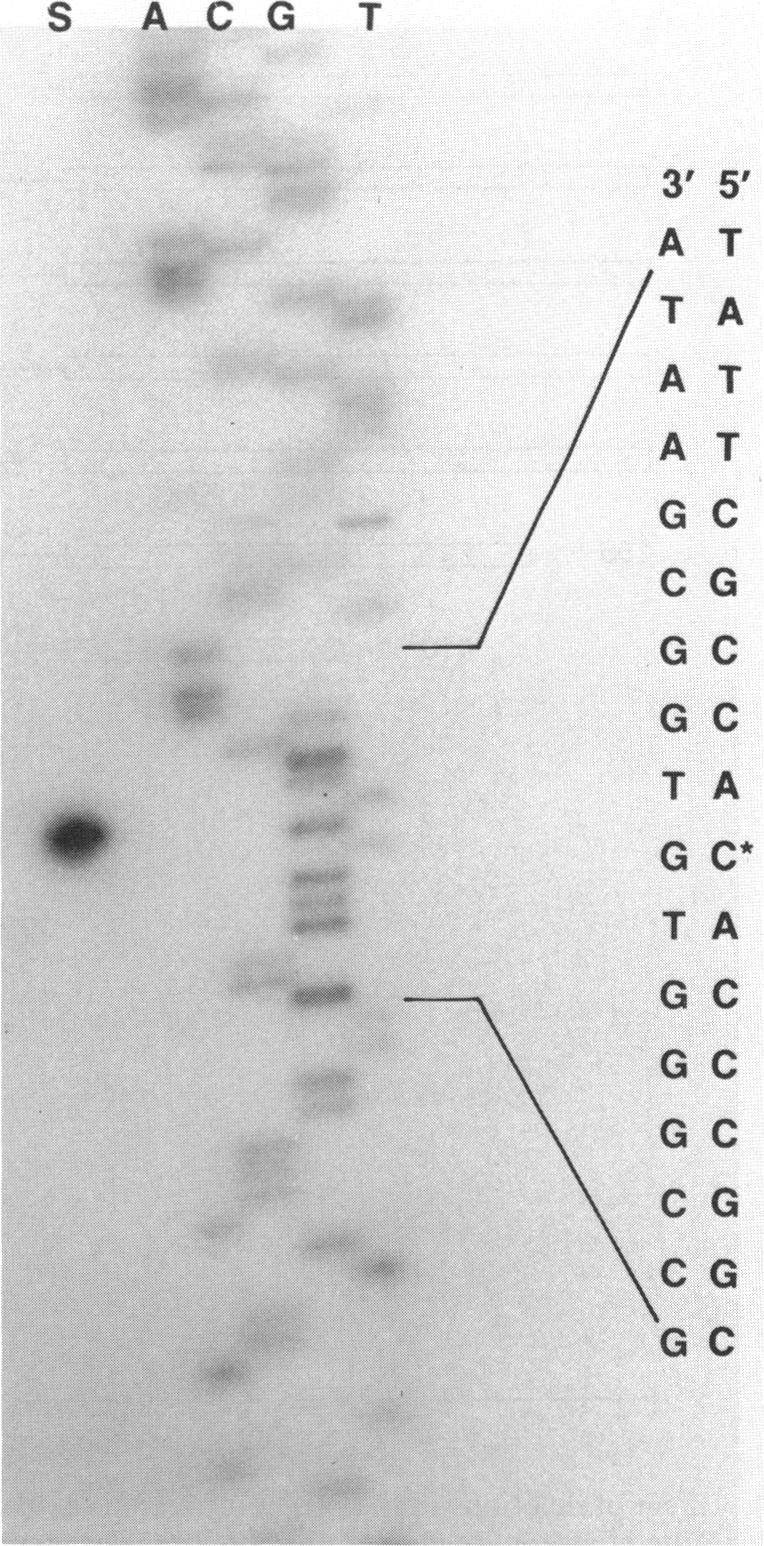
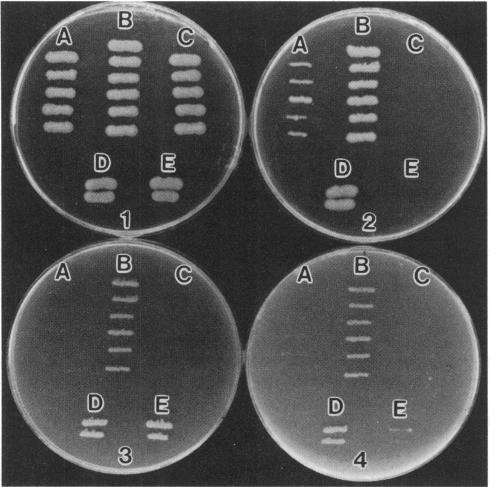
Branched-chain keto acid dehydrogenase is a multienzyme complex produced by Pseudomonas putida when it is grown in a minimal medium containing branched-chain amino acids. A 1.87-kilobase (kb) DNA fragment was cloned and sequenced which contained 0.24 kb of the E1 alpha structural gene and 1.6 kb of upstream DNA. There were 854 base pairs (bp) of noncoding DNA upstream of bkdA1, the first gene of the bkd operon, and 592 bp between the transcriptional and translational starts. The G + C content of the noncoding region was 56.7% compared with 65.2% for all the structural genes of the operon. A partial open reading frame was found on the strand opposite that of the bkd operon beginning at base 774. When the bkd promoter was cloned into the promoter probe vector pKT240, streptomycin resistance was obtained in P. putida but not Escherichia coli with the promoter in both orientations, which indicates either that the bkd promoter is bidirectional or that there are two promoters in this region. A series of ordered deletions on both sides of the proposed site of the start of transcription revealed that almost 700 bp upstream of the start of translation were required for expression. Streptomycin resistance was also obtained in an rpoN mutant of P. putida KT2440 containing constructs with the intact bkd promoter, indicating that the bkd operon does not require the rpoN sigma factor for expression. Another construct containing the bkd promoter, bkdA1, and bkdA2 in pKT240 was used to transform P. putida JS113, a mutant which was unable to produce the E1 subunits of the branched-chain keto acid dehydrogenase. In this case, very high inducible expression of the bkd operon was obtained.
支链酮酸脱氢酶是恶臭假单胞菌在含有支链氨基酸的基本培养基中生长时产生的一种多酶复合物。克隆并测序了一个1.87千碱基(kb)的DNA片段,该片段包含0.24 kb的E1α结构基因和1.6 kb的上游DNA。bkd操纵子的第一个基因bkdA1上游有854个碱基对(bp)的非编码DNA,转录起始和翻译起始之间有592 bp。非编码区的G + C含量为56.7%,而操纵子所有结构基因的G + C含量为65.2%。在与bkd操纵子相反的链上,从第774个碱基开始发现了一个部分开放阅读框。当bkd启动子被克隆到启动子探针载体pKT240中时,无论启动子处于何种方向,恶臭假单胞菌都获得了链霉素抗性,而大肠杆菌则没有,这表明bkd启动子是双向的,或者该区域有两个启动子。对转录起始位点两侧进行了一系列有序缺失,结果表明翻译起始上游近700 bp对于表达是必需的。在含有完整bkd启动子构建体的恶臭假单胞菌KT2440的rpoN突变体中也获得了链霉素抗性,这表明bkd操纵子的表达不需要rpoN σ因子。另一个在pKT240中含有bkd启动子、bkdA1和bkdA2的构建体被用于转化恶臭假单胞菌JS113,该突变体无法产生支链酮酸脱氢酶的E1亚基。在这种情况下,获得了bkd操纵子的非常高的诱导表达。