The Institute for Emerging Infections, The Oxford Martin School, Department of Zoology, Oxford University, Oxford, United Kingdom.
PLoS Comput Biol. 2011 Dec;7(12):e1002289. doi: 10.1371/journal.pcbi.1002289. Epub 2011 Dec 1.
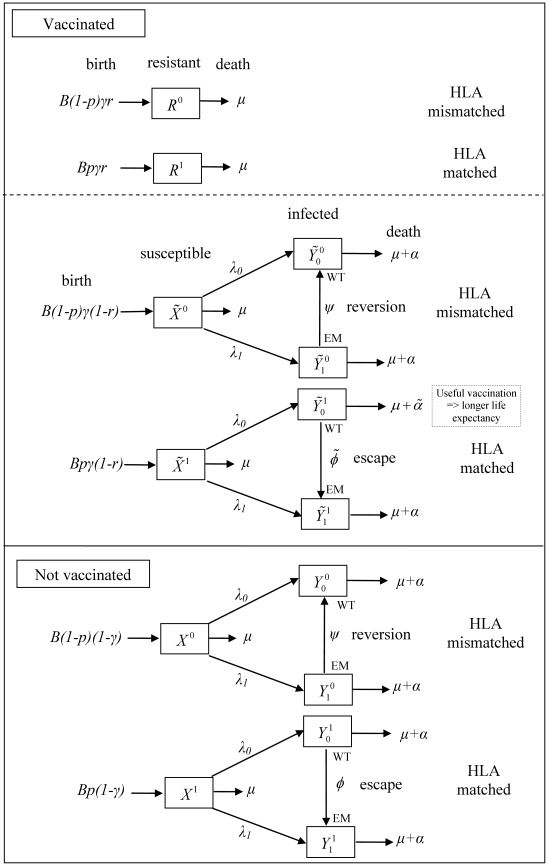
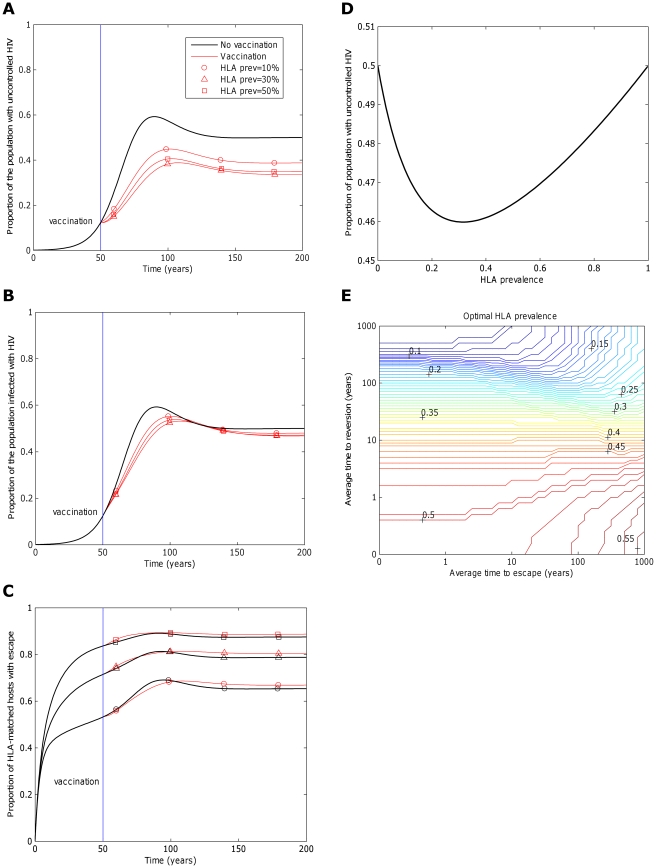
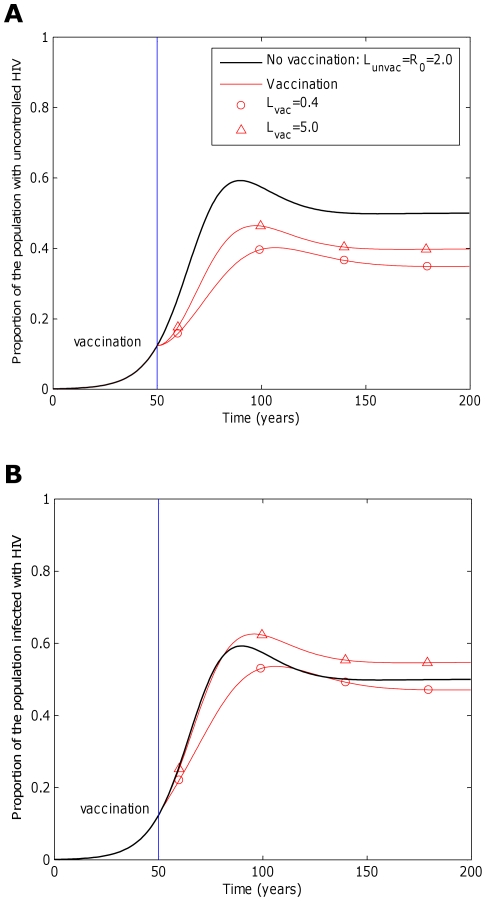
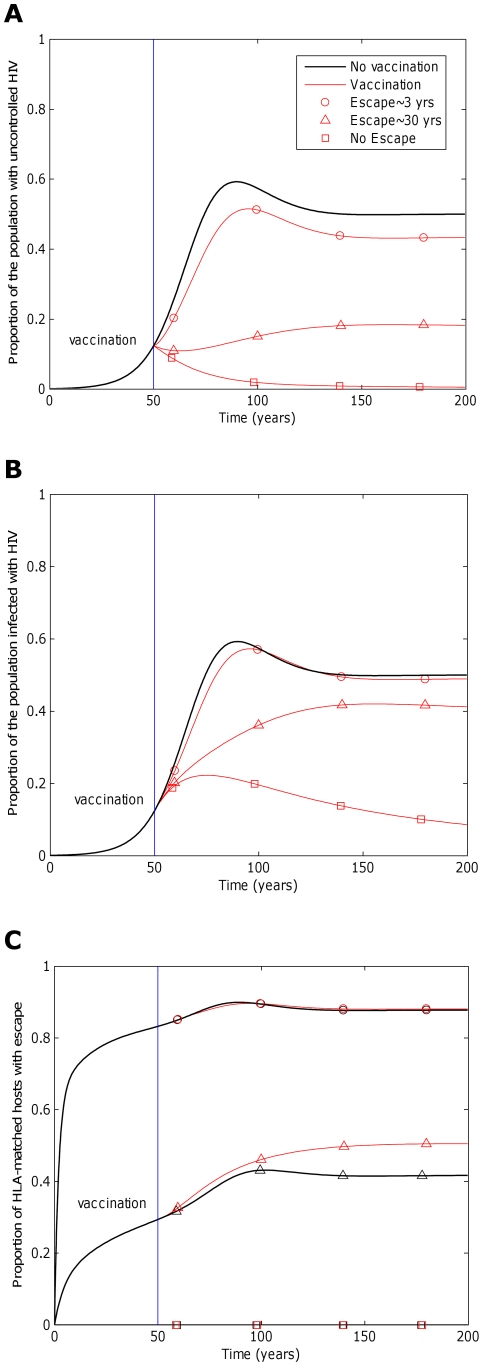
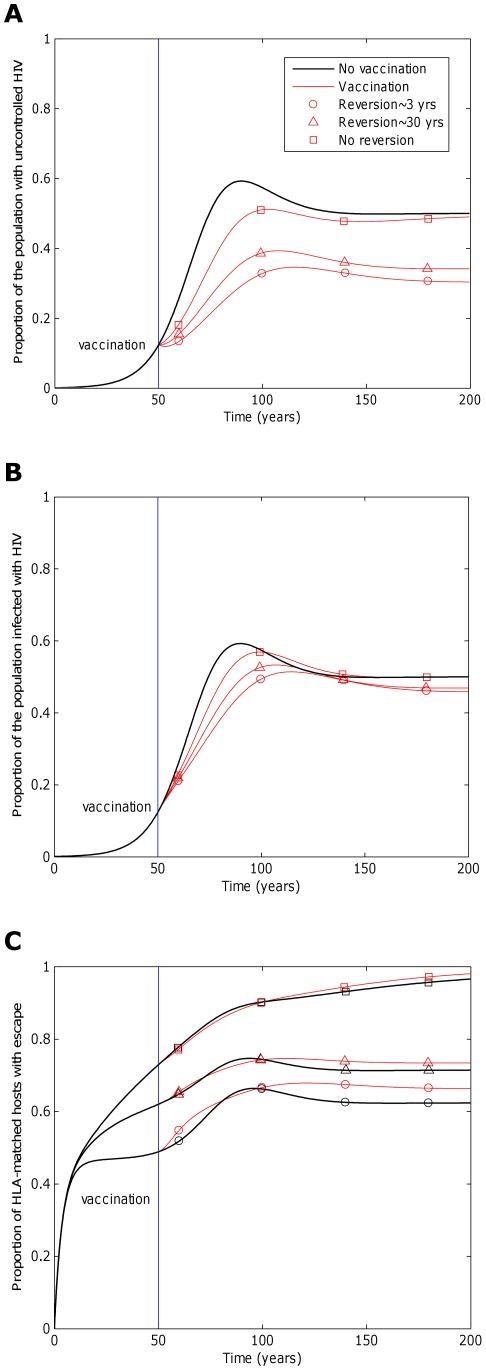
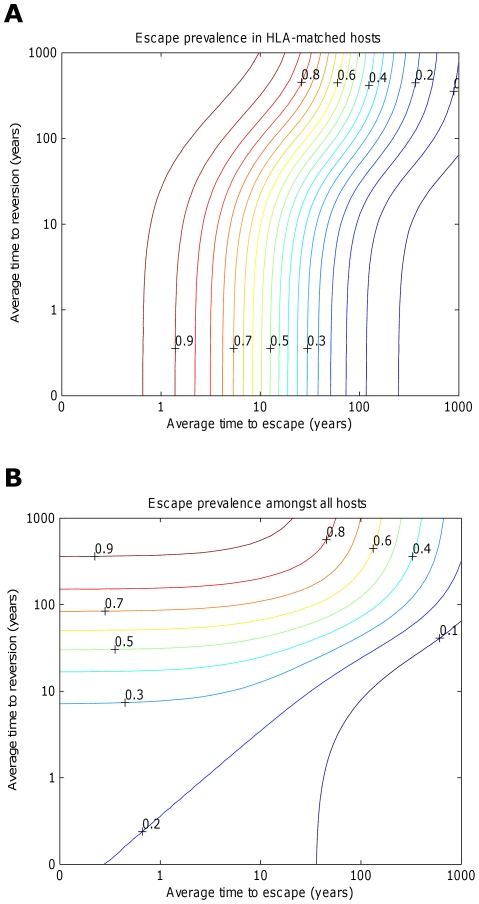
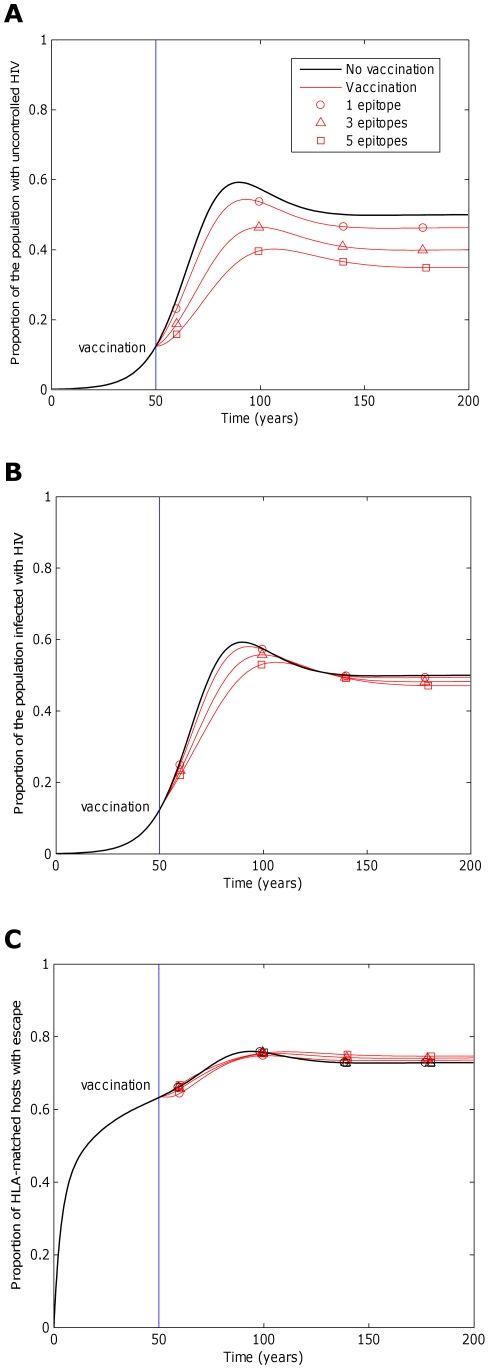
Because cytotoxic T-lymphocytes (CTLs) have been shown to play a role in controlling human immunodeficiency virus (HIV) infection and because CTL-based simian immunodeficiency virus (SIV) vaccines have proved effective in non-human primates, one goal of HIV vaccine design is to elicit effective CTL responses in humans. Such a vaccine could improve viral control in patients who later become infected, thereby reducing onwards transmission and enhancing life expectancy in the absence of treatment. The ability of HIV to evolve mutations that evade CTLs and the ability of these 'escape mutants' to spread amongst the population poses a challenge to the development of an effective and robust vaccine. We present a mathematical model of within-host evolution and between-host transmission of CTL escape mutants amongst a population receiving a vaccine that elicits CTL responses to multiple epitopes. Within-host evolution at each epitope is represented by the outgrowth of escape mutants in hosts who restrict the epitope and their reversion in hosts who do not restrict the epitope. We use this model to investigate how the evolution and spread of escape mutants could affect the impact of a vaccine. We show that in the absence of escape, such a vaccine could markedly reduce the prevalence of both infection and disease in the population. However the impact of such a vaccine could be significantly abated by CTL escape mutants, especially if their selection in hosts who restrict the epitope is rapid and their reversion in hosts who do not restrict the epitope is slow. We also use the model to address whether a vaccine should span a broad or narrow range of CTL epitopes and target epitopes restricted by rare or common HLA types. We discuss the implications and limitations of our findings.
由于细胞毒性 T 淋巴细胞(CTL)已被证明在控制人类免疫缺陷病毒(HIV)感染方面发挥作用,并且基于 CTL 的猴免疫缺陷病毒(SIV)疫苗已被证明在非人类灵长类动物中有效,因此 HIV 疫苗设计的一个目标是在人类中引发有效的 CTL 反应。这样的疫苗可以改善患者在随后感染时的病毒控制,从而减少传播,并在没有治疗的情况下提高预期寿命。HIV 能够进化出逃避 CTL 的突变,并且这些“逃逸突变体”能够在人群中传播,这对开发有效和强大的疫苗构成了挑战。我们提出了一个数学模型,用于描述在接种疫苗的人群中,CTL 逃逸突变体在宿主内的进化和在宿主间的传播。在每个表位处的宿主内进化由限制表位的宿主中逃逸突变体的生长和不限制表位的宿主中逃逸突变体的恢复来表示。我们使用这个模型来研究逃逸突变体的进化和传播如何影响疫苗的效果。我们表明,在没有逃逸的情况下,这种疫苗可以显著降低人群中感染和疾病的流行率。然而,CTL 逃逸突变体可能会显著削弱这种疫苗的效果,尤其是如果它们在限制表位的宿主中快速选择,并且在不限制表位的宿主中缓慢恢复。我们还使用该模型来解决疫苗应该涵盖广泛还是狭窄的 CTL 表位范围,以及针对罕见还是常见 HLA 类型限制的表位。我们讨论了我们发现的意义和局限性。