Whitehead Institute for Biomedical Research, Cambridge, Massachusetts 02142, USA.
J Biol Chem. 2012 Feb 3;287(6):4107-20. doi: 10.1074/jbc.M111.308668. Epub 2011 Dec 6.
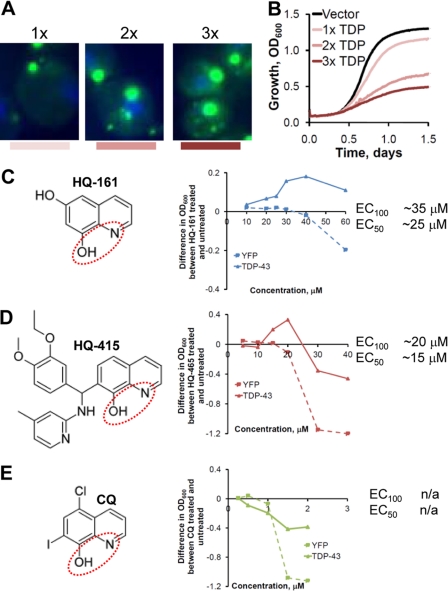
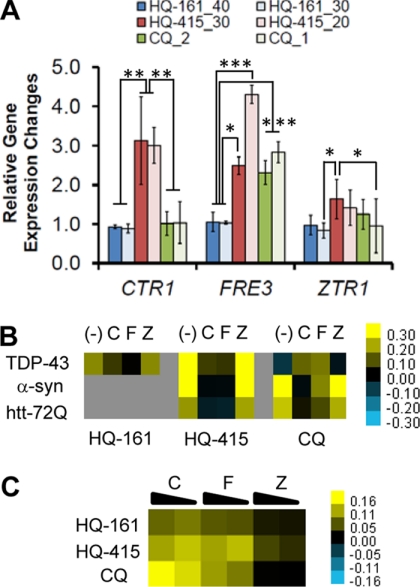
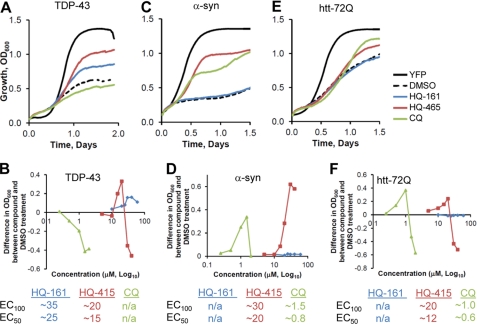
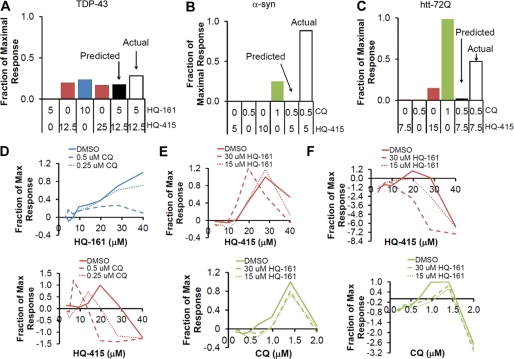
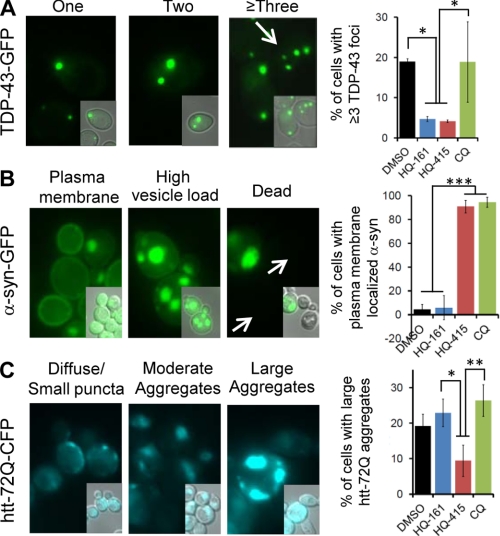
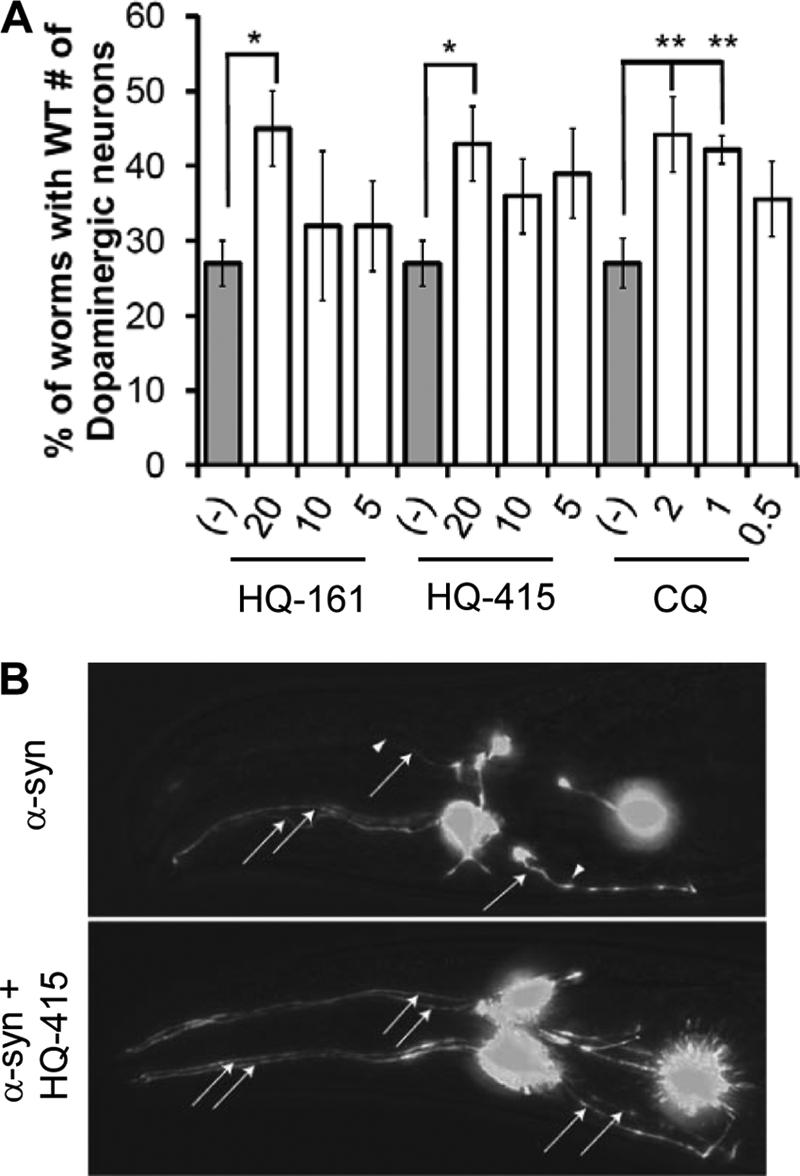
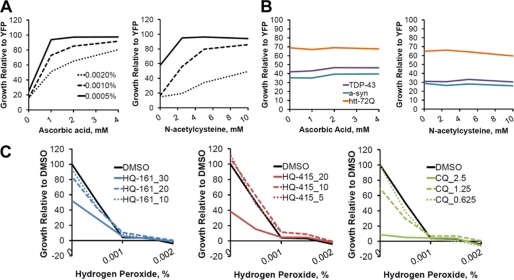
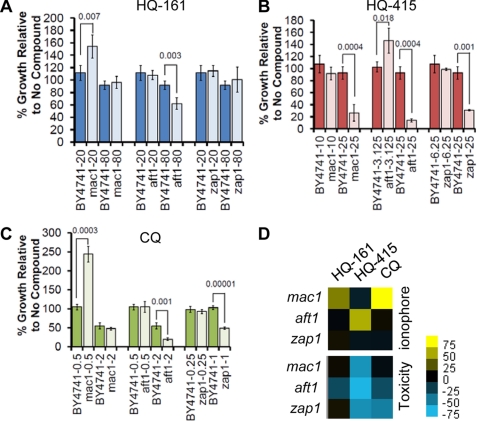
No current therapies target the underlying cellular pathologies of age-related neurodegenerative diseases. Model organisms provide a platform for discovering compounds that protect against the toxic, misfolded proteins that initiate these diseases. One such protein, TDP-43, is implicated in multiple neurodegenerative diseases, including amyotrophic lateral sclerosis and frontotemporal lobar degeneration. In yeast, TDP-43 expression is toxic, and genetic modifiers first discovered in yeast have proven to modulate TDP-43 toxicity in both neurons and humans. Here, we describe a phenotypic screen for small molecules that reverse TDP-43 toxicity in yeast. One group of hit compounds was 8-hydroxyquinolines (8-OHQ), a class of clinically relevant bioactive metal chelators related to clioquinol. Surprisingly, in otherwise wild-type yeast cells, different 8-OHQs had selectivity for rescuing the distinct toxicities caused by the expression of TDP-43, α-synuclein, or polyglutamine proteins. In fact, each 8-OHQ synergized with the other, clearly establishing that they function in different ways. Comparative growth and molecular analyses also revealed that 8-OHQs have distinct metal chelation and ionophore activities. The diverse bioactivity of 8-OHQs indicates that altering different aspects of metal homeostasis and/or metalloprotein activity elicits distinct protective mechanisms against several neurotoxic proteins. Indeed, phase II clinical trials of an 8-OHQ has produced encouraging results in modifying Alzheimer disease. Our unbiased identification of 8-OHQs in a yeast TDP-43 toxicity model suggests that tailoring 8-OHQ activity to a particular neurodegenerative disease may be a viable therapeutic strategy.
目前没有针对与年龄相关的神经退行性疾病的潜在细胞病理学的治疗方法。模式生物为发现能够预防引发这些疾病的有毒、错误折叠的蛋白质的化合物提供了一个平台。一种这样的蛋白质,TDP-43,与多种神经退行性疾病有关,包括肌萎缩性侧索硬化症和额颞叶变性。在酵母中,TDP-43 的表达是有毒的,最初在酵母中发现的遗传修饰因子已被证明可以调节神经元和人类中 TDP-43 的毒性。在这里,我们描述了一种用于在酵母中逆转 TDP-43 毒性的小分子表型筛选。一组命中化合物是 8-羟基喹啉(8-OHQ),这是一类与氯喹醇有关的具有临床相关性的生物活性金属螯合剂。令人惊讶的是,在其他方面为野生型酵母细胞中,不同的 8-OHQ 对拯救由 TDP-43、α-突触核蛋白或聚谷氨酰胺蛋白表达引起的不同毒性具有选择性。事实上,每种 8-OHQ 与其他的协同作用,清楚地表明它们以不同的方式起作用。比较生长和分子分析还表明,8-OHQ 具有不同的金属螯合和离子载体活性。8-OHQ 的多样化生物活性表明,改变金属稳态和/或金属蛋白活性的不同方面会引发针对几种神经毒性蛋白的不同保护机制。事实上,一种 8-OHQ 的 II 期临床试验在改变阿尔茨海默病方面产生了令人鼓舞的结果。我们在酵母 TDP-43 毒性模型中对 8-OHQ 的无偏鉴定表明,针对特定神经退行性疾病调整 8-OHQ 的活性可能是一种可行的治疗策略。