Department of Internal Medicine, Institute of Gastroenterology, Yonsei University College of Medicine, Seoul, Republic of Korea.
Oncol Rep. 2012 Apr;27(4):1111-5. doi: 10.3892/or.2011.1585. Epub 2011 Dec 8.
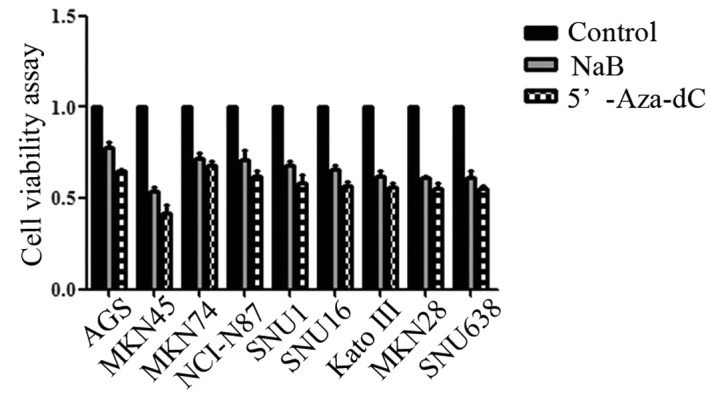
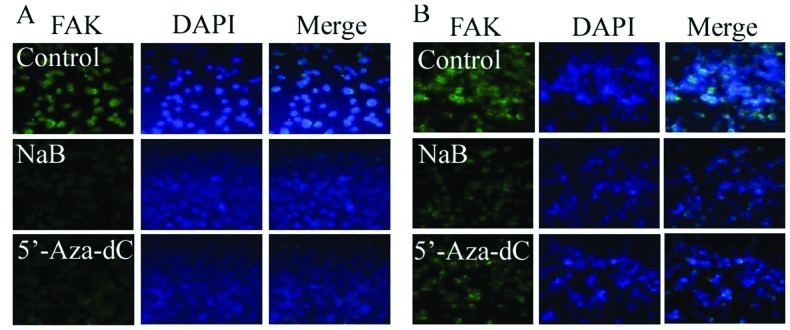
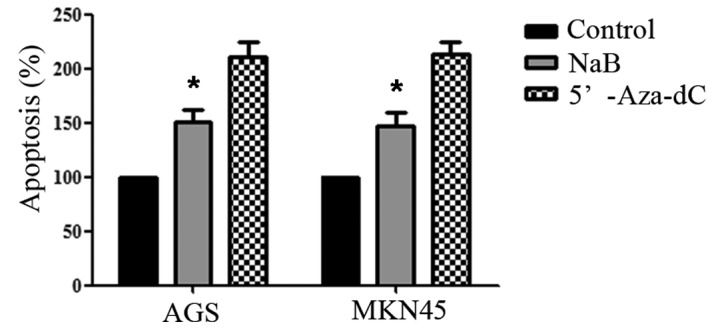
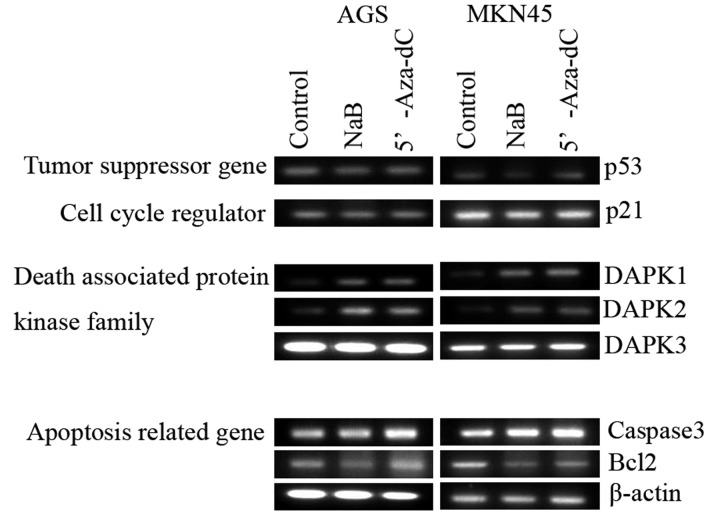
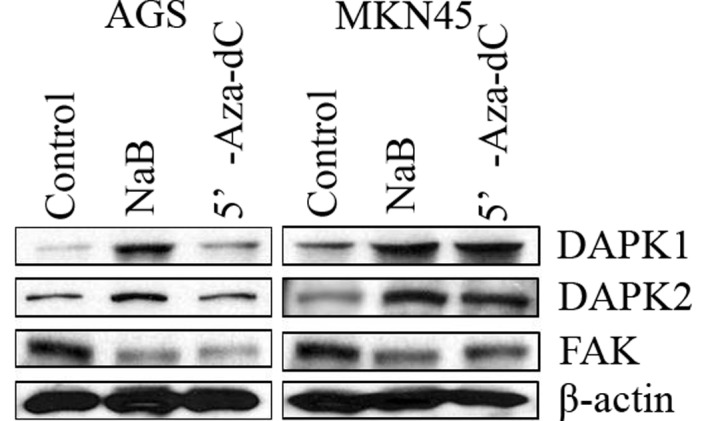
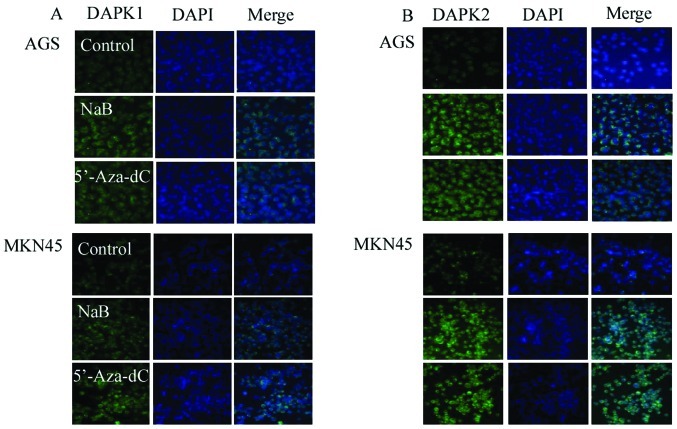
Epigenetic mechanisms of histone acetylation/deacetylation play an important role in the regulation of gene expression associated with the cell cycle and apoptosis. Recently, sodium butyrate, a histone deacetylase (HDAC) inhibitor, has been shown to exhibit anticancer effects via differentiation and apoptosis of cancer cells. Sodium butyrate may be a potential anticancer chemotherapeutic drug; however, the precise mechanism underlying the anticancer effects of sodium butyrate has not been clearly elucidated. In the present study, we investigated the role of death-associated protein kinase (DAPK) on the apoptosis of human gastric cancer cells induced by sodium butyrate. We observed that sodium butyrate induced apoptosis in human gastric cancer cells. Treatment with the HDAC inhibitor sodium butyrate increased the expression of caspase-3 and DAPK1/2 genes but decreased the expression of Bcl-2 in human gastric cancer cells. The expression of DAPK3, p53 and p21 were not altered by sodium butyrate treatment. Analysis of the general expression patterns revealed that sodium butyrate increased the expression of DAPK1/2 but decreased the expression of FAK and induced changes in the proliferation of apoptosis-related genes in human gastric cancer cells. These data suggest that DAPK expression prompts apoptosis by reducing the FAK protein level in sodium butyrate-induced apoptosis of human gastric cancer cells.
组蛋白乙酰化/去乙酰化的表观遗传机制在与细胞周期和细胞凋亡相关的基因表达调控中发挥着重要作用。最近,组蛋白去乙酰化酶(HDAC)抑制剂丁酸钠已被证明通过癌细胞的分化和凋亡发挥抗癌作用。丁酸钠可能是一种有潜力的抗癌化疗药物;然而,丁酸钠抗癌作用的确切机制尚未阐明。在本研究中,我们研究了死亡相关蛋白激酶(DAPK)在丁酸钠诱导的人胃癌细胞凋亡中的作用。我们观察到丁酸钠诱导人胃癌细胞凋亡。用 HDAC 抑制剂丁酸钠处理可增加人胃癌细胞中 caspase-3 和 DAPK1/2 基因的表达,但降低 Bcl-2 的表达。丁酸钠处理不改变 DAPK3、p53 和 p21 的表达。综合表达谱分析表明,丁酸钠增加了 DAPK1/2 的表达,降低了 FAK 的表达,并诱导人胃癌细胞中与增殖和凋亡相关基因的变化。这些数据表明,DAPK 表达通过降低 FAK 蛋白水平促进丁酸钠诱导的人胃癌细胞凋亡。