Department of Microbiology and Molecular Genetics, University of Pittsburgh School of Medicine, Pittsburgh, Pennsylvania, USA.
mBio. 2011 Dec 13;2(6). doi: 10.1128/mBio.00275-11. Print 2011.
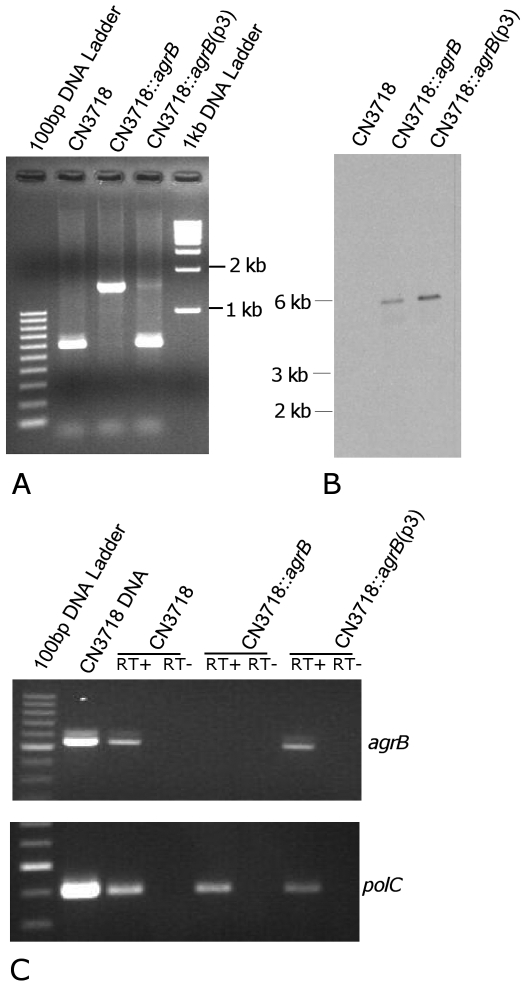
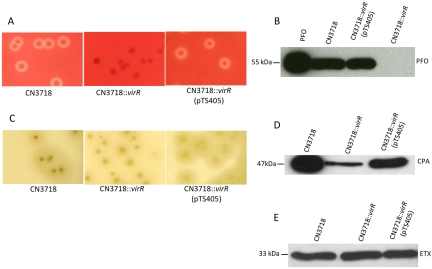
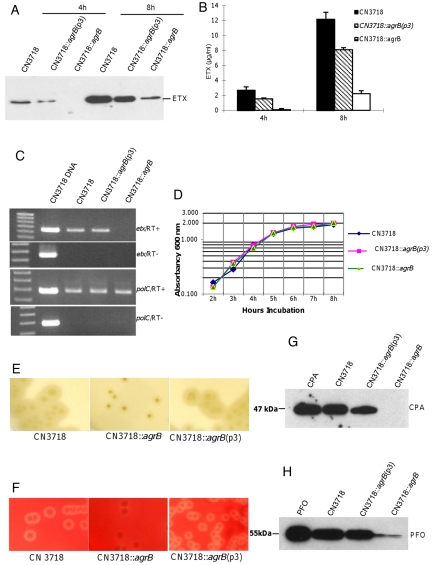
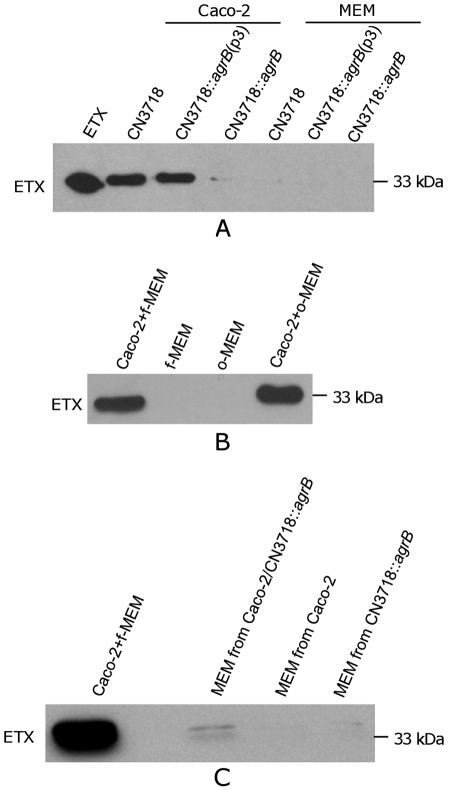
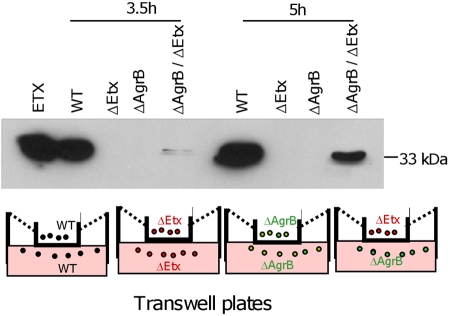
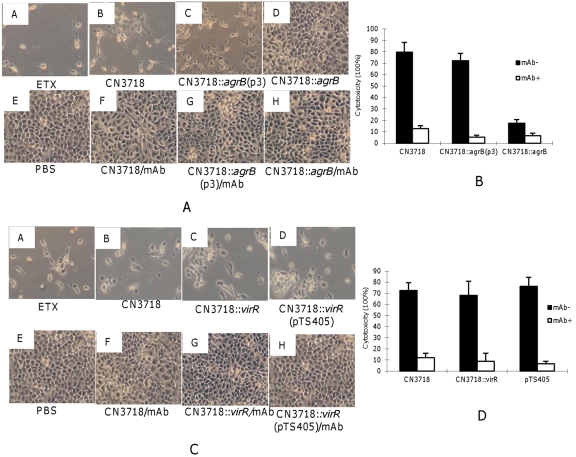
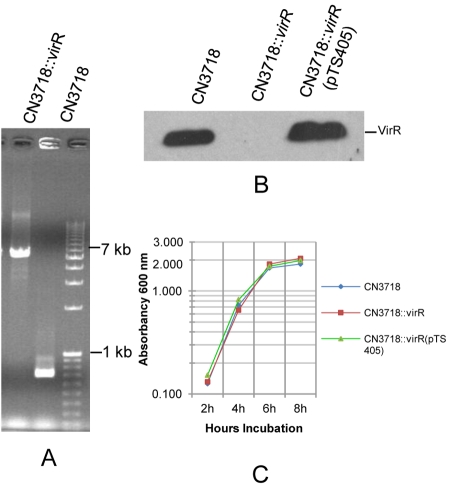
Clostridium perfringens type B and D strains cause enterotoxemias and enteritis in livestock after proliferating in the intestines and producing epsilon-toxin (ETX), alpha-toxin (CPA), and, usually, perfringolysin O (PFO). Although ETX is one of the most potent bacterial toxins, the regulation of ETX production by type B or D strains remains poorly understood. The present work determined that the type D strain CN3718 upregulates production of ETX upon close contact with enterocyte-like Caco-2 cells. This host cell-induced upregulation of ETX expression was mediated at the transcriptional level. Using an isogenic agrB null mutant and complemented strain, the agr operon was shown to be required when CN3718 produces ETX in broth culture or, via a secreted signal consistent with a quorum-sensing (QS) effect, upregulates ETX production upon contact with host cells. These findings provide the first insights into the regulation of ETX production, as well as additional evidence that the Agr-like QS system functions as a global regulator of C. perfringens toxin production. Since it was proposed previously that the Agr-like QS system regulates C. perfringens gene expression via the VirS/VirR two-component regulatory system, an isogenic virR null mutant of CN3718 was constructed to evaluate the importance of VirS/VirR for CN3718 toxin production. This mutation affected production of CPA and PFO, but not ETX, by CN3718. These results provide the first indication that C. perfringens toxin expression regulation by the Agr-like quorum-sensing system may not always act via the VirS/VirR two-component system. IMPORTANCE Mechanisms by which Clostridium perfringens type B and D strains regulate production of epsilon-toxin (ETX), a CDC class B select toxin, are poorly understood. Production of several other toxins expressed by C. perfringens is wholly or partially regulated by both the Agr-like quorum-sensing (QS) system and the VirS/VirR two-component regulatory system, so the present study tested whether ETX expression by type D strain CN3718 also requires these regulatory systems. The agr operon was shown to be essential for signaling CN3718 to produce ETX in broth culture or to upregulate ETX production upon close contact with enterocyte-like Caco-2 cells, which may have pathogenic relevance since ETX is produced intestinally. However, ETX production remained at wild-type levels after inactivation of the VirS/VirR system in CN3718. These findings provide the first information regarding regulation of ETX production and suggest Agr-like QS toxin production regulation in C. perfringens does not always require the VirS/VirR system.
产气荚膜梭菌 B 型和 D 型菌株在肠道内增殖并产生ε-毒素(ETX)、α-毒素(CPA)和通常的产气荚膜梭菌溶细胞素 O(PFO)后,会引起家畜的肠毒血症和肠炎。尽管 ETX 是最有效的细菌毒素之一,但 B 型或 D 型菌株对 ETX 产生的调控仍知之甚少。本研究表明,D 型菌株 CN3718 与肠细胞样 Caco-2 细胞密切接触时,会上调 ETX 的产生。这种宿主细胞诱导的 ETX 表达上调是在转录水平上进行的。通过使用同源的 agrB 缺失突变体和互补菌株,agr 操纵子被证明是必需的,当 CN3718 在肉汤培养物中或通过一致的群体感应(QS)效应的分泌信号,与宿主细胞接触时,上调 ETX 的产生。这些发现为 ETX 产生的调控提供了第一个见解,并提供了更多的证据表明 Agr 样 QS 系统作为产气荚膜梭菌毒素产生的全局调节剂发挥作用。由于先前提出 Agr 样 QS 系统通过 VirS/VirR 双组分调控系统来调节产气荚膜梭菌基因表达,因此构建了 CN3718 的同基因 virR 缺失突变体,以评估 VirS/VirR 对 CN3718 毒素产生的重要性。这种突变影响了 CN3718 的 CPA 和 PFO 的产生,但不影响 ETX 的产生。这些结果首次表明,Agr 样群体感应系统对产气荚膜梭菌毒素表达的调控可能并不总是通过 VirS/VirR 双组分系统进行的。
产气荚膜梭菌 B 型和 D 型菌株调节ε-毒素(ETX)产生的机制知之甚少,ETX 是一种 CDC 类 B 选择毒素。产气荚膜梭菌产生的其他几种毒素的表达完全或部分受到 Agr 样群体感应(QS)系统和 VirS/VirR 双组分调控系统的调控,因此本研究检测了 D 型菌株 CN3718 表达 ETX 是否也需要这些调控系统。agr 操纵子被证明是 CN3718 在肉汤培养物中产生 ETX 或与肠细胞样 Caco-2 细胞密切接触时上调 ETX 产生所必需的,这可能具有致病性意义,因为 ETX 是在肠道中产生的。然而,在 CN3718 中失活 VirS/VirR 系统后,ETX 的产生仍保持在野生型水平。这些发现提供了关于 ETX 产生调控的第一个信息,并表明 Agr 样 QS 毒素产生调控在产气荚膜梭菌中并不总是需要 VirS/VirR 系统。