Division of Endocrinology and Metabolism, Center for Osteoporosis and Metabolic Bone Diseases, Central Arkansas Veterans Healthcare System, University of Arkansas for Medical Sciences, Little Rock, AR 72205-7199, USA.
Endocrine. 2012 Apr;41(2):183-90. doi: 10.1007/s12020-011-9580-0. Epub 2011 Dec 15.
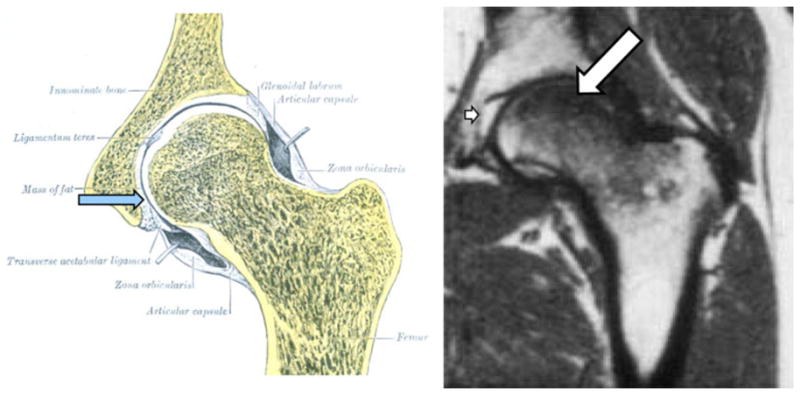
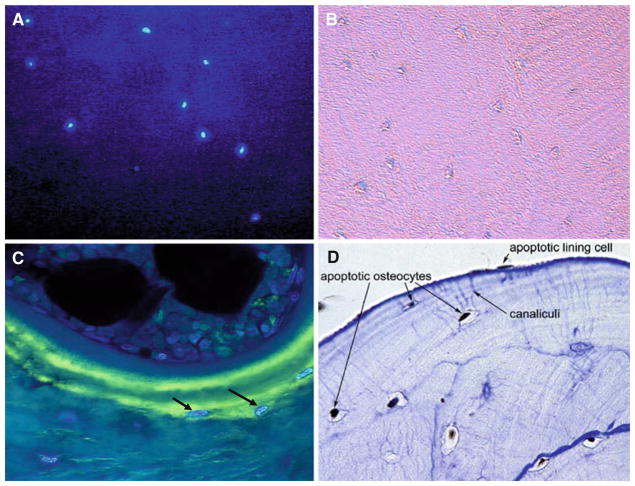
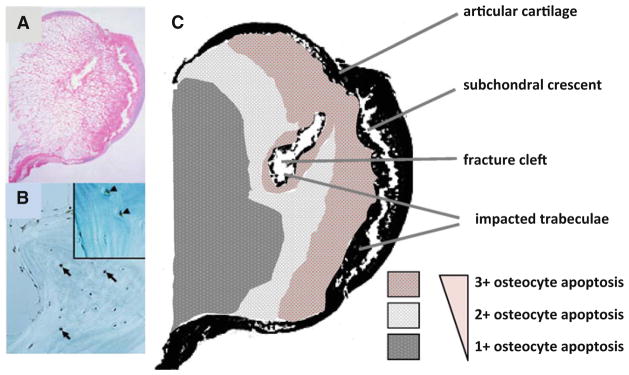
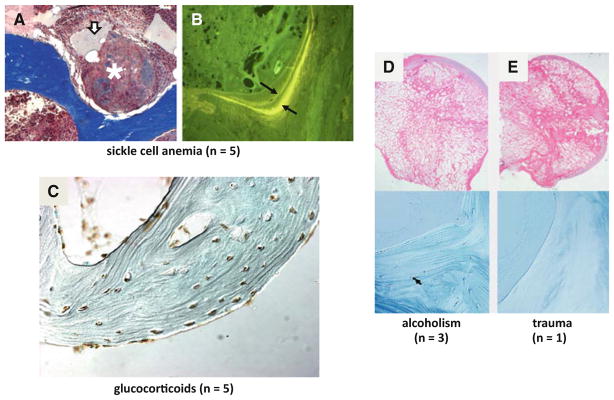
Awareness of the need for prevention of glucocorticoid-induced fractures is growing, but glucocorticoid administration is often overlooked as the most common cause of nontraumatic osteonecrosis. Glucocorticoid-induced osteonecrosis develops in 9-40% of patients receiving long-term therapy although it may also occur with short-term exposure to high doses, after intra-articular injection, and without glucocorticoid-induced osteoporosis. The name, osteonecrosis, is misleading because the primary histopathological lesion is osteocyte apoptosis. Apoptotic osteocytes persist because they are anatomically unavailable for phagocytosis and, with glucocorticoid excess, decreased bone remodeling retards their replacement. Glucocorticoid-induced osteocyte apoptosis, a cumulative and unrepairable defect, uniquely disrupts the mechanosensory function of the osteocyte-lacunar-canalicular system and thus starts the inexorable sequence of events leading to collapse of the femoral head. Current evidence indicates that bisphosphonates may rapidly reduce pain, increase ambulation, and delay joint collapse in patients with osteonecrosis.
人们日益认识到需要预防糖皮质激素引起的骨折,但糖皮质激素的应用常被忽视,它是引起非创伤性骨坏死的最常见原因。虽然骨坏死也可发生于短期大剂量应用或关节内注射后,并不伴有糖皮质激素诱导的骨质疏松症,但长期治疗中 9%-40%的患者会发生糖皮质激素诱导的骨坏死。骨坏死这一名称具有误导性,因为其主要的组织病理学病变是成骨细胞凋亡。凋亡的成骨细胞持续存在,因为它们在解剖学上无法被吞噬,而且在糖皮质激素过多的情况下,骨重建减少会延迟它们的替代。糖皮质激素诱导的成骨细胞凋亡是一种累积性的、不可修复的缺陷,它会特异性地破坏骨细胞-骨陷窝-骨小管系统的机械感觉功能,从而启动导致股骨头塌陷的不可避免的一系列事件。目前的证据表明,双膦酸盐类药物可能会迅速减轻疼痛、增加活动度并延迟骨坏死患者的关节塌陷。