AACD -Adult Physiotherapy, São Paulo, SP, Brazil.
Clinics (Sao Paulo). 2011;66(12):2043-8. doi: 10.1590/s1807-59322011001200008.
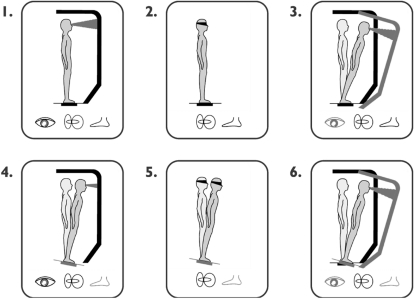
Impairments in balance can be a consequence of changes in the motor, sensory, and integrative aspects of motor control. Abnormal sensory reweighting, i.e., the ability to select the most appropriate sensory information to achieve postural stability, may contribute to balance impairment. The Sensory Organization Test is a component of Computerized Dynamic Posturography that evaluates the impact of visual, vestibular, and somatosensory inputs, as well as sensory reweighting, under conditions of sensory conflict. The aim of this study is to compare balance control in hemiparetic patients during the first year post-stroke and in age-matched neurologically normal subjects using the Berg Balance Scale and Computerized Dynamic Posturography.
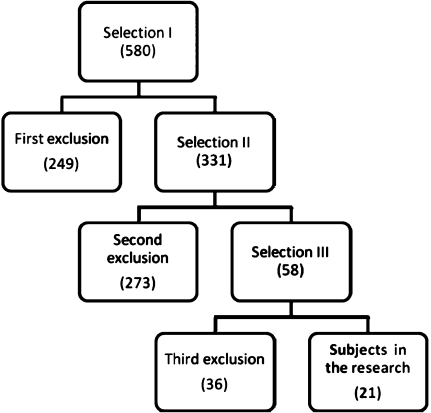
We compared the Berg Balance Scale and Sensory Organization Test scores in 21 patients with hemiparesis after first-ever ischemic stroke and in 21 age-matched, neurologically normal subjects. An equilibrium score was defined for each Sensory Organization Test condition.
Berg Balance Scale scores were significantly lower in the patients than in the neurologically normal subjects. Equilibrium scores were significantly lower in the patients than in the neurologically normal subjects for those Sensory Organization Test conditions that did not provide appropriate somatosensory information and under conditions of sensory conflict. A history of falls was more frequent in patients with lower equilibrium scores.
During the first year after a stroke, defective sensory reweighting significantly impacts balance control in hemiparetic patients. These results are important for the planning of effective rehabilitation interventions.
平衡障碍可能是运动、感觉和运动控制综合方面变化的结果。感觉再平衡异常,即选择最合适的感觉信息以实现姿势稳定性的能力,可能导致平衡障碍。感觉组织测试是计算机动态姿势描记法的一个组成部分,用于评估在感觉冲突条件下视觉、前庭和躯体感觉输入以及感觉再平衡的影响。本研究的目的是使用伯格平衡量表和计算机动态姿势描记法比较首次缺血性卒中后偏瘫患者和年龄匹配的神经正常受试者的平衡控制。
我们比较了 21 例首次缺血性卒中后偏瘫患者和 21 例年龄匹配的神经正常受试者的伯格平衡量表和感觉组织测试评分。为每个感觉组织测试条件定义了平衡评分。
患者的伯格平衡量表评分明显低于神经正常受试者。对于那些不能提供适当躯体感觉信息和感觉冲突条件下的感觉组织测试条件,患者的平衡评分明显低于神经正常受试者。平衡评分较低的患者跌倒史更为频繁。
在卒中后的第一年,感觉再平衡的缺陷会显著影响偏瘫患者的平衡控制。这些结果对于规划有效的康复干预措施很重要。