Ikeda T, Yanaga K, Lebeau G, Higashi H, Kakizoe S, Starzl T E
Department of Surgery, University Health Center of Pittsburgh, University of Pittsburgh, Pennsylvania.
Transplantation. 1990 Oct;50(4):564-7. doi: 10.1097/00007890-199010000-00006.
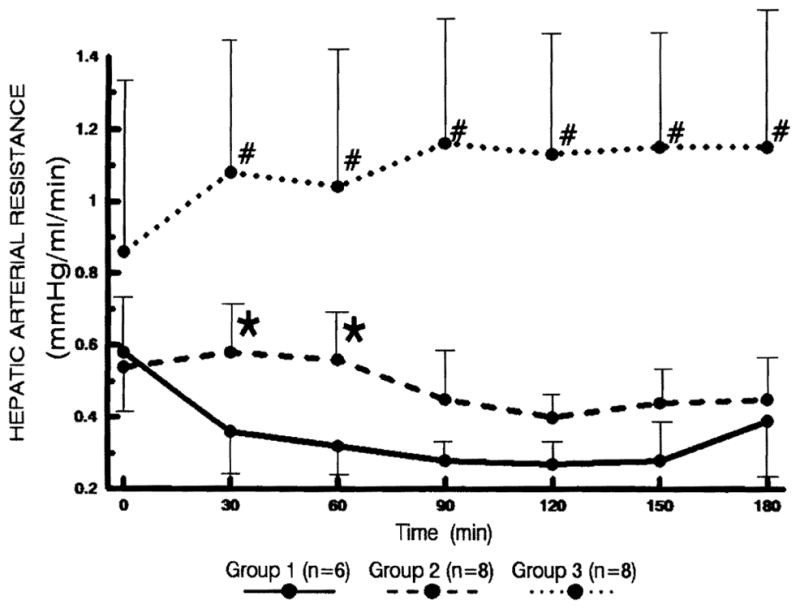
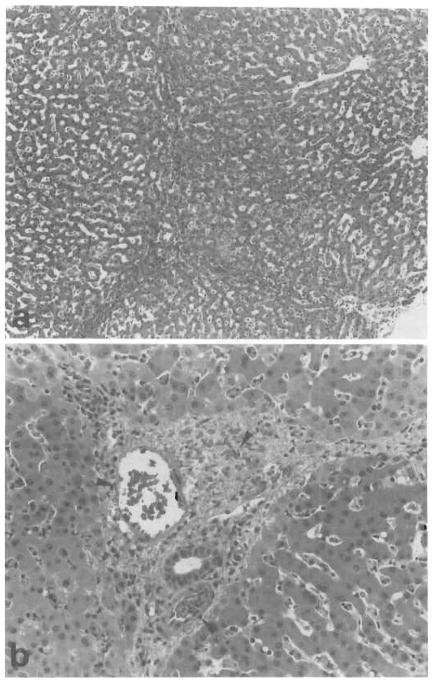
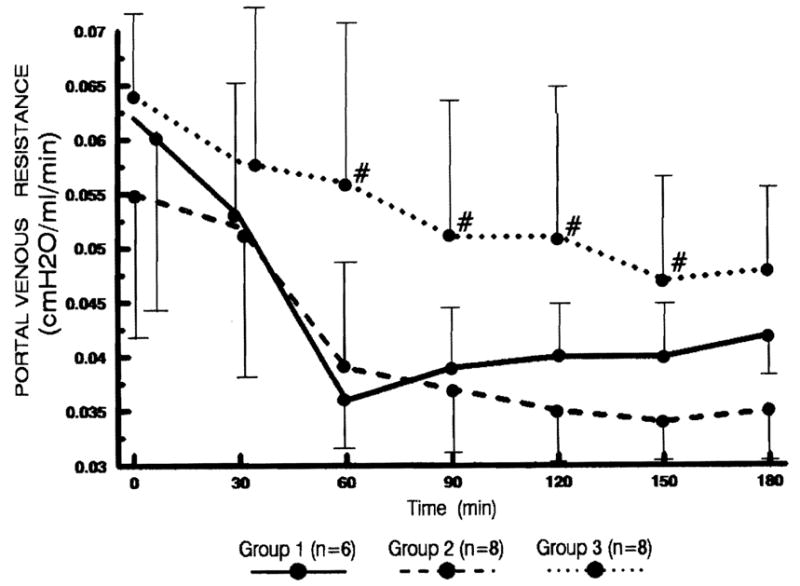
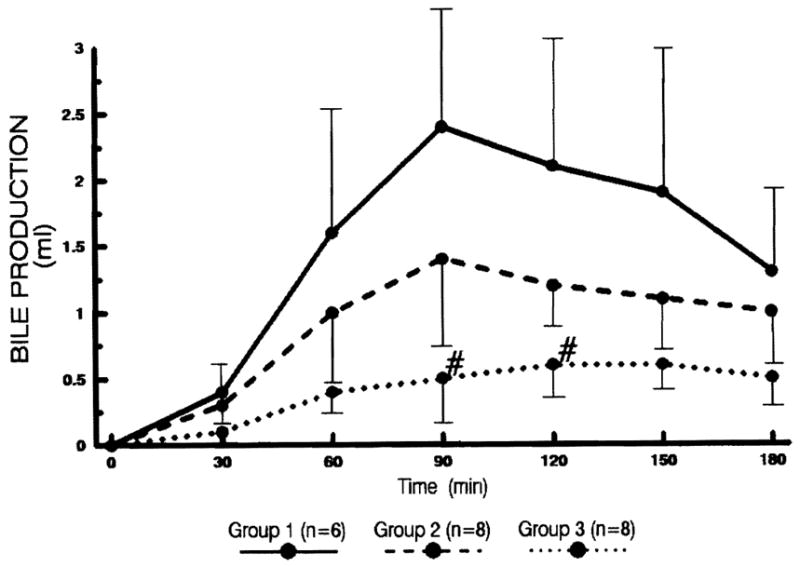
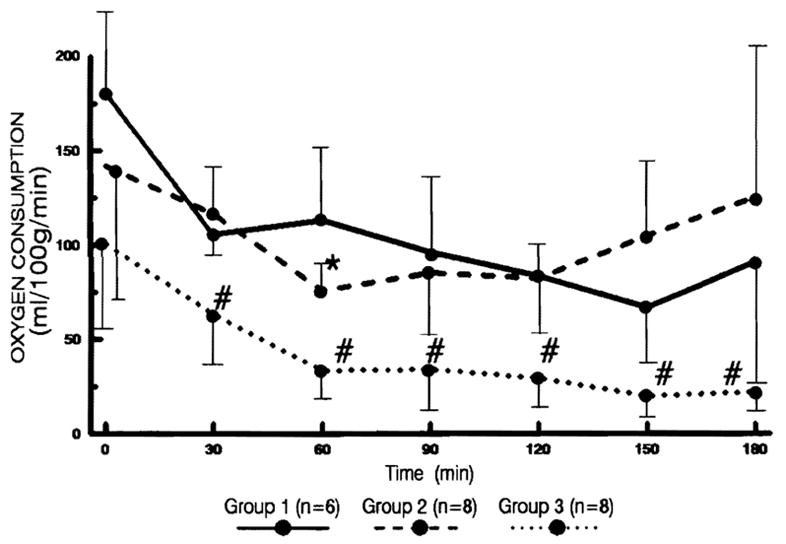
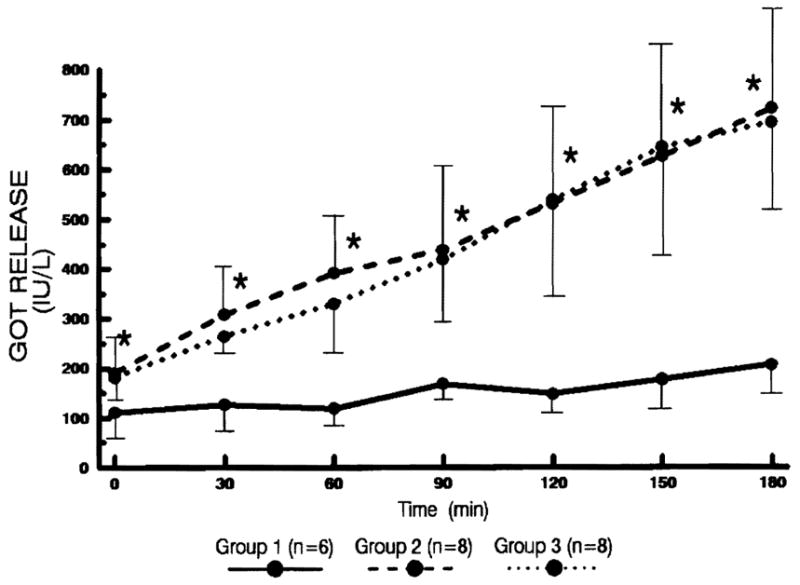
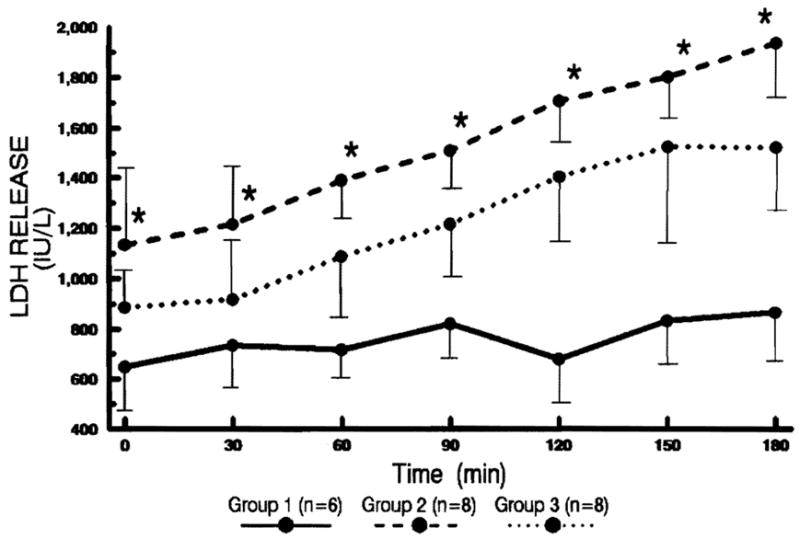
Using an ex vivo liver sanguinous perfusion system, hemodynamic and biochemical changes of the porcine livers were studied, which were preserved cold (4 degrees C) for 24 hr in University of Wisconsin solution and reperfused with normothermic (37 degrees C) (n = 8) or hypothermic (32 degrees C) (n = 8) blood for 3 hr. Six more livers were reperfused with normothermic blood (37 degrees C) immediately after procurement as controls. The total hepatic blood flow was adjusted to 1 ml/min/g liver weight, in which hepatic artery and portal vein flows were administered at a 1:2 ratio. In livers stored cold for 24 hr in UW solution and perfused normothermically, a statistically higher hepatic artery resistance was exhibited at 30 and 60 min after reperfusion (P less than 0.05), and there was lower bile output (P less than 0.05) at 90 and 120 min as compared to the controls. In livers stored cold for 24 hr in UW solution and perfused hypothermically, as compared to ones perfused normothermically, statistically higher hepatic-artery and portal-vein resistances (P less than 0.05) were observed throughout the perfusion period and 60 min after reperfusion, respectively. In addition, bile output and oxygen consumption of these livers were statistically lower than those of ones perfused normothermically (P less than 0.05). In contrast, chemistries of the perfusate of livers perfused hypothermically were comparable to ones perfused normothermically. Histologic examination of the liver perfused hypothermically demonstrated hepatic arterial and/or portal venous congestion and mild-to-moderate hemorrhage in the portal triads. This study suggests that livers preserved for a prolonged period of time demonstrate a high hepatic arterial resistance shortly after revascularization, and that recipient hypothermia after revascularization may be a risk factor for the development of hepatic arterial thrombosis following liver transplantation.
使用离体肝脏血液灌注系统,研究了猪肝脏的血流动力学和生化变化。这些肝脏在威斯康星大学溶液中于4℃冷藏保存24小时,然后用常温(37℃)(n = 8)或低温(32℃)(n = 8)血液再灌注3小时。另外6个肝脏在获取后立即用常温血液(37℃)再灌注作为对照。将肝脏总血流量调整为1 ml/(min·g肝脏重量),其中肝动脉和门静脉血流以1:2的比例给予。在UW溶液中冷藏保存24小时并进行常温灌注的肝脏中,再灌注后30分钟和60分钟时肝动脉阻力在统计学上较高(P < 0.05),与对照组相比,90分钟和120分钟时胆汁分泌量较低(P < 0.05)。在UW溶液中冷藏保存24小时并进行低温灌注的肝脏中,与常温灌注的肝脏相比,在整个灌注期和再灌注后60分钟时,分别观察到肝动脉和门静脉阻力在统计学上较高(P < 0.05)。此外,这些肝脏的胆汁分泌量和耗氧量在统计学上低于常温灌注的肝脏(P < 0.05)。相比之下,低温灌注肝脏的灌注液化学成分与常温灌注的相当。对低温灌注肝脏的组织学检查显示肝动脉和/或门静脉充血以及门三联管区轻度至中度出血。本研究表明,长时间保存的肝脏在血管再通后不久表现出较高的肝动脉阻力,并且血管再通后受体低温可能是肝移植后肝动脉血栓形成的一个危险因素。