Department of Pathology, University of Massachusetts Medical School, Worcester, Massachusetts, USA.
Nat Immunol. 2011 Dec 25;13(2):129-35. doi: 10.1038/ni.2203.
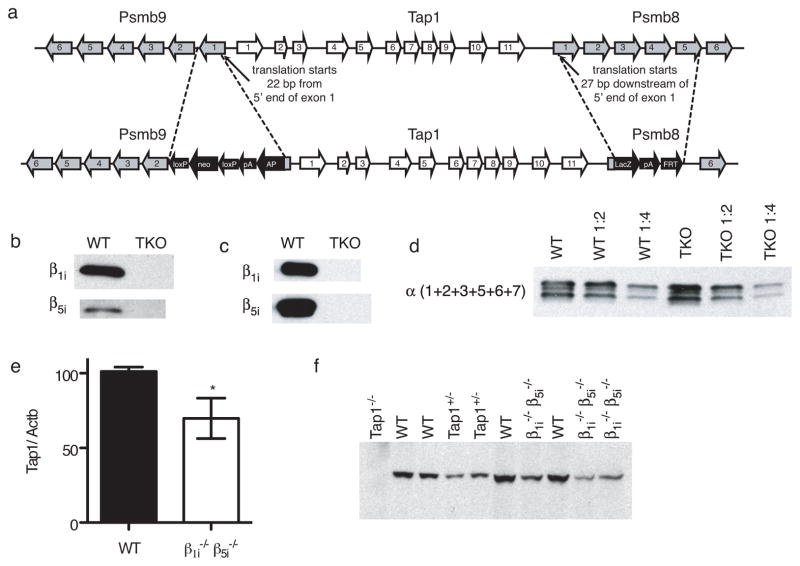
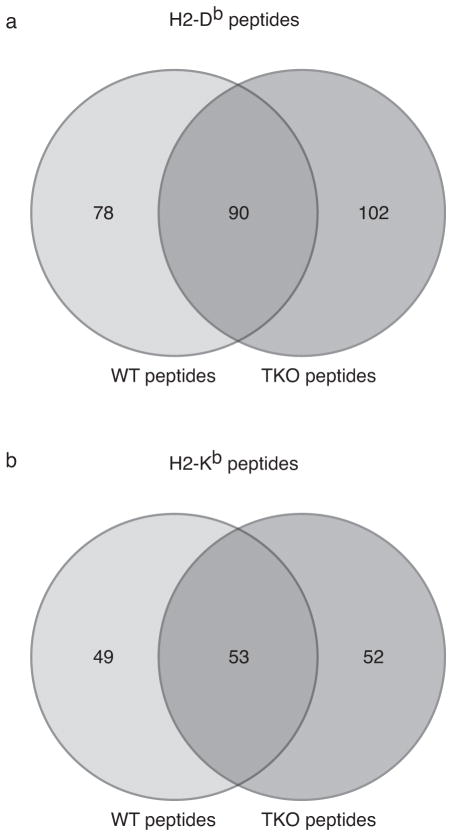
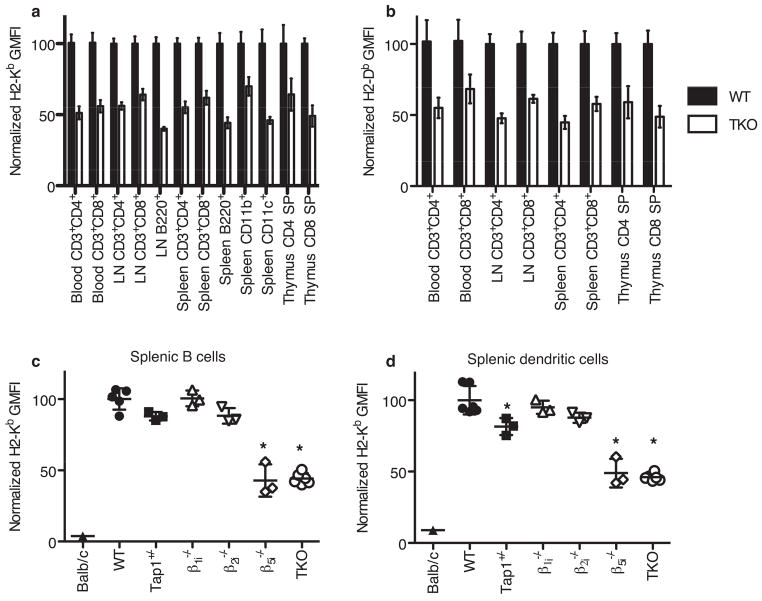
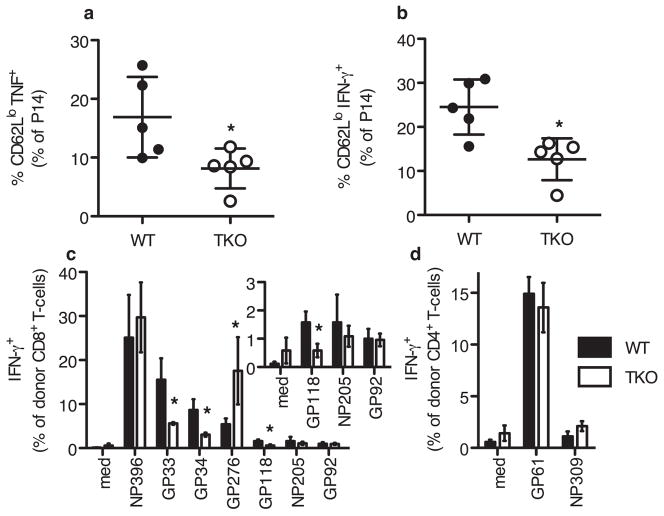
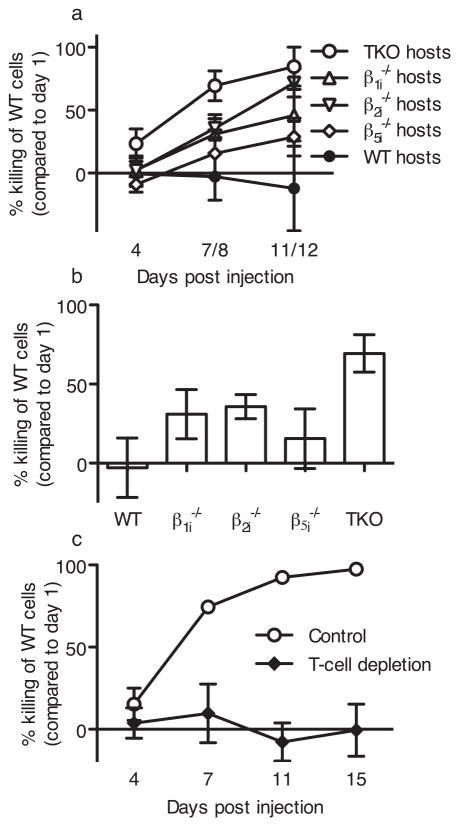
The importance of immunoproteasomes to antigen presentation has been unclear because animals totally lacking immunoproteasomes had not been available. Having now developed mice lacking the three immunoproteasome catalytic subunits, we found that the dendritic cells of these mice had defects in presenting several major histocompatibility complex (MHC) class I epitopes. During viral infection in vivo, the presentation of a majority of MHC class I epitopes was markedly reduced in immunoproteasome-deficient animals compared with wild-type animals, whereas presentation of MHC class II peptides was unaffected. According to mass spectrometry, the repertoire of MHC class I-presented peptides was ∼50% different from that in wild-type mice, and these differences were sufficient to stimulate robust transplant rejection of wild-type cells in mutant mice. These results indicated that immunoproteasomes were more important in antigen presentation than previously thought.
免疫蛋白酶体对于抗原呈递的重要性一直不清楚,因为缺乏完全缺乏免疫蛋白酶体的动物。现在已经开发出缺乏三种免疫蛋白酶体催化亚基的小鼠,我们发现这些小鼠的树突状细胞在呈现几种主要组织相容性复合物 (MHC) Ⅰ类表位时存在缺陷。在体内病毒感染期间,与野生型动物相比,免疫蛋白酶体缺陷动物中大多数 MHC Ⅰ类表位的呈递明显减少,而 MHC Ⅱ类肽的呈递不受影响。根据质谱分析,MHC Ⅰ类呈递肽的谱大约有 50%与野生型小鼠不同,这些差异足以刺激突变小鼠中对野生型细胞的强烈移植排斥反应。这些结果表明,免疫蛋白酶体在抗原呈递中的作用比以前认为的更为重要。