Stewart Coats Andrew J, Srinivasan Venkatesan, Surendran Jayaraman, Chiramana Haritha, Vangipuram Shankar R K G, Bhatt Nirajkumar N, Jain Minish, Shah Sandip, Ali Irfhan A B H, Fuang Ho G, Hassan Mohammed Z M, Beadle John, Tilson Julia, Kirwan Bridget-Anne, Anker Stefan D
J Cachexia Sarcopenia Muscle. 2011 Dec;2(4):201-207. doi: 10.1007/s13539-011-0046-2. Epub 2011 Oct 16.
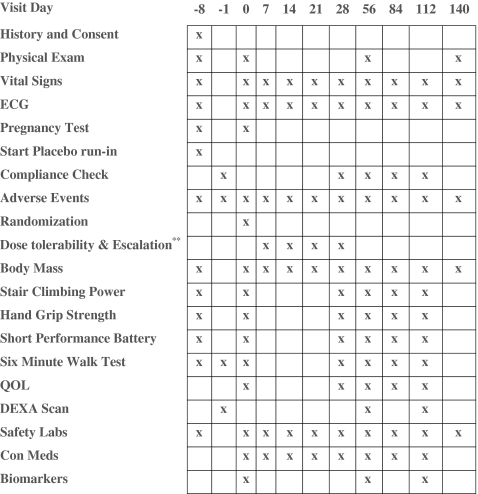
Cachexia, the wasting disorder associated with a wide range of serious illnesses including cancer, is a major cause of morbidity and mortality. There is currently no widely approved therapeutic agent for treating or preventing cancer-associated cachexia. Colorectal cancer and non-small cell lung cancer have relatively high incidences of cachexia, approximately 28% and 34%, respectively. Neurohormonal overactivity has been implicated in the genesis and progression of cachexia and beta receptor antagonism has been proposed as a potential therapy. MT-102, a novel anabolic/catabolic transforming agent, has a multi-functional effect upon three potential pharmacological targets in cancer cachexia, namely reduced catabolism through non-selective β-blockade, reduced fatigue, and thermogenesis through central 5-HT1a antagonism and increased anabolism through partial β-2 receptor agonism. METHODS: At least 132 male and female patients, aged between 25 and 80 years with a confirmed diagnosis of late-stage non-small cell lung cancer or colorectal cancer, with cachexia will be randomised to either one of the two MT-102 doses or placebo in a 3:1:2 ratio (MT-102 10 mg BD(-1)/MT-102 2.5 mg BD/placebo). Patients will continue on study treatment for maximally 16 weeks. The primary endpoint, to be analysed by assigned treatment group, will be body weight change over 16 weeks. For this endpoint, the study has 85% power (0.05% significance level) to detect per 4-week period a mean change of -0.8 kg in the placebo group and 0 kg in the high-dose MT-102 arm. The first patient was randomised in February 2011 and patient recruitment is expected to continue until mid-2012. PERSPECTIVE: The ACT-ONE trial is designed to test whether the anabolic/catabolic transforming agent MT-102 will positively impact on the rate of change of body weight in cancer cachexia, thereby evaluating a novel therapeutic strategy in this hitherto poorly treatable condition. A separate ACT-TWO trial will recruit patients who complete the ACT-ONE trial and remain on randomised double-blind medication. Participants in ACT-TWO will be followed for an additional period with a separate primary endpoint.
恶病质是一种与包括癌症在内的多种严重疾病相关的消耗性疾病,是发病和死亡的主要原因。目前尚无广泛认可的治疗或预防癌症相关性恶病质的治疗药物。结直肠癌和非小细胞肺癌的恶病质发生率相对较高,分别约为28%和34%。神经激素过度活跃与恶病质的发生和发展有关,β受体拮抗作用已被提出作为一种潜在的治疗方法。MT-102是一种新型的合成代谢/分解代谢转化剂,对癌症恶病质的三个潜在药理学靶点具有多功能作用,即通过非选择性β阻断减少分解代谢、通过中枢5-HT1a拮抗作用减轻疲劳和产热以及通过部分β-2受体激动作用增加合成代谢。方法:至少132名年龄在25至80岁之间、确诊为晚期非小细胞肺癌或结直肠癌且患有恶病质的男性和女性患者将以3:1:2的比例随机分配至两种MT-102剂量之一或安慰剂组(MT-102 10mg BD(-1)/MT-102 2.5mg BD/安慰剂)。患者将持续接受研究治疗最长16周。主要终点将按指定治疗组进行分析,即16周内的体重变化。对于该终点,该研究有85%的把握度(0.05%显著性水平)在每4周期间检测到安慰剂组平均变化-0.8kg,高剂量MT-102组平均变化0kg。首例患者于2011年2月随机分组,预计患者招募将持续至2012年年中。前景:ACT-ONE试验旨在测试合成代谢/分解代谢转化剂MT-102是否会对癌症恶病质患者的体重变化率产生积极影响,从而评估在这种迄今难以治疗的疾病中的一种新型治疗策略。一项单独的ACT-TWO试验将招募完成ACT-ONE试验并继续接受随机双盲药物治疗的患者。ACT-TWO的参与者将在另外一段时间内进行随访,有一个单独的主要终点。