Karaarslan Emine Sirin, Usumez Aslihan, Ozturk Bora, Cebe Mehmet Ata
Department of Operative Dentistry, Faculty of Dentistry, Gaziantep University, Gaziantep, TURKIYE.
Eur J Dent. 2012 Jan;6(1):87-94.
This study aimed to evaluate the extent of microleakage of a single type of composite resin (Clearfil Majesty Posterior, Kuraray, Osaka, Japan) following different preheating procedures in Class V cavities prepared with a diamond bur or Er:YAG (erbium: yttrium aluminum garnet) laser.
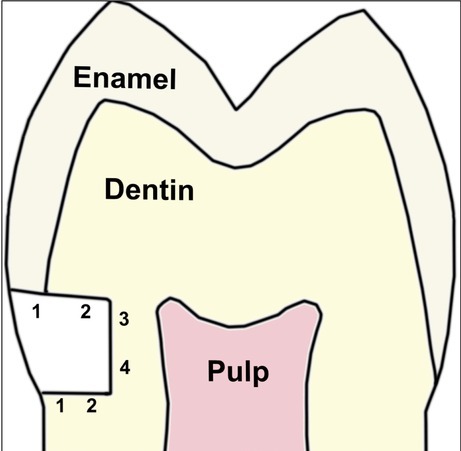
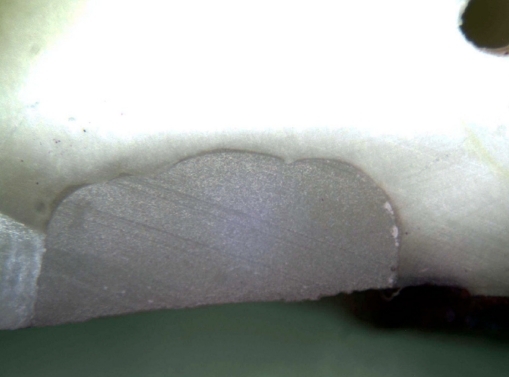
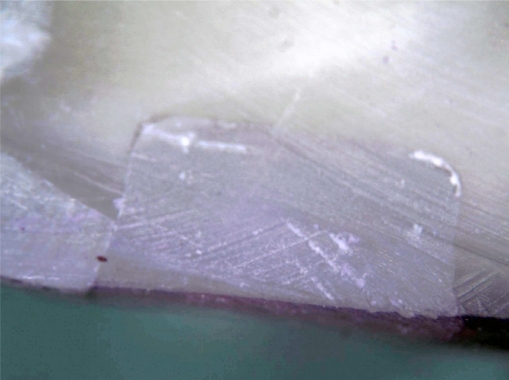
The study randomly divided 72 permanent molar teeth divided into eight groups (n = 9): G1: Diamond bur-unheated composite resin (room temperature-24 ºC); G2: Diamond bur-composite preheated to 37 ºC; G3: Diamond bur-composite preheated to 54 ºC; G4: Diamond bur-composite preheated to 68 ºC; G5: Er:YAG laser-unheated composite resin (room temperature-24 ºC); G6: Er:YAG laser-composite preheated to 37 ºC; G7: Er:YAG laser-composite preheated to 54 ºC; and G8: Er:YAG laser-composite preheated to 68 ºC. The specimens were subjected to a thermal cycling regimen of 5000 cycles between 5 and 55 ºC; then they were immersed in a solution of 0.5% basic fuchsin dye for 24 hours. The dyed specimens were sectioned in the buccolingual direction and dye penetration was scored in a blinded manner using a five-point qualitative scale. Microleakage scores were analyzed with the Kruskall-Wallis, Mann-Whitney U, and Wilcoxon tests.
There were no statistically significant differences between the microleakages of composite applied to cavities prepared by either the Er:YAG laser or diamond bur (P>.05). Statistical analysis revealed significant differences between the enamel and dentin in all restorations (P<.001). However, there were no significant differences among the preheated groups (P>.05).
For all groups, microleakage values were higher at gingival margins than at occlusal margins. The use of the Er:YAG laser at different preheating procedures did not influence the marginal sealing in Class V composite resin restorations.
本研究旨在评估在使用金刚石车针或铒:钇铝石榴石(Er:YAG)激光制备的Ⅴ类窝洞中,一种复合树脂(Clearfil Majesty Posterior,可乐丽公司,日本大阪)在不同预热程序后的微渗漏程度。
本研究将72颗恒磨牙随机分为八组(n = 9):G1:金刚石车针-未预热复合树脂(室温-24℃);G2:金刚石车针-复合树脂预热至37℃;G3:金刚石车针-复合树脂预热至54℃;G4:金刚石车针-复合树脂预热至68℃;G5:Er:YAG激光-未预热复合树脂(室温-24℃);G6:Er:YAG激光-复合树脂预热至37℃;G7:Er:YAG激光-复合树脂预热至54℃;G8:Er:YAG激光-复合树脂预热至68℃。将标本在5至55℃之间进行5000次热循环处理;然后将它们浸入0.5%碱性品红染料溶液中24小时。将染色后的标本沿颊舌方向切片,并采用五点定性量表以盲法对染料渗透情况进行评分。使用Kruskal-Wallis、Mann-Whitney U和Wilcoxon检验对微渗漏评分进行分析。
应用于Er:YAG激光或金刚石车针制备的窝洞中的复合树脂的微渗漏之间无统计学显著差异(P>0.05)。统计分析显示,所有修复体的釉质和牙本质之间存在显著差异(P<0.001)。然而,预热组之间无显著差异(P>0.05)。
对于所有组,牙龈边缘的微渗漏值高于咬合边缘。在不同预热程序下使用Er:YAG激光不影响Ⅴ类复合树脂修复体的边缘封闭性。