Masoumi K C, Shaw-Hallgren Gina, Massoumi Ramin
Molecular Tumor Pathology, Department of Laboratory Medicine, Lund University, Skåne University Hospital, 205 02 Malmö, Sweden.
J Skin Cancer. 2011;2011:614097. doi: 10.1155/2011/614097. Epub 2011 Dec 17.
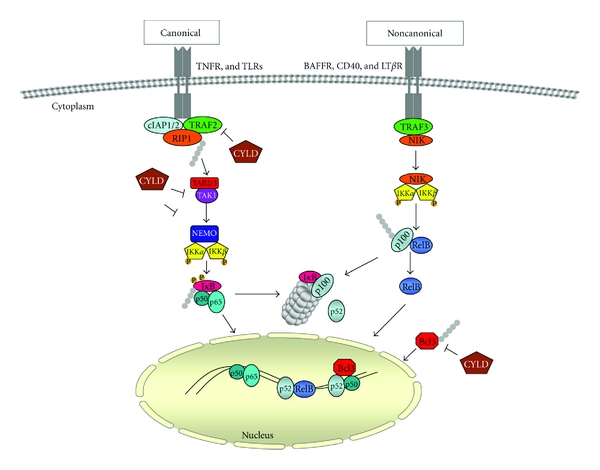
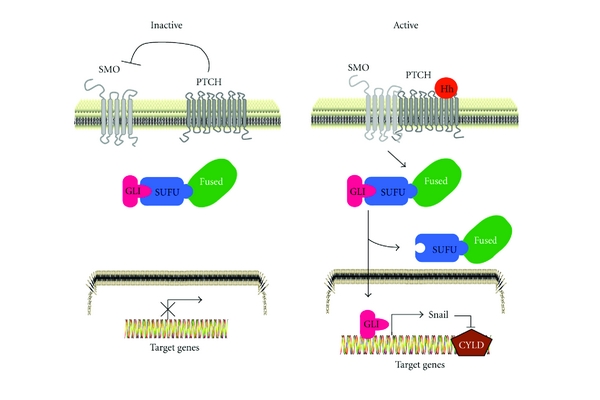
Ubiquitin and ubiquitin-related proteins posttranslationally modify substrates, and thereby alter the functions of their targets. The ubiquitination process is involved in various physiological responses, and dysregulation of components of the ubiquitin system has been linked to many diseases including skin cancer. The ubiquitin pathways activated among skin cancers are highly diverse and may reflect the various characteristics of the cancer type. Basal cell carcinoma and squamous cell carcinoma, the most common types of human skin cancer, are instances where the involvement of the deubiquitination enzyme CYLD has been recently highlighted. In basal cell carcinoma, the tumor suppressor protein CYLD is repressed at the transcriptional levels through hedgehog signaling pathway. Downregulation of CYLD in basal cell carcinoma was also shown to interfere with TrkC expression and signaling, thereby promoting cancer progression. By contrast, the level of CYLD is unchanged in squamous cell carcinoma, instead, catalytic inactivation of CYLD in the skin has been linked to the development of squamous cell carcinoma. This paper will focus on the current knowledge that links CYLD to nonmelanoma skin cancers and will explore recent insights regarding CYLD regulation of NF-κB and hedgehog signaling during the development and progression of these types of human tumors.
泛素及泛素相关蛋白可对底物进行翻译后修饰,从而改变其靶标的功能。泛素化过程参与多种生理反应,泛素系统各组分的失调与包括皮肤癌在内的多种疾病相关。皮肤癌中激活的泛素途径高度多样,可能反映了癌症类型的各种特征。基底细胞癌和鳞状细胞癌是人类最常见的皮肤癌类型,最近有研究突出显示了去泛素化酶CYLD在其中的作用。在基底细胞癌中,肿瘤抑制蛋白CYLD通过刺猬信号通路在转录水平受到抑制。基底细胞癌中CYLD的下调还被证明会干扰TrkC的表达和信号传导,从而促进癌症进展。相比之下,CYLD的水平在鳞状细胞癌中没有变化,相反,皮肤中CYLD的催化失活与鳞状细胞癌的发生有关。本文将聚焦于目前将CYLD与非黑色素瘤皮肤癌联系起来的知识,并探讨关于CYLD在这些类型的人类肿瘤发生和进展过程中对NF-κB和刺猬信号通路调控的最新见解。