National Centre for Cell Science, NCCS Complex, Pune University Campus, Ganeshkhind, Pune - 411007, India.
Cell Biosci. 2012 Jan 13;2:2. doi: 10.1186/2045-3701-2-2.
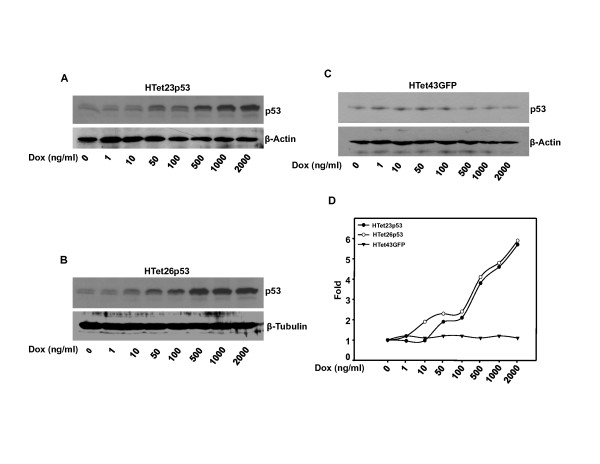
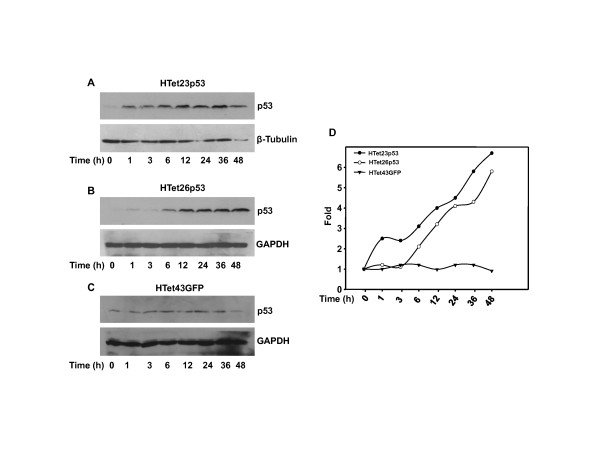
In HPV infected cells p53 function is abrogated by E6 and even ectopically expressed p53 is unable to perform tumor suppressor functions. In addition to facilitating its degradation, E6 may also inhibit p53 transactivity, though the mechanisms are still poorly understood. It has been reported that inhibition of p300, an acetyltransferase responsible for p53 acetylation is inactivated by E6. Activation of overexpressed p53 to cause cell growth inhibition is facilitated by its phosphorylation. Previously, we reported that non-genotoxically overexpressed p53 in HeLa cells needs to be phosphorylated to perform its cell growth inhibitory functions. Since over expressed p53 by itself was not activated, we hypothesized an inhibitory role for E6.
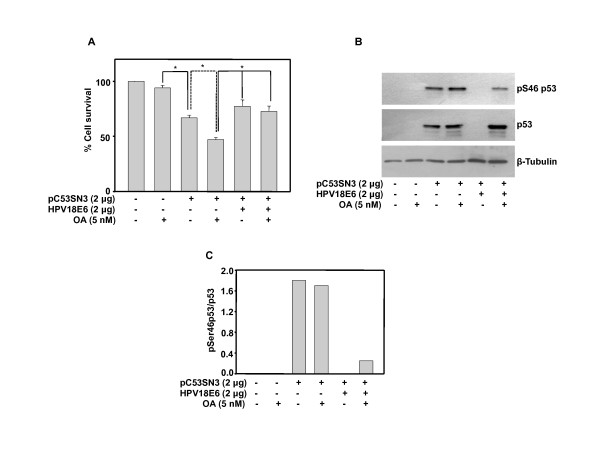
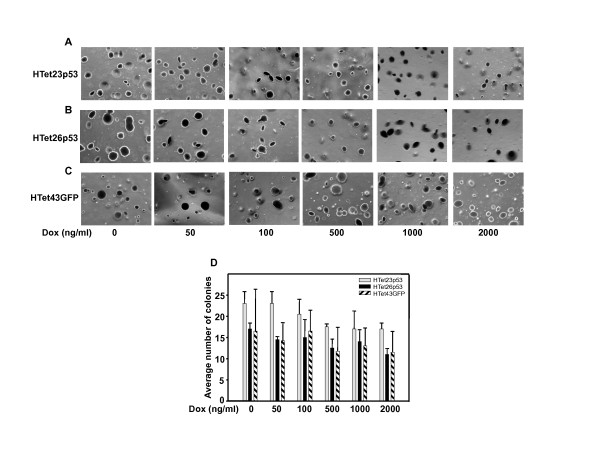
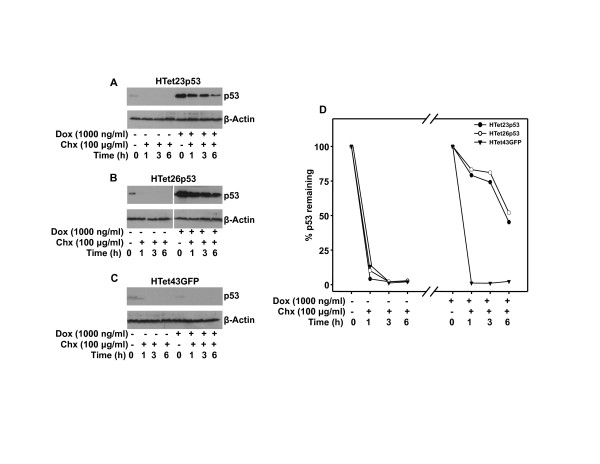
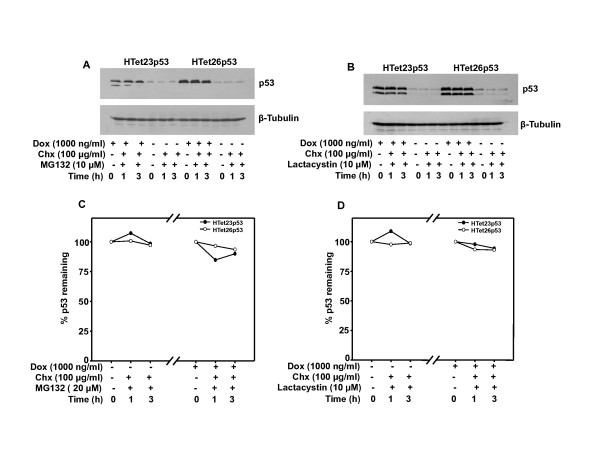
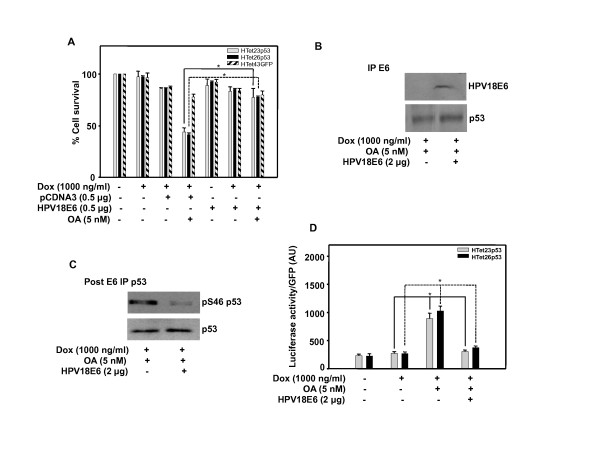
Majority of reports proposes E6 mediated degradation of p53 as a possible reason for its inactivation. However, results presented here for the first time demonstrate that overexpressed p53 is not directly associated with E6 and therefore free, yet it is not functionally active in HPV positive cells. Also, the stability of overexpressed p53 does not seem to be an issue because inhibition of proteasomal degradation did not increase the half-life of overexpressed p53, which is more than endogenous p53. However, inhibition of proteasomal degradation prevents the degradation of endogenous p53. These findings suggest that overexpressed p53 and endogenous p53 are differentially subjected to proteasomal degradation and the reasons for this discrepancy remain unclear. Our studies demonstrate that p53 over expression has no effect on anchorage independent cell-growth and E6 nullifies its cell growth inhibitory effect. E6 overexpression abrogates OA induced p53 occupancy on the p21 promoter and cell death as well. E6 did not decrease p53 protein but phospho-p53 level was significantly reduced.
We report for the first time that E6 de-activates p53 by inhibiting its phosphorylation. This prevents p53 binding to p21 promoter and thereby restraining its cell-growth inhibitory functions. Our study provides new evidence indicating that viral protein E6 inhibits p53 transactivity by mechanism independent of degradation pathway.
在 HPV 感染的细胞中,p53 功能被 E6 废除,即使异位表达的 p53 也无法发挥肿瘤抑制功能。除了促进其降解外,E6 还可能抑制 p53 的转录活性,但机制仍不清楚。据报道,E6 使负责 p53 乙酰化的乙酰转移酶 p300 失活。通过其磷酸化来激活过表达的 p53 以引起细胞生长抑制。以前,我们报道过在 HeLa 细胞中非遗传毒性过表达的 p53 需要磷酸化才能发挥其细胞生长抑制功能。由于过表达的 p53 本身没有被激活,我们假设 E6 起抑制作用。
大多数报道提出 E6 介导的 p53 降解是其失活的可能原因。然而,这里首次展示的结果表明,过表达的 p53 与 E6 没有直接关联,因此是游离的,但在 HPV 阳性细胞中没有功能活性。此外,过表达的 p53 的稳定性似乎不是问题,因为抑制蛋白酶体降解并没有增加过表达的 p53 的半衰期,超过了内源性 p53。然而,抑制蛋白酶体降解可防止内源性 p53 的降解。这些发现表明,过表达的 p53 和内源性 p53 受到蛋白酶体降解的差异影响,其原因尚不清楚。我们的研究表明,p53 过表达对无锚定细胞生长没有影响,而 E6 使它的细胞生长抑制作用失效。E6 过表达还使 OA 诱导的 p53 占据 p21 启动子和细胞死亡失效。E6 没有减少 p53 蛋白,但磷酸化 p53 水平显著降低。
我们首次报告 E6 通过抑制其磷酸化使 p53 失活。这阻止了 p53 与 p21 启动子结合,从而抑制其细胞生长抑制功能。我们的研究提供了新的证据,表明病毒蛋白 E6 通过独立于降解途径的机制抑制 p53 的转录活性。