Institute for Cancer Research and Treatment (IRCC), University of Torino Medical School, Candiolo, Italy.
EMBO Mol Med. 2012 Mar;4(3):234-50. doi: 10.1002/emmm.201100205. Epub 2012 Jan 13.
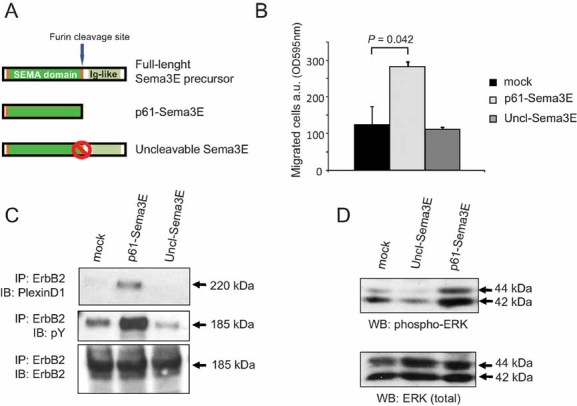
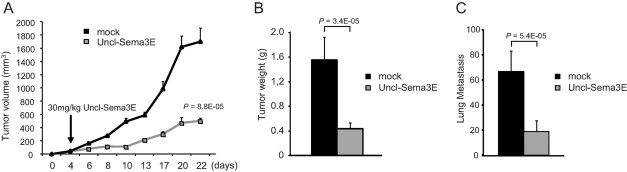
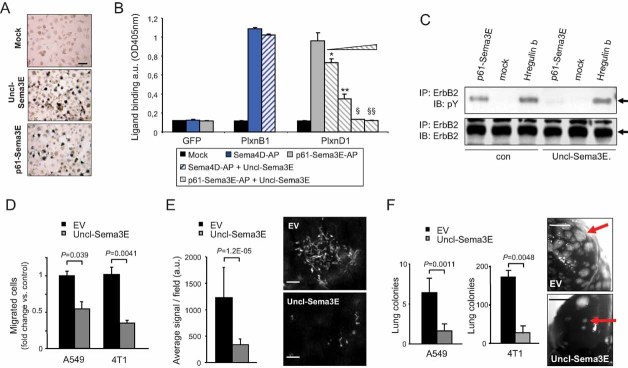
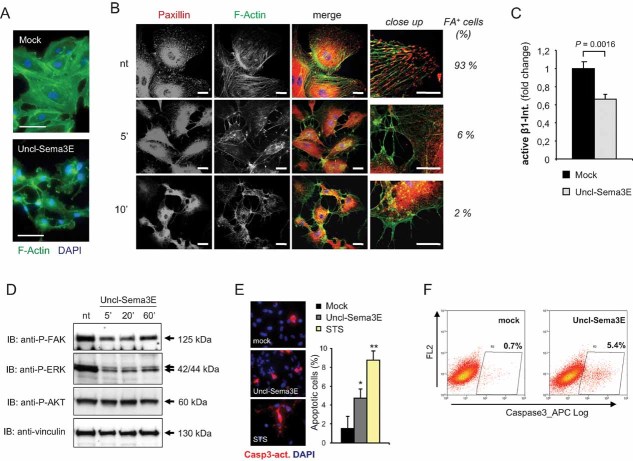
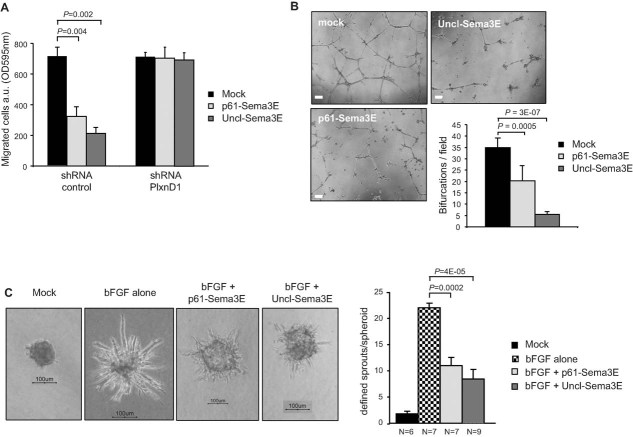
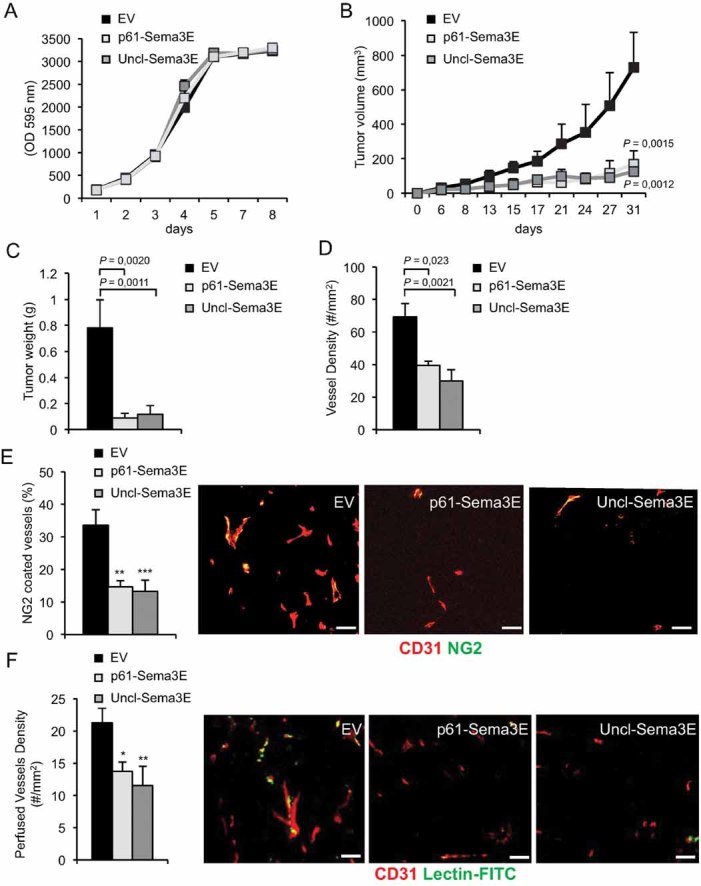
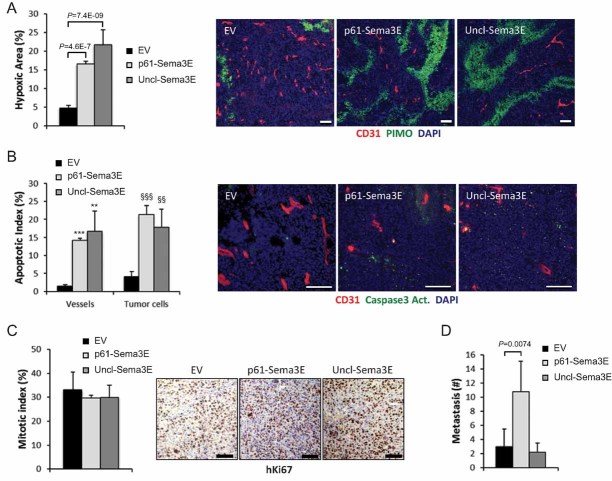
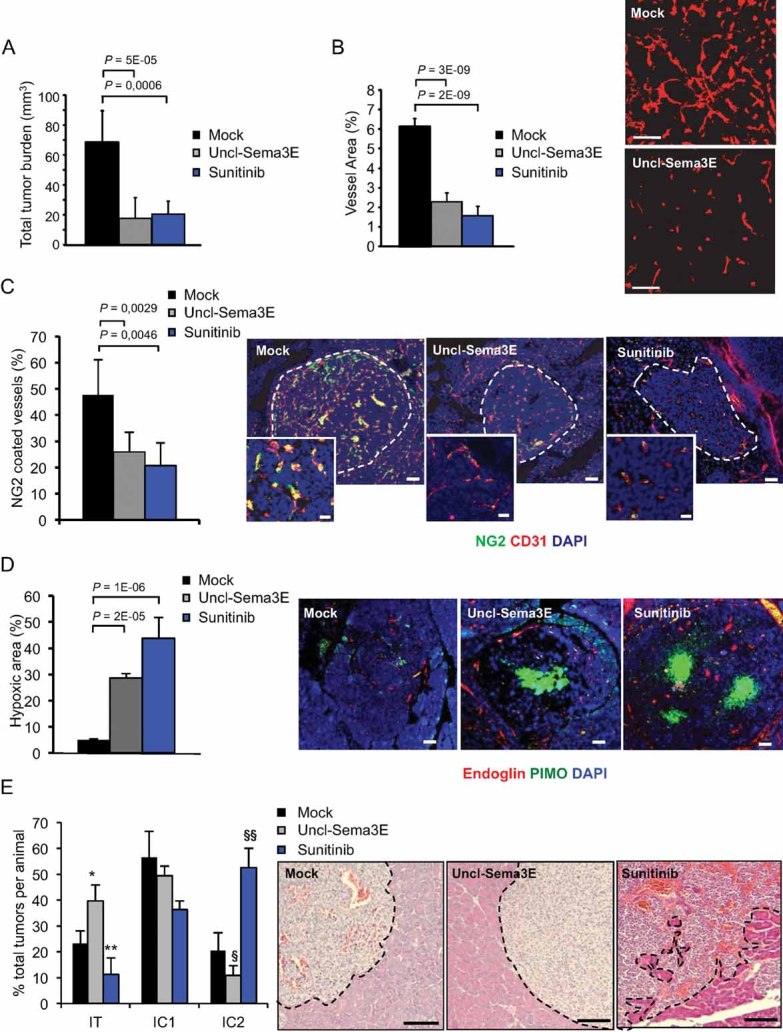
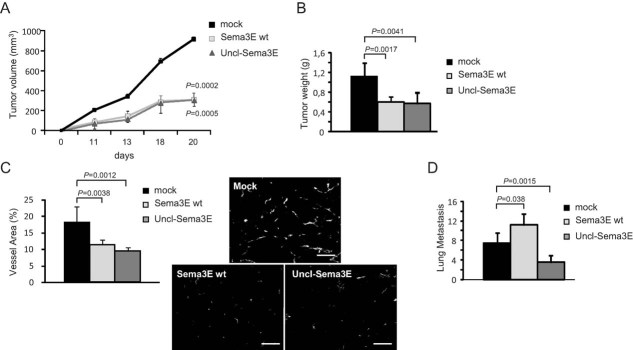
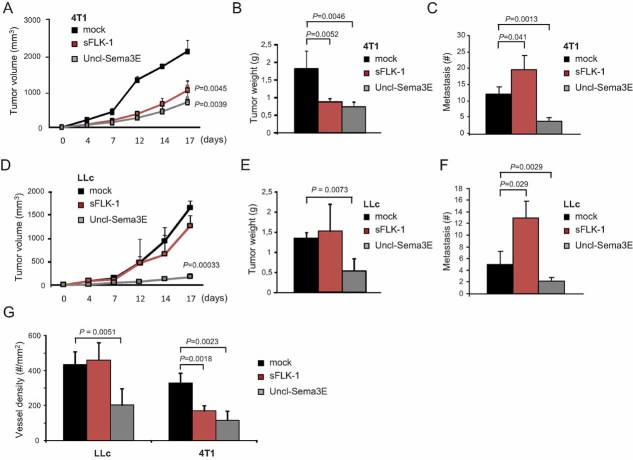
Secreted Semaphorin 3E (Sema3E) promotes cancer cell invasiveness and metastatic spreading. The pro-metastatic activity of Sema3E is due to its proteolytic fragment p61, capable of transactivating the oncogenic tyrosine kinase ErbB2 that associates with the Sema3E receptor PlexinD1 in cancer cells. Here, we show that a mutated, uncleavable variant of Sema3E (Uncl-Sema3E) binds to PlexinD1 like p61-Sema3E, but does not promote the association of PlexinD1 with ErbB2 nor activates the ensuing signalling cascade leading to metastatic spreading. Furthermore, Uncl-Sema3E competes with endogenous p61-Sema3E produced by tumour cells, thereby hampering their metastatic ability. Uncl-Sema3E also acts independently as a potent anti-angiogenic factor. It activates a PlexinD1-mediated signalling cascade in endothelial cells that leads to the inhibition of adhesion to extracellular matrix, directional migration and cell survival. The putative therapeutic potential of Uncl-Sema3E was validated in multiple orthotopic or spontaneous tumour models in vivo, where either local or systemic delivery of Uncl-Sema3E-reduced angiogenesis, growth and metastasis, even in the case of tumours refractory to treatment with a soluble vascular endothelial growth factor trap. In summary, we conclude that Uncl-Sema3E is a novel inhibitor of tumour angiogenesis and growth that concomitantly hampers metastatic spreading.
分泌型神经纤毛蛋白 3E(Sema3E)可促进癌细胞的侵袭和转移扩散。Sema3E 的促转移活性源于其可切割的片段 p61,p61 能够使致癌酪氨酸激酶 ErbB2 发生反式激活,而 ErbB2 与癌细胞中的 Sema3E 受体 PlexinD1 相关联。在这里,我们发现一种突变的、不可切割的 Sema3E 变体(Uncl-Sema3E)与 PlexinD1 的结合方式与 p61-Sema3E 相似,但不促进 PlexinD1 与 ErbB2 的结合,也不激活随后导致转移扩散的信号级联反应。此外,Uncl-Sema3E 可与肿瘤细胞产生的内源性 p61-Sema3E 竞争,从而阻碍其转移能力。Uncl-Sema3E 还可作为一种有效的抗血管生成因子独立发挥作用。它在血管内皮细胞中激活一种由 PlexinD1 介导的信号级联反应,导致细胞对细胞外基质的黏附、定向迁移和存活能力受到抑制。在体内的多个原位或自发肿瘤模型中验证了 Uncl-Sema3E 的潜在治疗作用,无论是局部还是系统性递送 Uncl-Sema3E,都能减少血管生成、肿瘤生长和转移,即使是对可溶性血管内皮生长因子陷阱治疗有抗性的肿瘤也是如此。总之,我们得出结论,Uncl-Sema3E 是一种新型的肿瘤血管生成和生长抑制剂,同时也能抑制转移扩散。