Institute of Genetic and Biomedical Research, Milan Unit, National Research Council, Milan, Italy.
J Bone Miner Res. 2012 Feb;27(2):342-51. doi: 10.1002/jbmr.559.
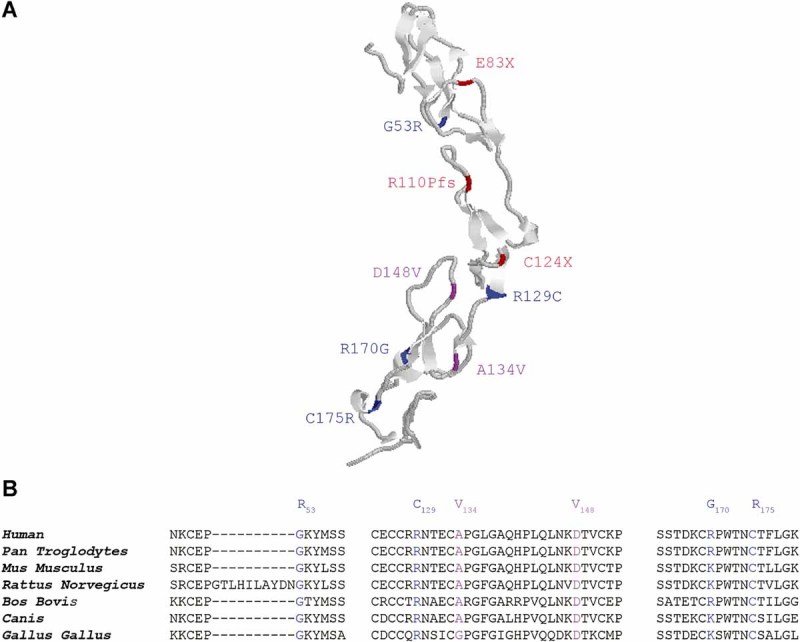
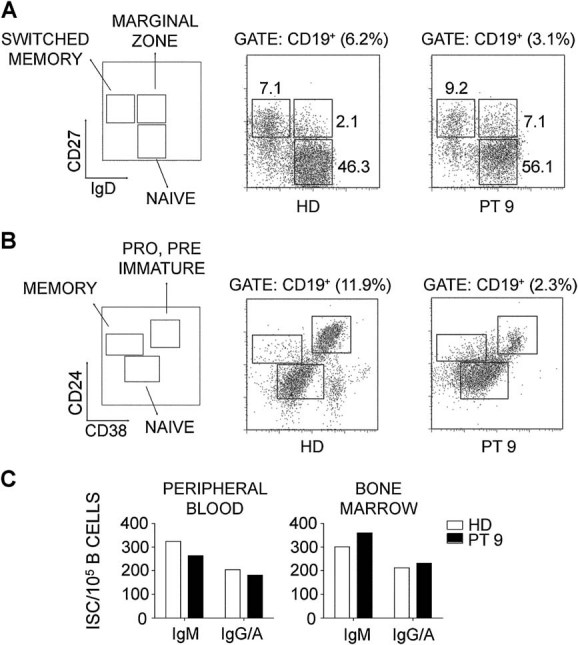
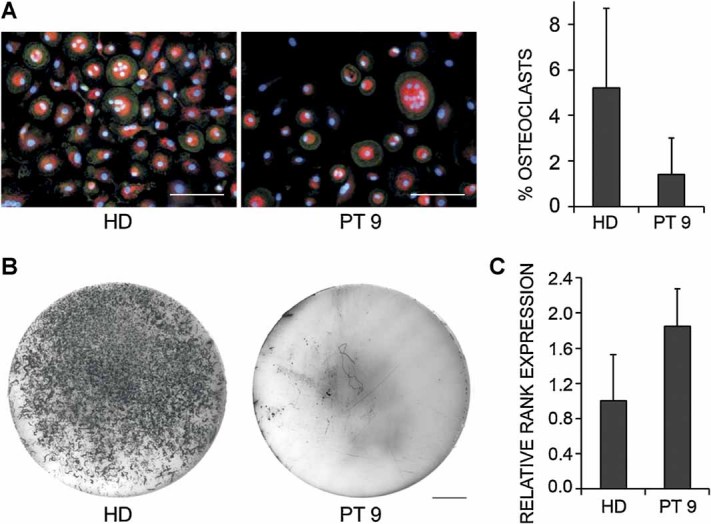
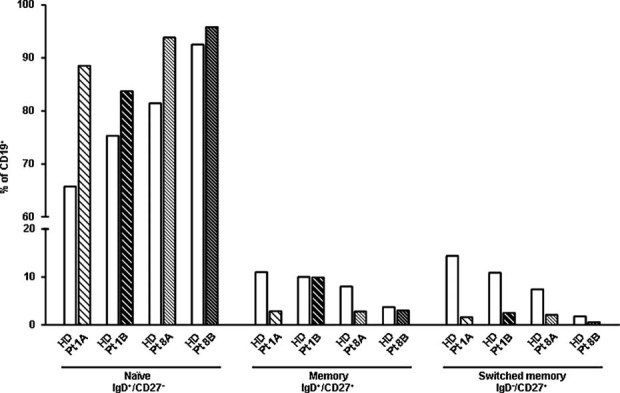
Autosomal recessive osteopetrosis (ARO) is a genetically heterogeneous disorder attributed to reduced bone resorption by osteoclasts. Most human AROs are classified as osteoclast rich, but recently two subsets of osteoclast-poor ARO have been recognized as caused by defects in either TNFSF11 or TNFRSF11A genes, coding the RANKL and RANK proteins, respectively. The RANKL/RANK axis drives osteoclast differentiation and also plays a role in the immune system. In fact, we have recently reported that mutations in the TNFRSF11A gene lead to osteoclast-poor osteopetrosis associated with hypogammaglobulinemia. Here we present the characterization of five additional unpublished patients from four unrelated families in which we found five novel mutations in the TNFRSF11A gene, including two missense and two nonsense mutations and a single-nucleotide insertion. Immunological investigation in three of them showed that the previously described defect in the B cell compartment was present only in some patients and that its severity seemed to increase with age and the progression of the disease. HSCT performed in all five patients almost completely cured the disease even when carried out in late infancy. Hypercalcemia was the most important posttransplant complication. Overall, our results further underline the heterogeneity of human ARO also deriving from the interplay between bone and the immune system, and highlight the prognostic and therapeutic implications of the molecular diagnosis.
常染色体隐性骨硬化症(ARO)是一种遗传性异质性疾病,其特征为破骨细胞的骨吸收减少。大多数人类 ARO 被归类为破骨细胞丰富型,但最近已经认识到两种破骨细胞缺乏型 ARO 是由 TNFSF11 或 TNFRSF11A 基因缺陷引起的,分别编码 RANKL 和 RANK 蛋白。RANKL/RANK 轴驱动破骨细胞分化,在免疫系统中也发挥作用。事实上,我们最近报道称,TNFRSF11A 基因突变导致与低丙种球蛋白血症相关的破骨细胞缺乏型骨硬化症。在这里,我们描述了来自四个无关家庭的另外五名未发表的患者的特征,在这些患者中,我们发现了 TNFRSF11A 基因中的五个新突变,包括两个错义突变和两个无义突变以及一个单核苷酸插入。对其中的三个患者进行免疫学研究表明,以前描述的 B 细胞缺陷仅存在于一些患者中,并且其严重程度似乎随年龄和疾病的进展而增加。所有五名患者均进行了 HSCT,即使在婴儿期晚期进行,也几乎完全治愈了疾病。高钙血症是最重要的移植后并发症。总体而言,我们的结果进一步强调了人类 ARO 的异质性也源于骨骼和免疫系统之间的相互作用,并突出了分子诊断的预后和治疗意义。