Vishnubalaji Radhakrishnan, Manikandan Muthurangan, Al-Nbaheen May, Kadalmani Balamuthu, Aldahmash Abdullah, Alajez Nehad M
Department of Anatomy, College of Medicine, King Saud University, Riyadh, Kingdom of Saudi Arabia.
BMC Dev Biol. 2012 Jan 27;12:7. doi: 10.1186/1471-213X-12-7.
Multipotent stem cells have been successfully isolated from various tissues and are currently utilized for tissue-engineering and cell-based therapies. Among the many sources, skin has recently emerged as an attractive source for multipotent cells because of its abundance. Recent literature showed that skin stromal cells (SSCs) possess mesoderm lineage differentiation potential; however, the endothelial differentiation and angiogenic potential of SSC remains elusive. In our study, SSCs were isolated from human neonatal foreskin (hNFSSCs) and adult dermal skin (hADSSCs) using explants cultures and were compared with bone marrow (hMSC-TERT) and adipose tissue-derived mesenchymal stem cells (hADMSCs) for their potential differentiation into osteoblasts, adipocytes, and endothelial cells.
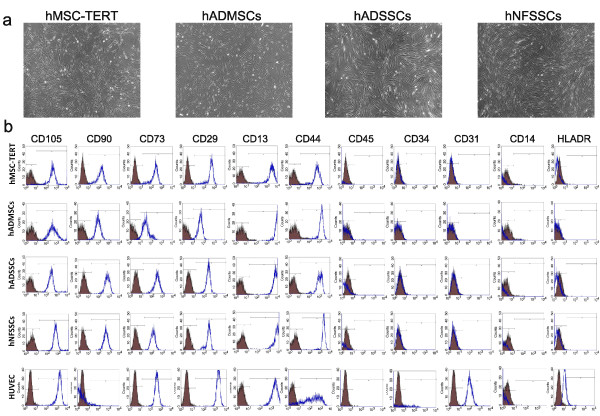
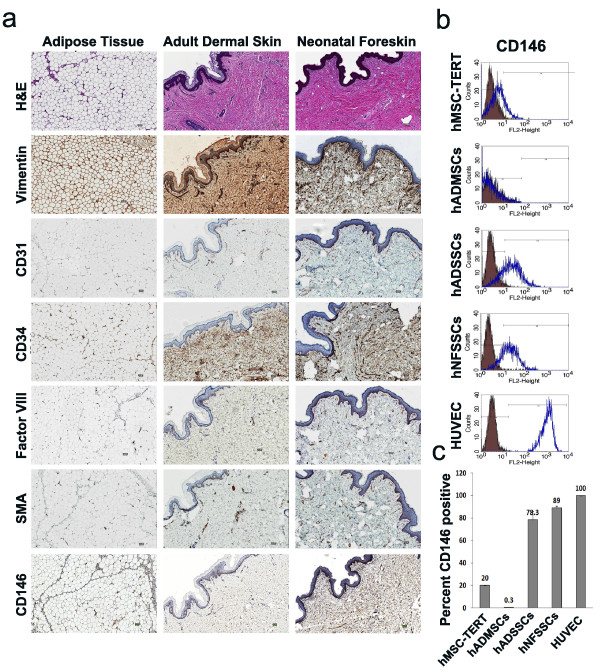
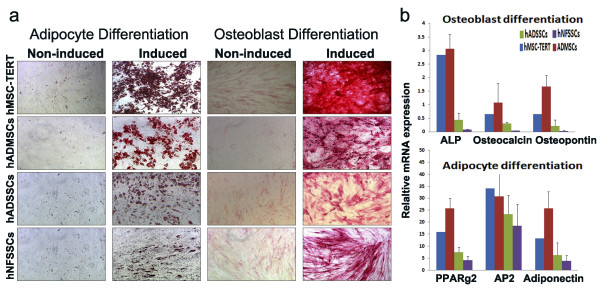
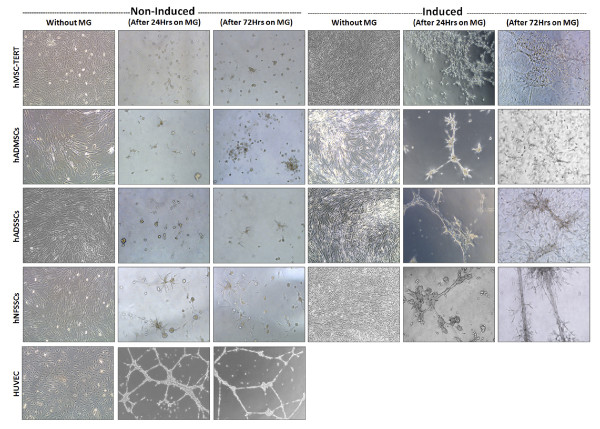
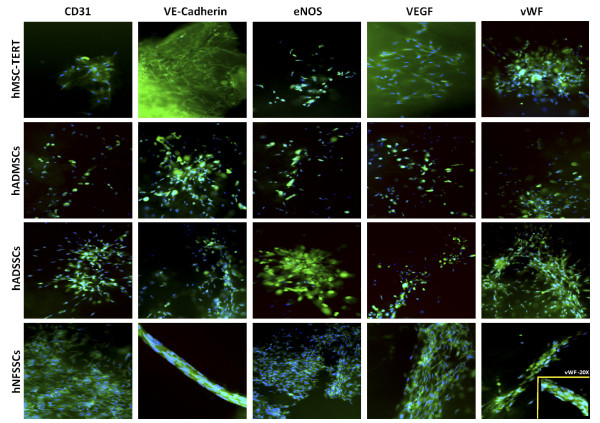
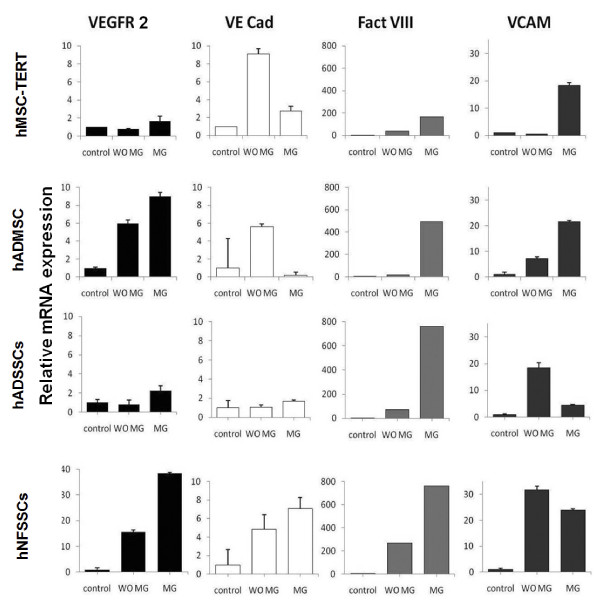
Concordant with previous studies, both MSCs and SSCs showed similar morphology, surface protein expression, and were able to differentiate into osteoblasts and adipocytes. Using an endothelial induction culture system combined with an in vitro matrigel angiogenesis assay, hNFSSCs and hADSSCs exhibited the highest tube-forming capability, which was similar to those formed by human umbilical vein endothelial cells (HUVEC), with hNFSSCs forming the most tightly packed, longest, and largest diameter tubules among the three cell types. CD146 was highly expressed on hNFSSCs and HUVEC followed by hADSSCs, and hMSC-TERT, while its expression was almost absent on hADMSCs. Similarly, higher vascular density (based on the expression of CD31, CD34, vWF, CD146 and SMA) was observed in neonatal skin, followed by adult dermal skin and adipose tissue. Thus, our preliminary data indicated a plausible relationship between vascular densities, and the expression of CD146 on multipotent cells derived from those tissues.
Our data is the first to demonstrate that human dermal skin stromal cells can be differentiated into endothelial lineage. Hence, SSCs represents a novel source of stem/stromal cells for tissue regeneration and the vascularization of engineered tissues. Moreover, the CD146 investigations suggested that the microenvironmental niche might contribute to direct stromal cells multipotency toward certain lineages, which warrants further investigation.
多能干细胞已成功从各种组织中分离出来,目前用于组织工程和基于细胞的治疗。在众多来源中,皮肤因其丰富性最近成为多能细胞的一个有吸引力的来源。最近的文献表明,皮肤基质细胞(SSCs)具有中胚层谱系分化潜能;然而,SSC的内皮分化和血管生成潜能仍不清楚。在我们的研究中,使用外植体培养从人新生儿包皮(hNFSSCs)和成人真皮皮肤(hADSSCs)中分离出SSCs,并将其与骨髓(hMSC-TERT)和脂肪组织来源的间充质干细胞(hADMSCs)进行比较,观察它们向成骨细胞、脂肪细胞和内皮细胞分化的潜能。
与先前的研究一致,间充质干细胞和皮肤基质细胞表现出相似的形态、表面蛋白表达,并且能够分化为成骨细胞和脂肪细胞。使用内皮诱导培养系统结合体外基质胶血管生成试验,hNFSSCs和hADSSCs表现出最高的成管能力,这与人类脐静脉内皮细胞(HUVEC)形成的管相似,在这三种细胞类型中,hNFSSCs形成的管排列最紧密、最长且直径最大。CD146在hNFSSCs和HUVEC上高表达,其次是hADSSCs和hMSC-TERT,而在hADMSCs上几乎不表达。同样,在新生儿皮肤中观察到更高的血管密度(基于CD31、CD34、vWF、CD146和SMA的表达),其次是成人真皮皮肤和脂肪组织。因此,我们的初步数据表明血管密度与源自这些组织的多能细胞上CD146的表达之间存在合理的关系。
我们的数据首次证明人真皮皮肤基质细胞可分化为内皮谱系。因此,皮肤基质细胞是组织再生和工程组织血管化的一种新型干细胞/基质细胞来源。此外,对CD146的研究表明,微环境龛可能有助于直接引导基质细胞向某些谱系的多能性,这值得进一步研究。