Department of Microbiology, University of Iowa, Carver College of Medicine, Iowa City, IA, USA.
Retrovirology. 2012 Jan 27;9:10. doi: 10.1186/1742-4690-9-10.
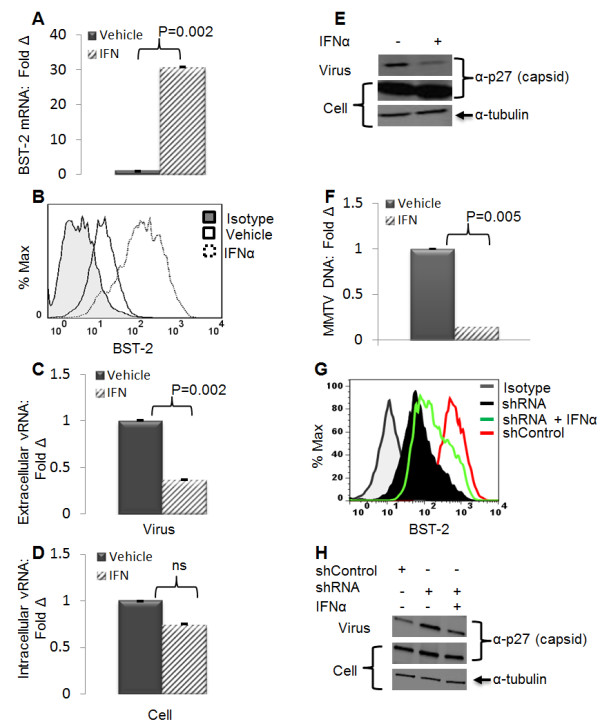
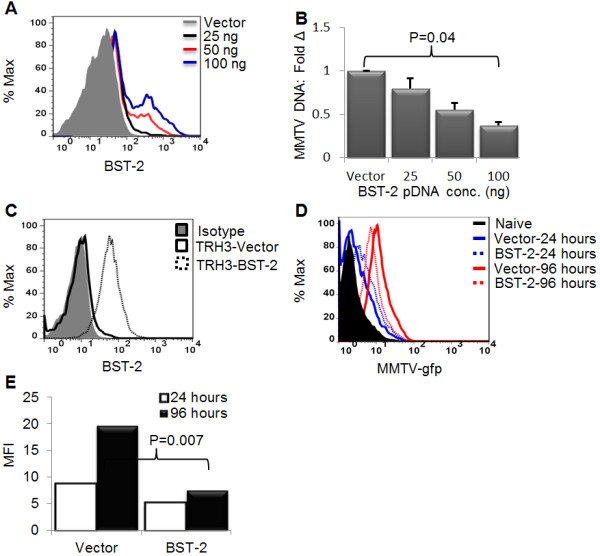
Bone marrow stromal cell antigen 2 (BST-2) is a cellular factor that restricts the egress of viruses such as human immunodeficiency virus (HIV-1) from the surface of infected cells, preventing infection of new cells. BST-2 is variably expressed in most cell types, and its expression is enhanced by cytokines such as type I interferon alpha (IFN-α). In this present study, we used the beta-retrovirus, mouse mammary tumor virus (MMTV) as a model to examine the role of mouse BST-2 in host infection in vivo.
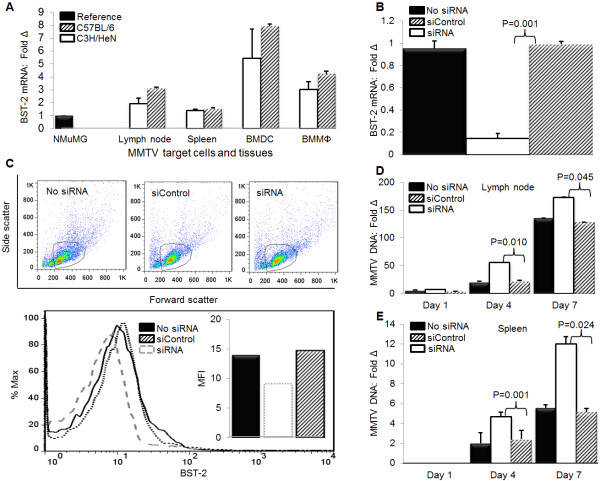
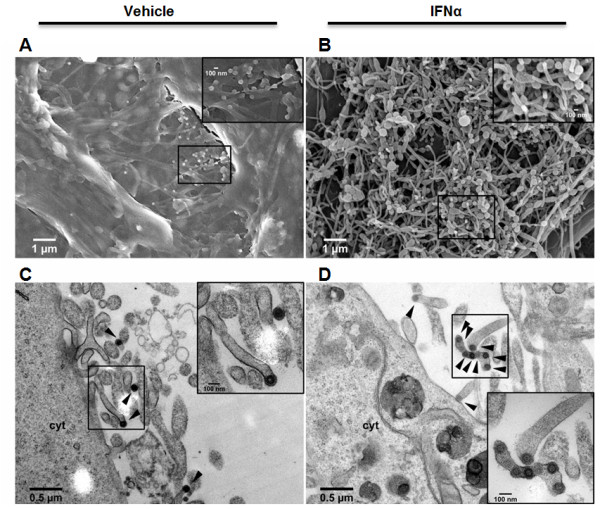
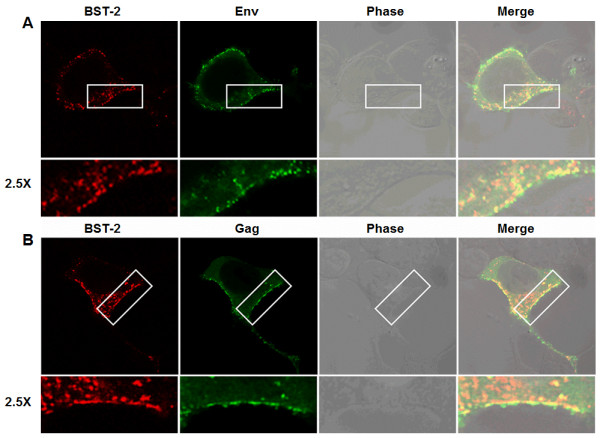
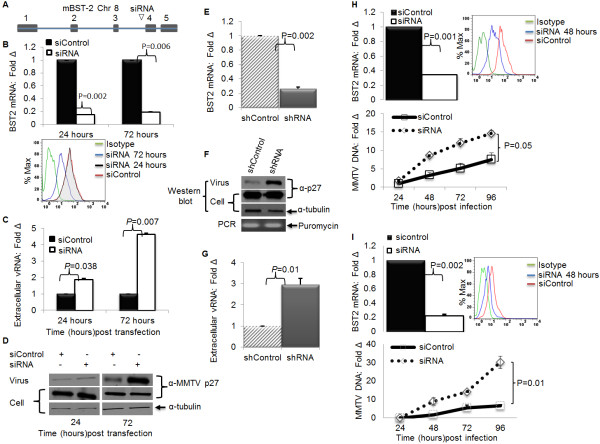
By using RNA interference, we show that loss of BST-2 enhances MMTV replication in cultured mammary tumor cells and in vivo. In cultured cells, BST-2 inhibits virus accumulation in the culture medium, and co-localizes at the cell surface with virus structural proteins. Furthermore, both scanning electron micrograph (SEM) and transmission electron micrograph (TEM) show that MMTV accumulates on the surface of IFNα-stimulated cells.
Our data provide evidence that BST-2 restricts MMTV release from naturally infected cells and that BST-2 is an antiviral factor in vivo.
骨髓基质细胞抗原 2(BST-2)是一种细胞因子,可限制病毒(如人类免疫缺陷病毒 1(HIV-1))从受感染细胞表面逸出,从而阻止新细胞感染。BST-2 在大多数细胞类型中表达不同,其表达可被 I 型干扰素-α(IFN-α)等细胞因子增强。在本研究中,我们使用β逆转录病毒,鼠乳腺肿瘤病毒(MMTV)作为模型,研究小鼠 BST-2 在体内宿主感染中的作用。
通过使用 RNA 干扰,我们表明 BST-2 的缺失会增强培养的乳腺肿瘤细胞和体内的 MMTV 复制。在培养的细胞中,BST-2 抑制病毒在培养基中的积累,并与病毒结构蛋白在细胞表面共定位。此外,扫描电子显微镜(SEM)和透射电子显微镜(TEM)都显示 MMTV 积聚在 IFNα 刺激细胞的表面。
我们的数据提供了证据表明 BST-2 限制了自然感染细胞中 MMTV 的释放,并且 BST-2 是体内的抗病毒因子。