B cell Molecular Immunology Section, Laboratory of Immunoregulation, National Institute of Allergy and Infectious Diseases, US National Institutes of Health, Bethesda, Maryland, USA.
Nat Immunol. 2012 Jan 29;13(3):255-63. doi: 10.1038/ni.2215.
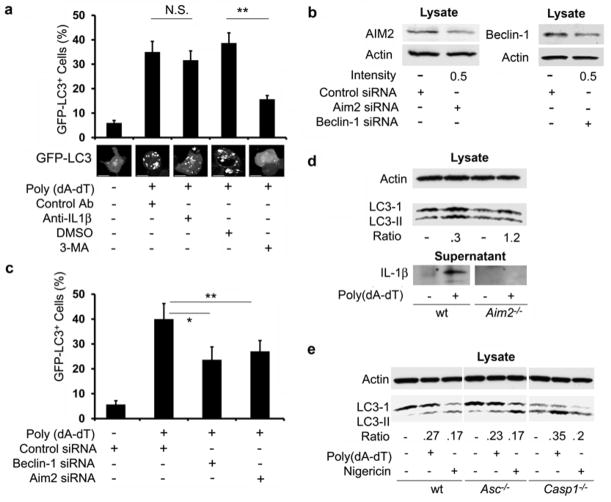
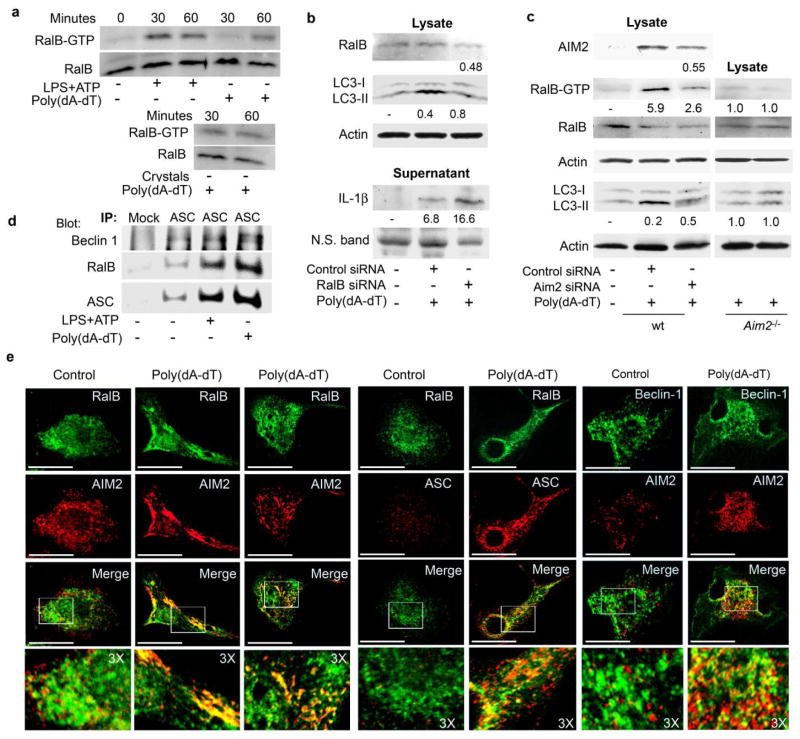
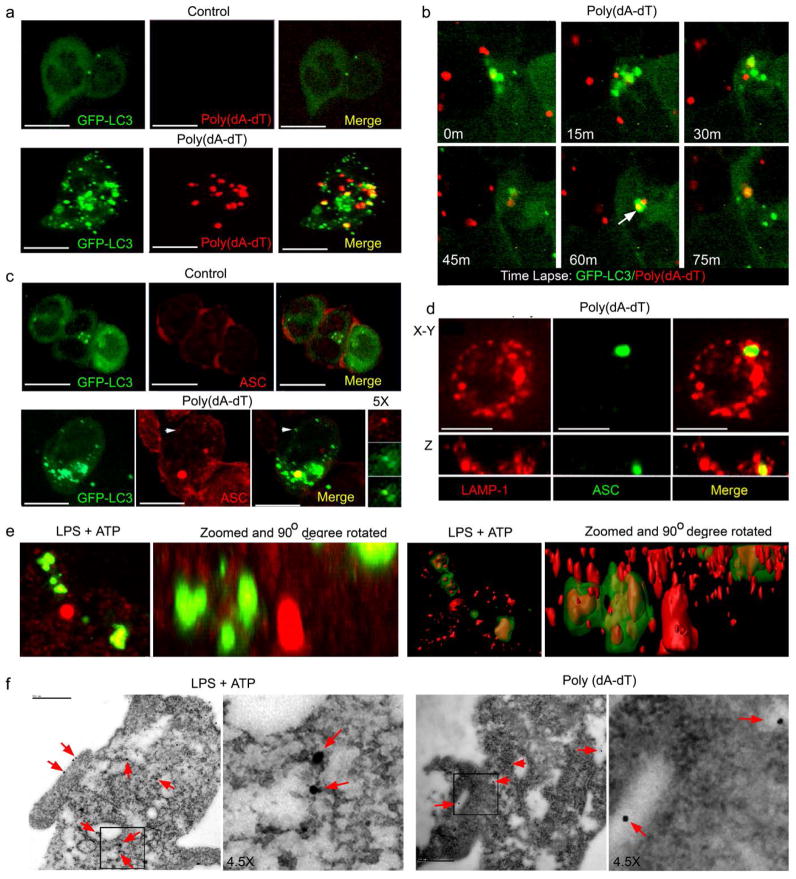
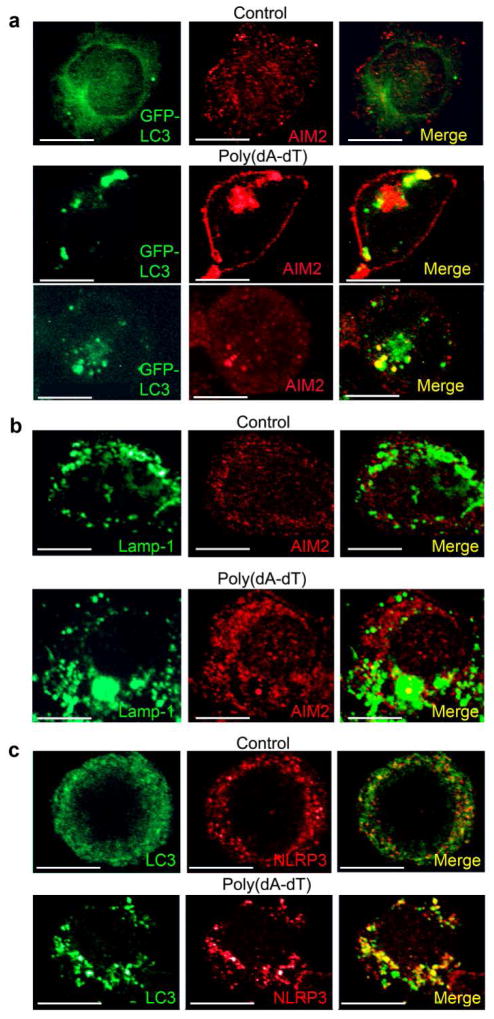
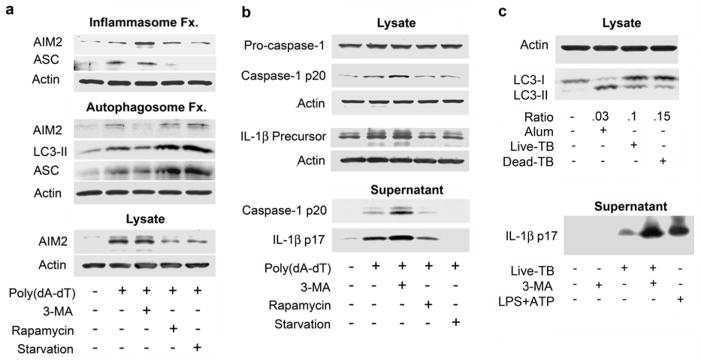
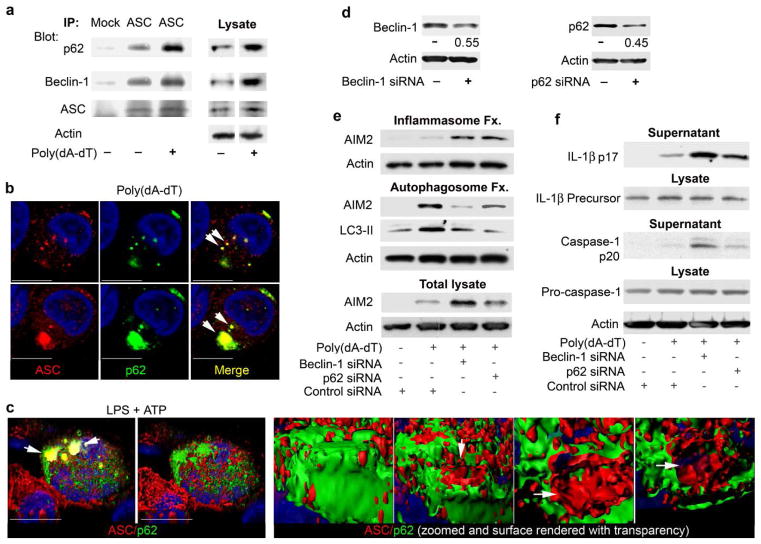
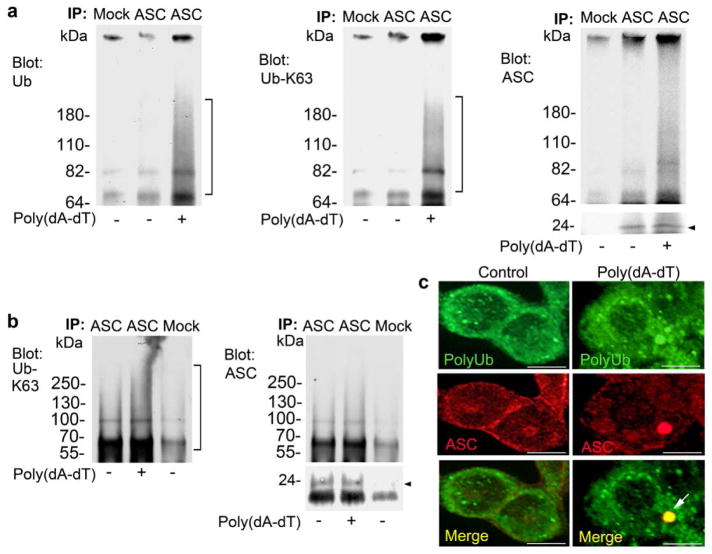
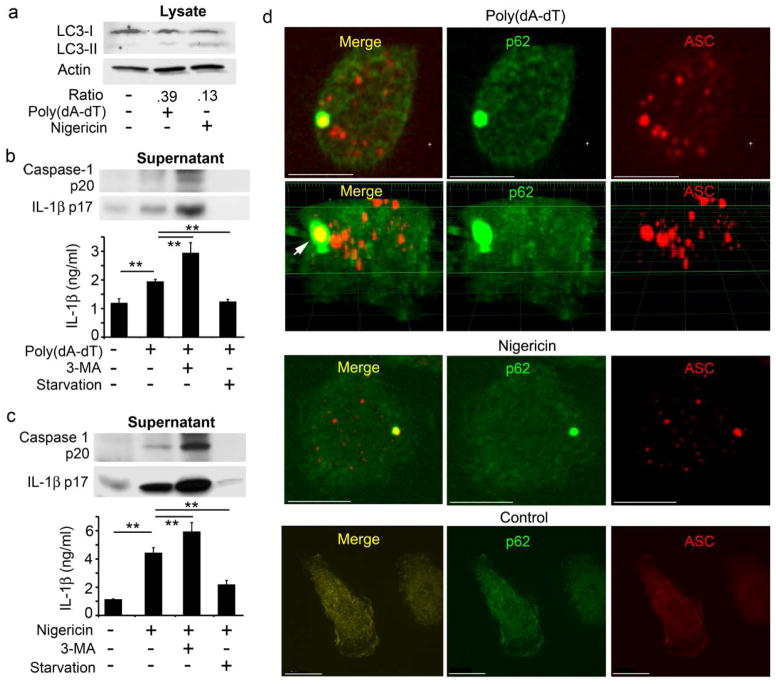
Autophagosomes delivers cytoplasmic constituents to lysosomes for degradation, whereas inflammasomes are molecular platforms activated by infection or stress that regulate the activity of caspase-1 and the maturation of interleukin 1β (IL-1β) and IL-18. Here we show that the induction of AIM2 or NLRP3 inflammasomes in macrophages triggered activation of the G protein RalB and autophagosome formation. The induction of autophagy did not depend on the adaptor ASC or capase-1 but was dependent on the presence of the inflammasome sensor. Blocking autophagy potentiated inflammasome activity, whereas stimulating autophagy limited it. Assembled inflammasomes underwent ubiquitination and recruited the autophagic adaptor p62, which assisted their delivery to autophagosomes. Our data indicate that autophagy accompanies inflammasome activation to temper inflammation by eliminating active inflammasomes.
自噬体将细胞质成分递送至溶酶体进行降解,而炎性体是被感染或应激激活的分子平台,调节半胱氨酸蛋白酶-1(caspase-1)的活性以及白细胞介素 1β(IL-1β)和白细胞介素 18(IL-18)的成熟。在这里,我们发现巨噬细胞中 AIM2 或 NLRP3 炎性体的诱导会触发 G 蛋白 RalB 的激活和自噬体的形成。自噬的诱导不依赖于衔接蛋白 ASC 或 capase-1,但依赖于炎性体传感器的存在。阻断自噬会增强炎性体的活性,而刺激自噬则会限制其活性。组装好的炎性体发生泛素化,并募集自噬衔接蛋白 p62,后者有助于将它们递送至自噬体。我们的数据表明,自噬伴随着炎性体的激活,通过消除活性炎性体来调节炎症。