Department of Biochemistry and Biomedical Sciences, McMaster University, Hamilton, ON L8N 3Z5, Canada.
Nucleic Acids Res. 2012 Feb;40(4):1868-78. doi: 10.1093/nar/gks022. Epub 2012 Jan 27.
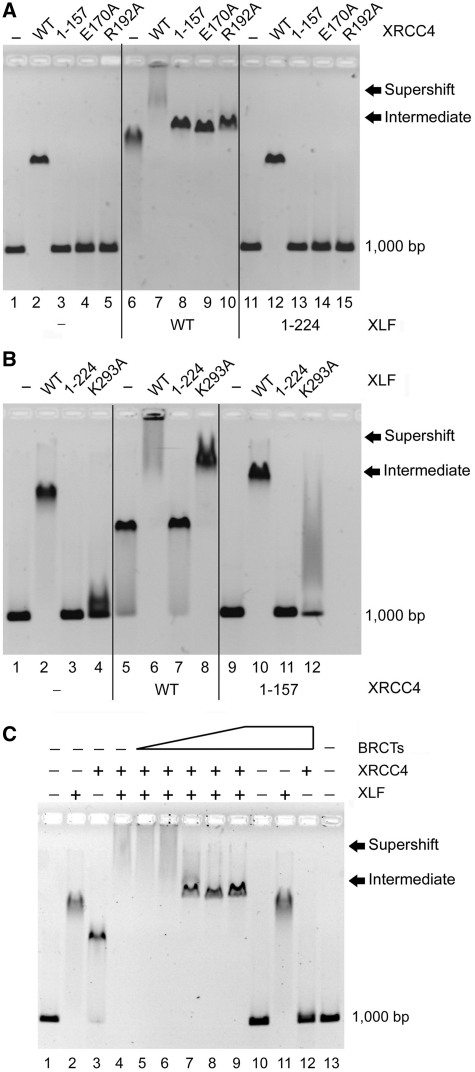
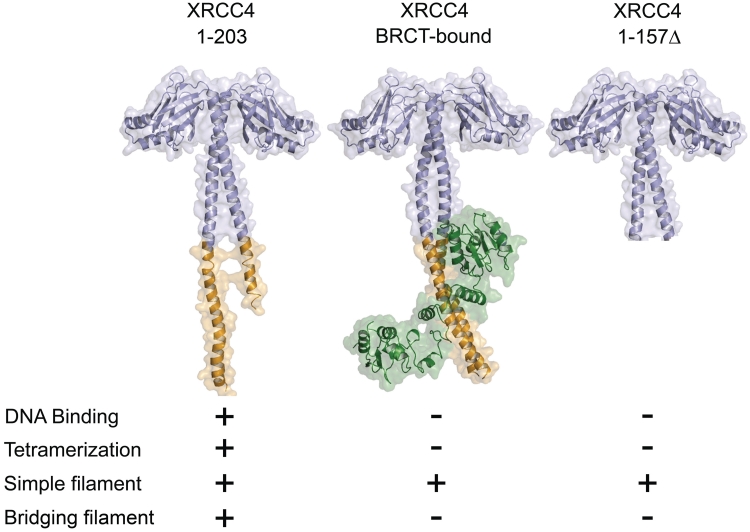
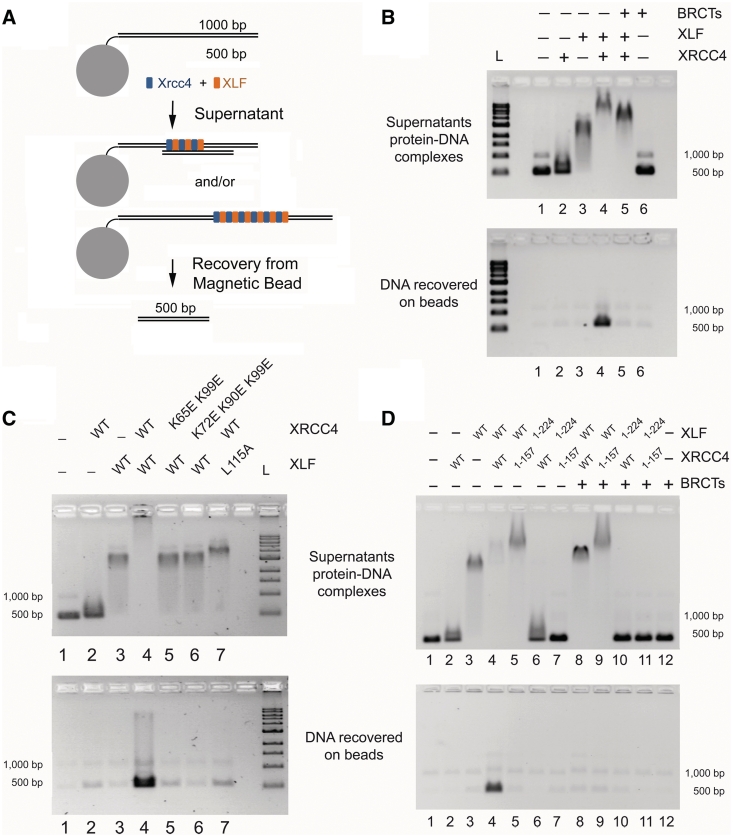
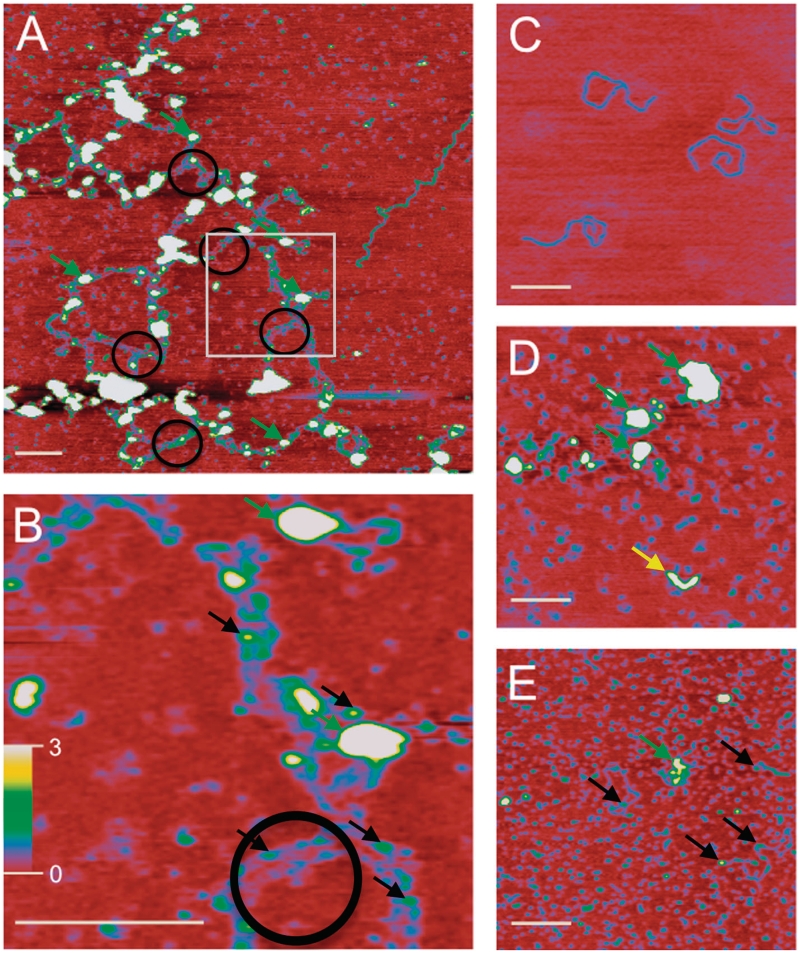
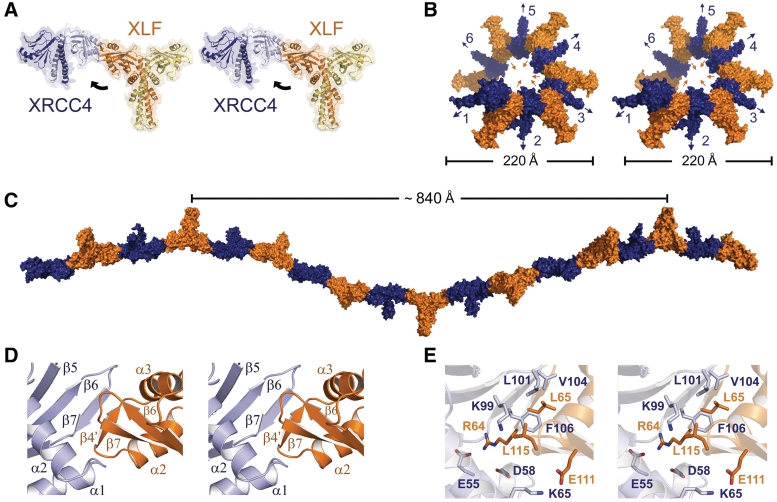
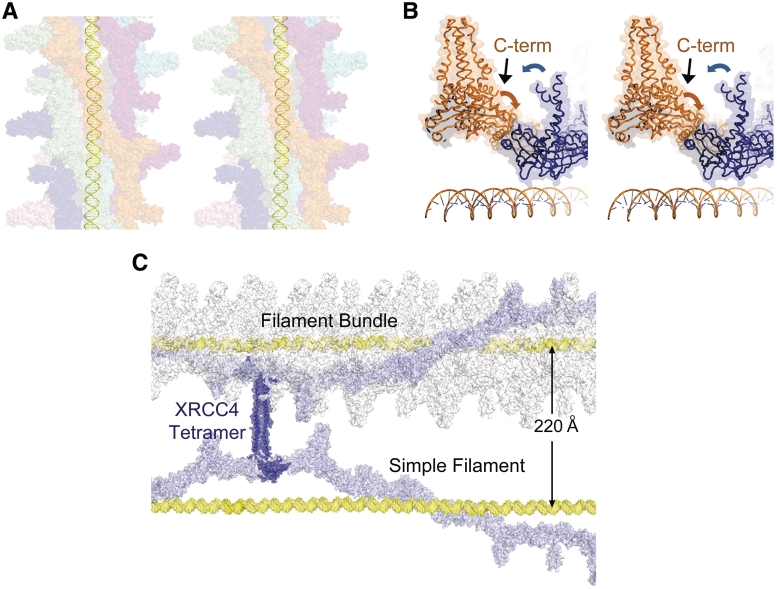
DNA double-strand breaks pose a significant threat to cell survival and must be repaired. In higher eukaryotes, such damage is repaired efficiently by non-homologous end joining (NHEJ). Within this pathway, XRCC4 and XLF fulfill key roles required for end joining. Using DNA-binding and -bridging assays, combined with direct visualization, we present evidence for how XRCC4-XLF complexes robustly bridge DNA molecules. This unanticipated, DNA Ligase IV-independent bridging activity by XRCC4-XLF suggests an early role for this complex during end joining, in addition to its more well-established later functions. Mutational analysis of the XRCC4-XLF C-terminal tail regions further identifies specialized functions in complex formation and interaction with DNA and DNA Ligase IV. Based on these data and the crystal structure of an extended protein filament of XRCC4-XLF at 3.94 Å, a model for XRCC4-XLF complex function in NHEJ is presented.
DNA 双链断裂对细胞存活构成重大威胁,必须加以修复。在高等真核生物中,这种损伤可以通过非同源末端连接 (NHEJ) 有效地修复。在这个途径中,XRCC4 和 XLF 发挥了末端连接所必需的关键作用。我们使用 DNA 结合和桥接测定,结合直接可视化,提供了 XRCC4-XLF 复合物如何有力地桥接 DNA 分子的证据。这种出乎意料的、不需要 DNA 连接酶 IV 的 XRCC4-XLF 桥接活性表明,该复合物在末端连接过程中除了具有更广泛的后期功能外,还具有早期作用。对 XRCC4-XLF C 末端尾部区域的突变分析进一步确定了该复合物在形成复合物以及与 DNA 和 DNA 连接酶 IV 相互作用中的特殊功能。基于这些数据和 XRCC4-XLF 扩展蛋白丝的 3.94Å 晶体结构,提出了 NHEJ 中 XRCC4-XLF 复合物功能的模型。