Schlaak Max, Schmidt Patrick, Bangard Christopher, Kurschat Peter, Mauch Cornelia, Abken Hinrich
Department of Dermatology and Venerology, Skin Cancer Center at the Center for Integrated Oncology, University of Cologne, Cologne, Germany
Oncotarget. 2012 Jan;3(1):22-30. doi: 10.18632/oncotarget.437.
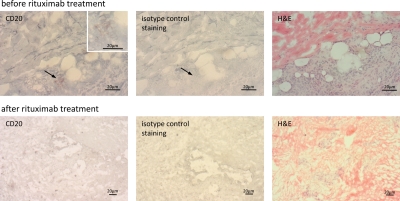
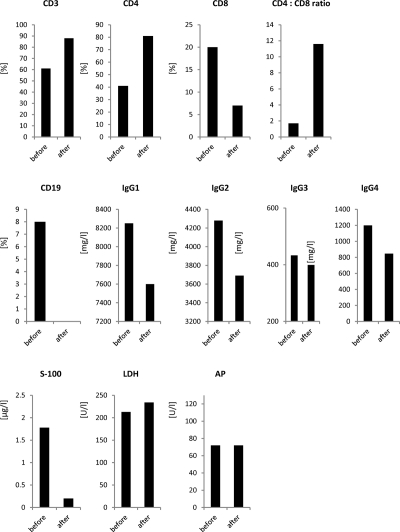
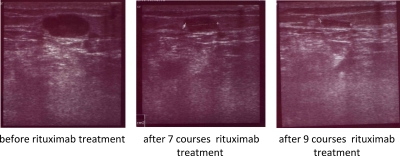
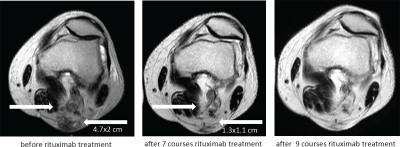
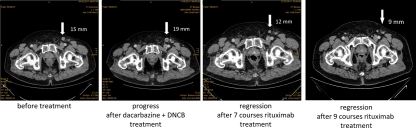
Current therapeutic regimens attempt to eliminate all malignant cells of a melanoma lesion; pre-clinical data, however, indicate that melanoma, once established, is maintained by a minor, non-random subset of cancer cells which are characterized by CD20 expression. We asked to eliminate those cells in a progressing, chemotherapy-refractory metastatic melanoma patient by lesional injections of the anti-CD20 therapeutic antibody rituximab and concomitant low dose systemic dacarbazine treatment. Although the frequencies of CD20+ melanoma cells within the tumor lesions were initially about 2% and the bulk of tumor cells did not express CD20, rituximab treatment produced lasting remission of treated tumor lesions in the long-term. Remission was accompanied by a decline of the melanoma serum marker S-100 to physiological levels. Detailed in-depth-analyses revealed a switch of serum cytokines from a T helper-2 to a pro-inflammatory T helper-1 cell profile. Apart from B cell elimination and decline in gammaglobulin levels, no grade 3/4 toxicity related to treatment was observed. Data provide the first clinical evidence that targeting the minor subset of CD20+ "melanoma sustaining cells" produces regression of chemotherapy-refractory melanoma and highlight the potency of selective cancer cell targeting in the treatment of melanoma.
当前的治疗方案试图清除黑色素瘤病灶中的所有恶性细胞;然而,临床前数据表明,黑色素瘤一旦形成,就由一小部分非随机的癌细胞维持,这些癌细胞的特征是表达CD20。我们要求通过病灶内注射抗CD20治疗性抗体利妥昔单抗并同时进行低剂量全身达卡巴嗪治疗,来清除一名病情进展、对化疗耐药的转移性黑色素瘤患者体内的这些细胞。尽管肿瘤病灶内CD20+黑色素瘤细胞的比例最初约为2%,且大部分肿瘤细胞不表达CD20,但长期来看,利妥昔单抗治疗使治疗的肿瘤病灶实现了持久缓解。缓解伴随着黑色素瘤血清标志物S-100降至生理水平。详细的深入分析显示,血清细胞因子从辅助性T细胞2型转变为促炎性辅助性T细胞1型。除了B细胞清除和γ球蛋白水平下降外,未观察到与治疗相关的3/4级毒性。数据提供了首个临床证据,表明靶向CD20+“黑色素瘤维持细胞”的小亚群可使化疗难治性黑色素瘤消退,并突出了选择性靶向癌细胞在黑色素瘤治疗中的潜力。