Department of Etiological Research, Cancer Registry of Norway, Institute of Population-based Cancer Research, PO Box 5313 Majorstuen, 0304 Oslo, Norway.
BMJ. 2012 Jan 30;344:e299. doi: 10.1136/bmj.e299.
To quantify the separate contributions of menopausal hormone treatment and mammography screening activities on trends in incidence of invasive breast cancer between 1987 and 2008.
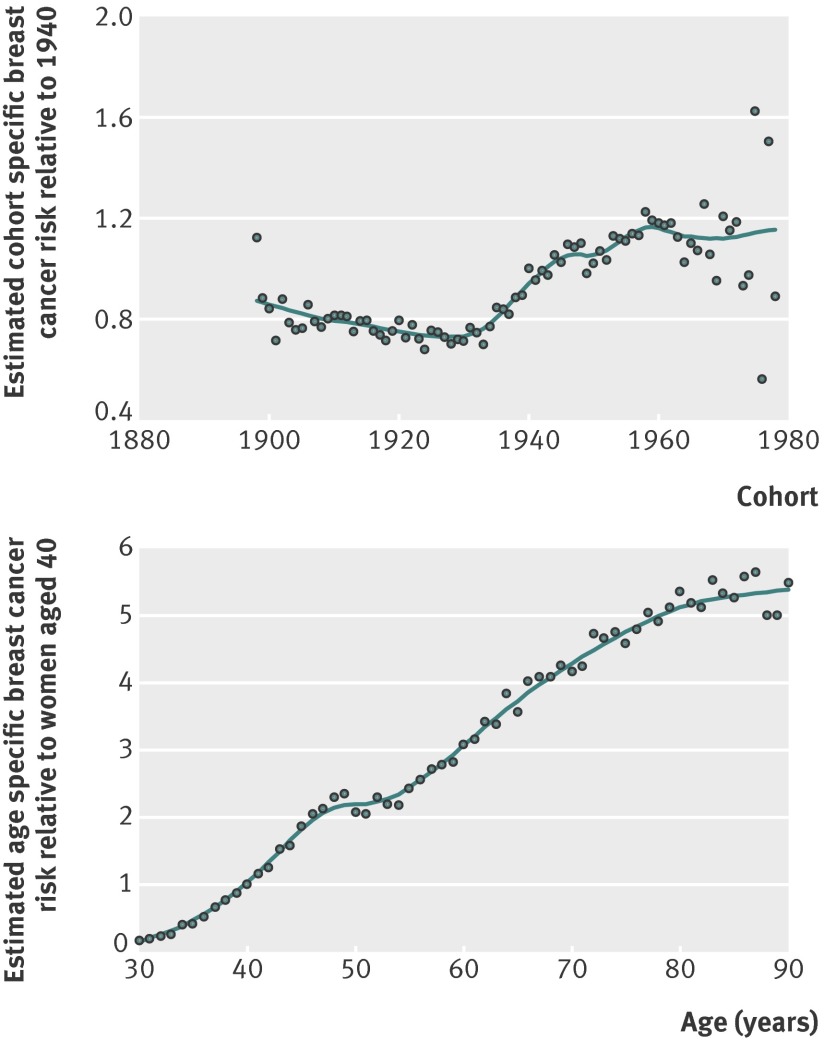
Population study using aggregated data analysed by an extended age-period-cohort model.
Norway. Population Norwegian women aged 30-90 between 1987 and 2008, including 50,102 newly diagnosed cases of invasive breast cancer. Main outcomes measures Attributable proportions of mammography screening and hormone treatment to recent incidence of invasive breast cancer, and the remaining variation in incidence after adjustment for mammography screening and hormone treatment.
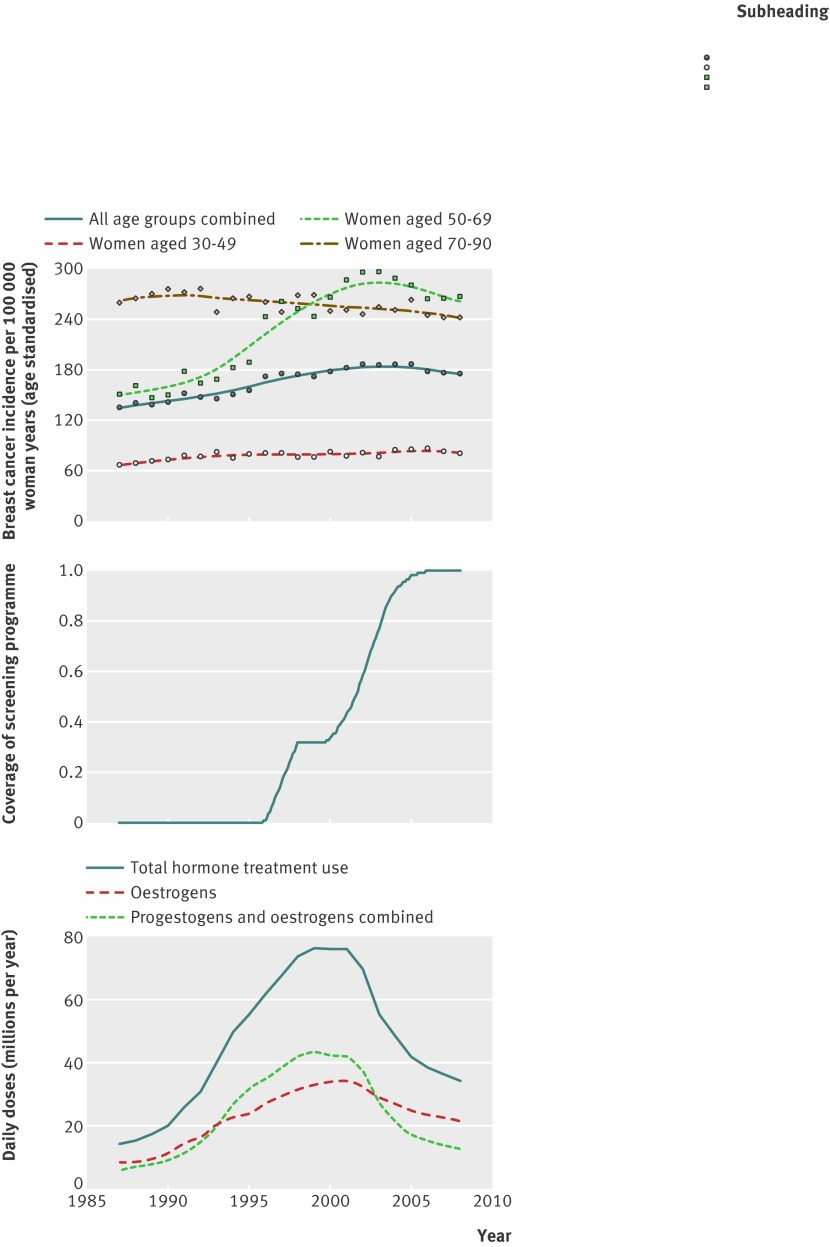
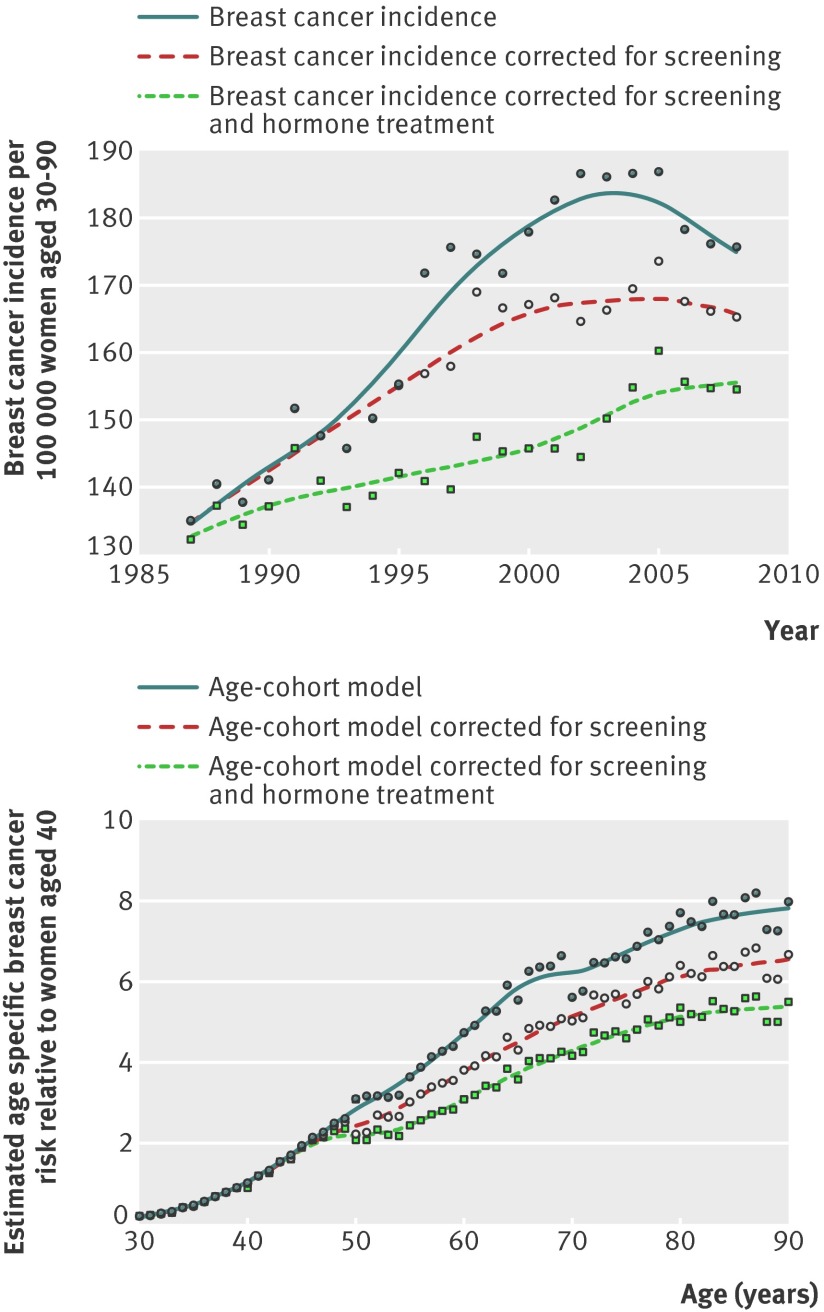
The incidence of invasive breast cancer in Norway increased steadily until 2002, levelled off, and then declined from 2006. All non-linear changes in incidence were explained by use of hormone treatment and mammography screening activities, with about similar contributions of each factor. In 2002, when the incidence among women aged 50-69 was highest, an estimated 23% of the cases in that age group could be attributed to mammography screening and 27% to use of hormone treatment.
Changes in incidence trends of invasive breast cancer since the early 1990s may be fully attributed to mammography screening and hormone treatment, with about similar contributions of each factor.
量化绝经激素治疗和乳房 X 线筛查活动对 1987 年至 2008 年期间浸润性乳腺癌发病率变化趋势的单独贡献。
使用扩展的年龄-时期-队列模型对汇总数据进行分析的人群研究。
挪威。1987 年至 2008 年间年龄在 30-90 岁之间的挪威女性人群,包括 50102 例新诊断的浸润性乳腺癌病例。
乳房 X 线筛查和激素治疗对近期浸润性乳腺癌发病率的归因比例,以及在调整乳房 X 线筛查和激素治疗后发病率的剩余变化。
挪威浸润性乳腺癌的发病率在 2002 年之前持续稳步上升,然后在 2002 年达到顶峰后持平,接着从 2006 年开始下降。发病率的所有非线性变化都可以用激素治疗和乳房 X 线筛查活动来解释,每个因素的作用大致相同。在 2002 年,50-69 岁女性的发病率最高,该年龄组中约有 23%的病例可归因于乳房 X 线筛查,27%可归因于激素治疗。
自 20 世纪 90 年代初以来,浸润性乳腺癌发病率变化趋势的变化可能完全归因于乳房 X 线筛查和激素治疗,每个因素的作用大致相同。