State Key Laboratory of Brain and Cognitive Science, Institute of Psychology, Chinese Academy of Sciences, Beijing, China.
PLoS One. 2012;7(1):e30278. doi: 10.1371/journal.pone.0030278. Epub 2012 Jan 23.
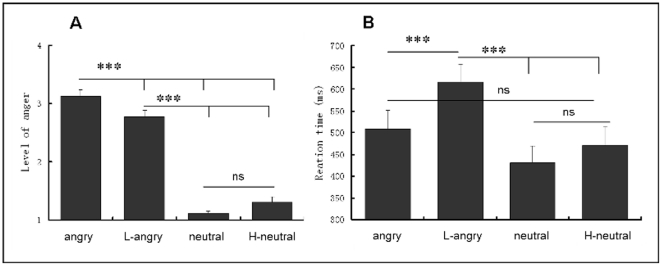
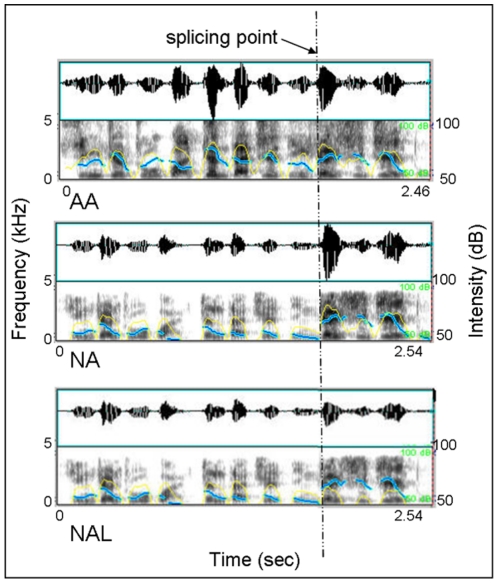
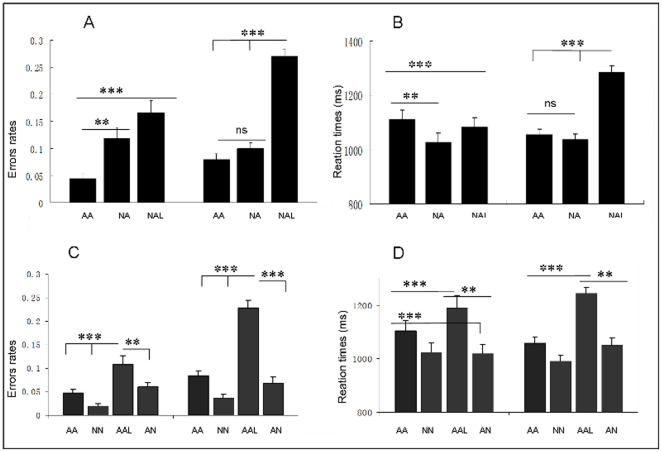
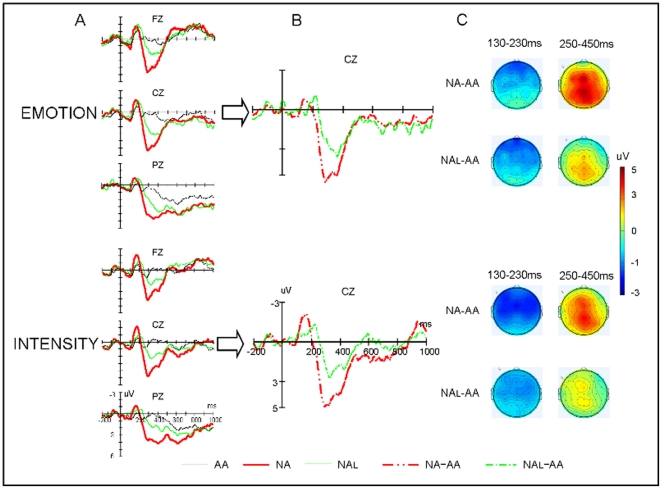
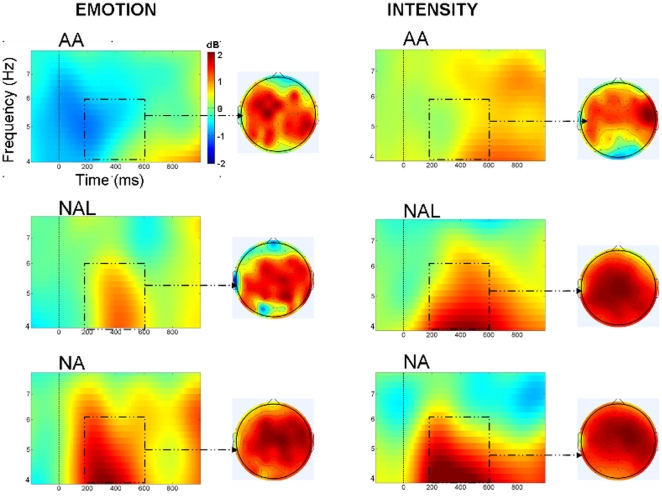
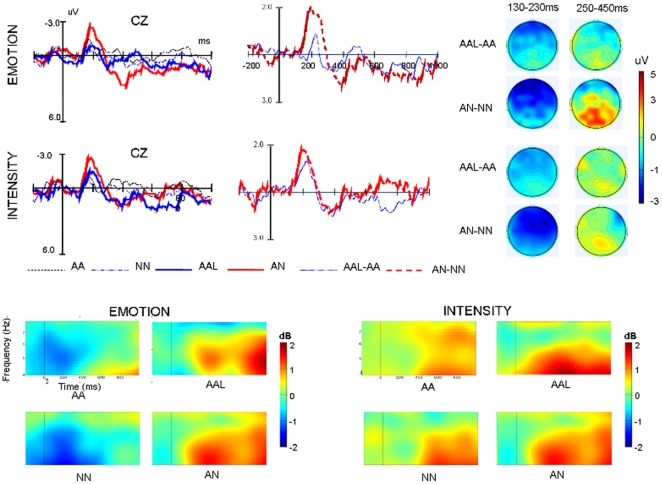
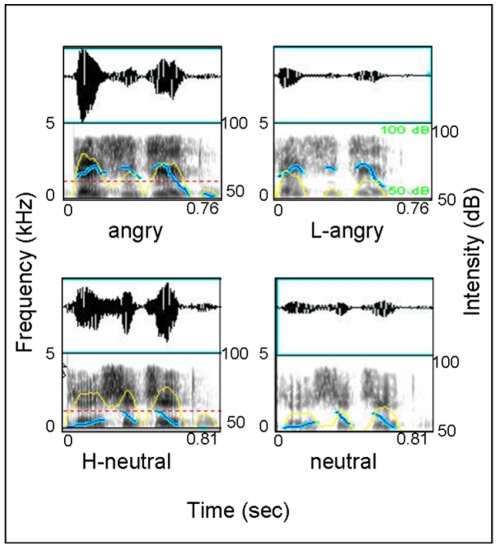
Although its role is frequently stressed in acoustic profile for vocal emotion, sound intensity is frequently regarded as a control parameter in neurocognitive studies of vocal emotion, leaving its role and neural underpinnings unclear. To investigate these issues, we asked participants to rate the angry level of neutral and angry prosodies before and after sound intensity modification in Experiment 1, and recorded electroencephalogram (EEG) for mismatching emotional prosodies with and without sound intensity modification and for matching emotional prosodies while participants performed emotional feature or sound intensity congruity judgment in Experiment 2. It was found that sound intensity modification had significant effect on the rating of angry level for angry prosodies, but not for neutral ones. Moreover, mismatching emotional prosodies, relative to matching ones, induced enhanced N2/P3 complex and theta band synchronization irrespective of sound intensity modification and task demands. However, mismatching emotional prosodies with reduced sound intensity showed prolonged peak latency and decreased amplitude in N2/P3 complex and smaller theta band synchronization. These findings suggest that though it cannot categorically affect emotionality conveyed in emotional prosodies, sound intensity contributes to emotional significance quantitatively, implying that sound intensity should not simply be taken as a control parameter and its unique role needs to be specified in vocal emotion studies.
尽管在声音情感的声学特征中经常强调声音强度的作用,但在声音情感的神经认知研究中,它通常被视为一个控制参数,其作用和神经基础尚不清楚。为了研究这些问题,我们要求参与者在实验 1 中对中性和愤怒韵律的愤怒水平进行评级,然后在强度修改前后进行评级,同时在实验 2 中记录脑电图 (EEG),记录有无声音强度修改的不匹配情感韵律以及参与者执行情感特征或声音强度一致性判断时的匹配情感韵律。结果发现,声音强度修改对愤怒韵律的愤怒水平评分有显著影响,但对中性韵律没有影响。此外,与匹配的韵律相比,不匹配的情感韵律无论声音强度修改和任务要求如何,都会引起增强的 N2/P3 复合波和θ频段同步。然而,声音强度降低的不匹配情感韵律表现出 N2/P3 复合波的峰值潜伏期延长和幅度降低,以及θ频段同步减小。这些发现表明,尽管声音强度不能完全影响情感韵律中传达的情感,但它在数量上有助于情感的显著性,这意味着声音强度不应简单地作为一个控制参数,它在声音情感研究中的独特作用需要加以明确。