Unit of Critical Care, Royal Brompton Hospital, National Heart and Lung Institute, Faculty of Medicine, Imperial College London, London, United Kingdom.
PLoS One. 2012;7(1):e30075. doi: 10.1371/journal.pone.0030075. Epub 2012 Jan 27.
Bone morphogenetic proteins (BMPs) and their receptors, such as bone morphogenetic protein receptor (BMPR) II, have been implicated in a wide variety of disorders including pulmonary arterial hypertension (PAH). Similarly, endothelin-1 (ET-1), a mitogen and vasoconstrictor, is upregulated in PAH and endothelin receptor antagonists are used in its treatment. We sought to determine whether there is crosstalk between BMP signalling and the ET-1 axis in human pulmonary artery endothelial cells (HPAECs), possible mechanisms involved in such crosstalk and functional consequences thereof.
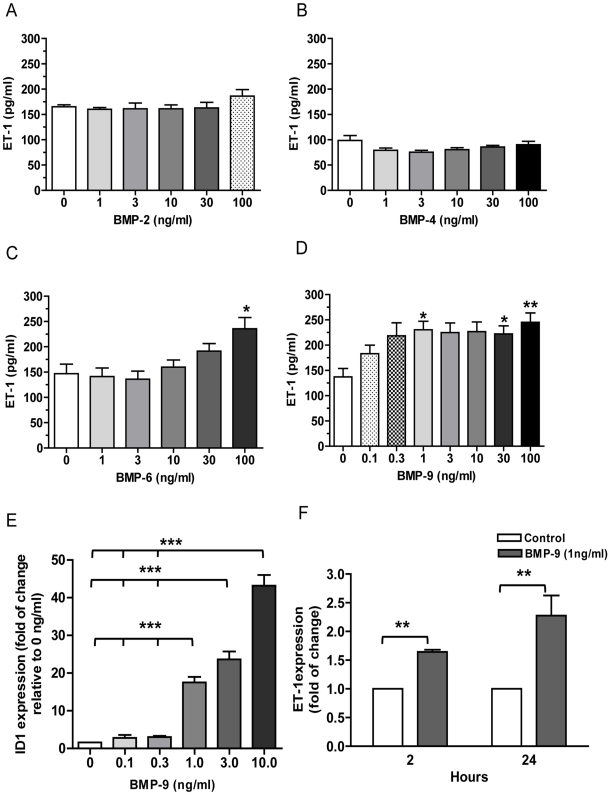
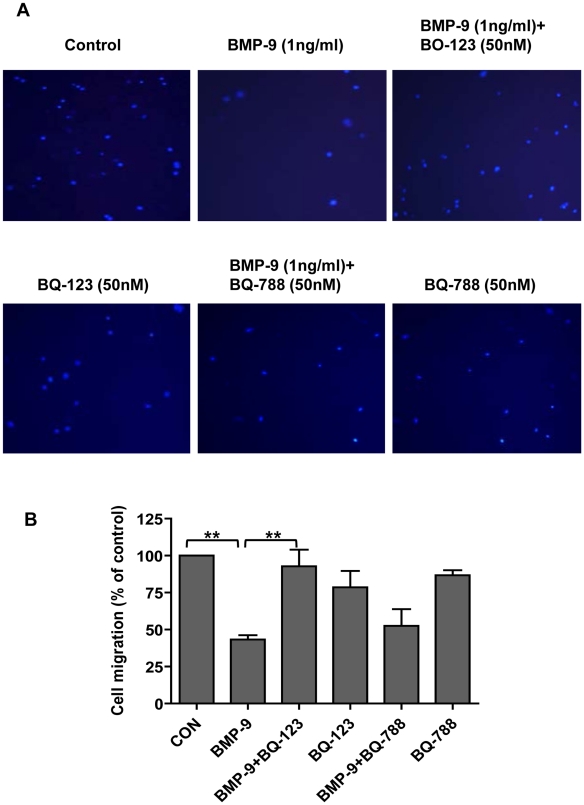
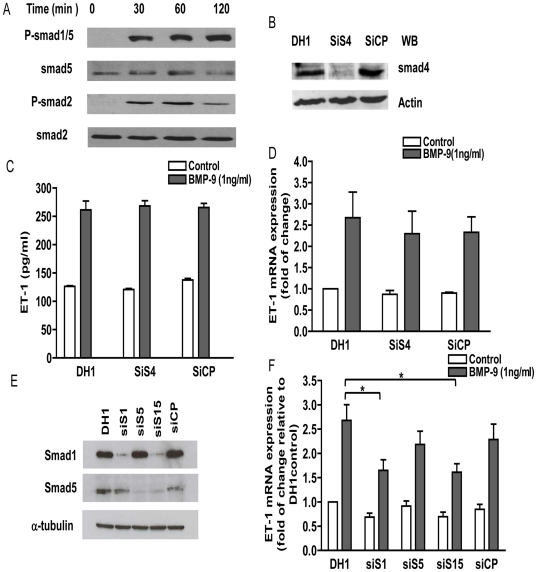
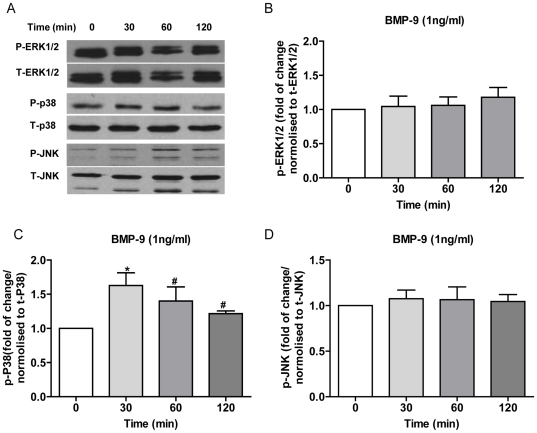
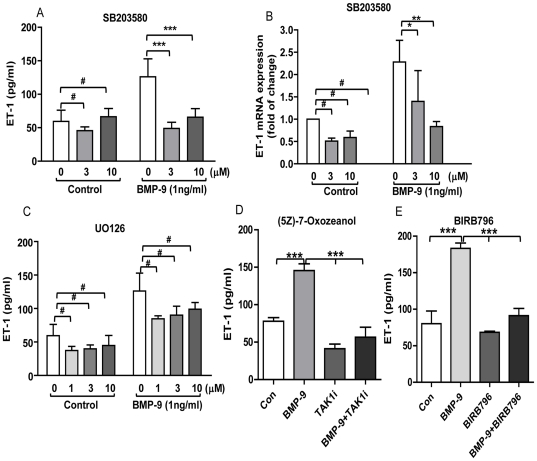
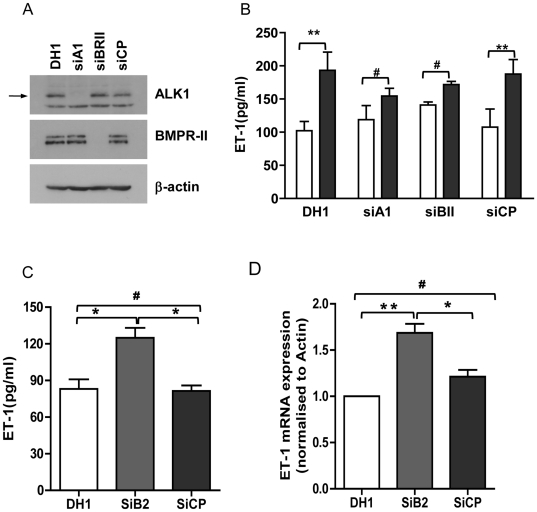
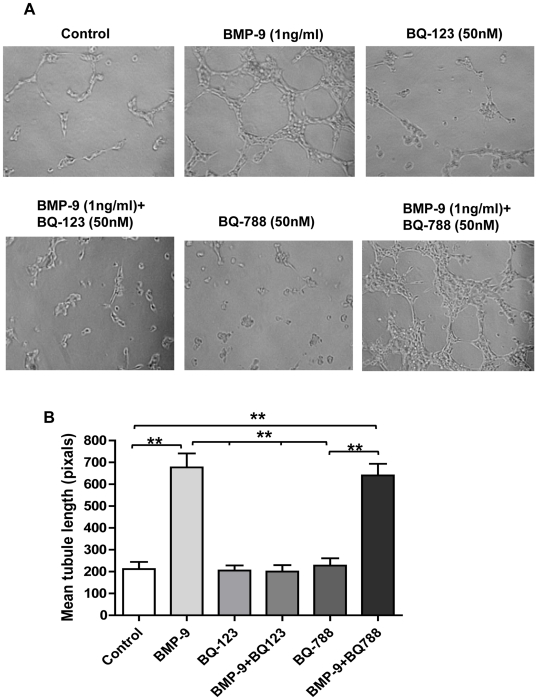
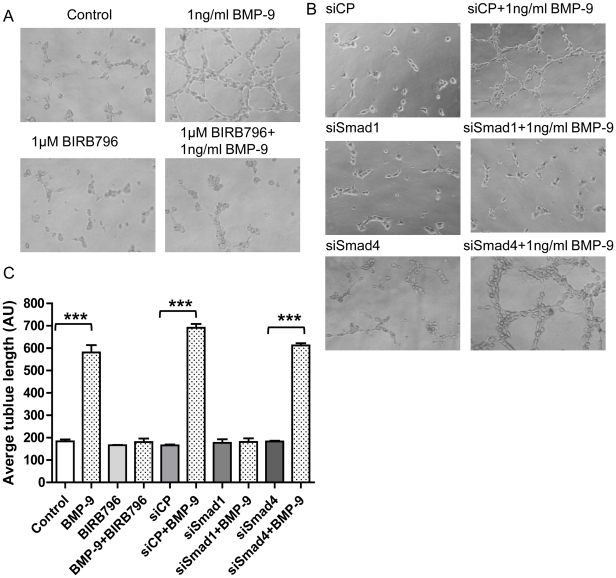
METHODOLOGY/PRINCIPAL FINDING: Using western blot, real time RT-PCR, ELISA and small RNA interference methods we provide evidence that in HPAECs BMP-9, but not BMP-2, -4 and -6 significantly stimulated ET-1 release under physiological concentrations. This release is mediated by both Smad1 and p38 MAPK and is independent of the canonical Smad4 pathway. Moreover, knocking down the ALK1 receptor or BMPR II attenuates BMP-9 stimulated ET-1 release, whilst causing a significant increase in prepro ET-1 mRNA transcription and mature peptide release. Finally, BMP-9 induced ET-1 release is involved in both inhibition of endothelial cell migration and promotion of tubule formation.
CONCLUSIONS/SIGNIFICANCE: Although our data does not support an important role for BMP-9 as a source of increased endothelial ET-1 production seen in human PAH, BMP-9 stimulated ET-1 production is likely to be important in angiogenesis and vascular stability. However, increased ET-1 production by endothelial cells as a consequence of BMPR II dysfunction may be clinically relevant in the pathogenesis of PAH.
骨形态发生蛋白(BMPs)及其受体,如骨形态发生蛋白受体(BMPR)II,已被牵涉到多种疾病中,包括肺动脉高压(PAH)。同样,内皮素-1(ET-1),一种有丝分裂原和血管收缩剂,在 PAH 中上调,并且内皮素受体拮抗剂用于其治疗。我们试图确定在人肺动脉内皮细胞(HPAECs)中,BMP 信号与 ET-1 轴之间是否存在串扰,这种串扰涉及的可能机制及其功能后果。
方法/主要发现:通过 Western blot、实时 RT-PCR、ELISA 和小 RNA 干扰方法,我们提供了证据,表明在 HPAECs 中,BMP-9,但不是 BMP-2、-4 和 -6,在生理浓度下显著刺激 ET-1 释放。这种释放是由 Smad1 和 p38 MAPK 介导的,与经典的 Smad4 途径无关。此外,敲低 ALK1 受体或 BMPR II 可减弱 BMP-9 刺激的 ET-1 释放,同时导致 prepro ET-1 mRNA 转录和成熟肽释放显著增加。最后,BMP-9 诱导的 ET-1 释放参与了内皮细胞迁移的抑制和管腔形成的促进。
结论/意义:尽管我们的数据不支持 BMP-9 作为人 PAH 中内皮 ET-1 产生增加的重要来源的作用,但 BMP-9 刺激的 ET-1 产生可能在血管生成和血管稳定性中很重要。然而,BMPR II 功能障碍导致内皮细胞产生增加的 ET-1 可能与 PAH 的发病机制有关。