University of California, Los Angeles.
J Clin Psychol. 2012 Apr;68(4):403-20. doi: 10.1002/jclp.20862. Epub 2012 Feb 3.
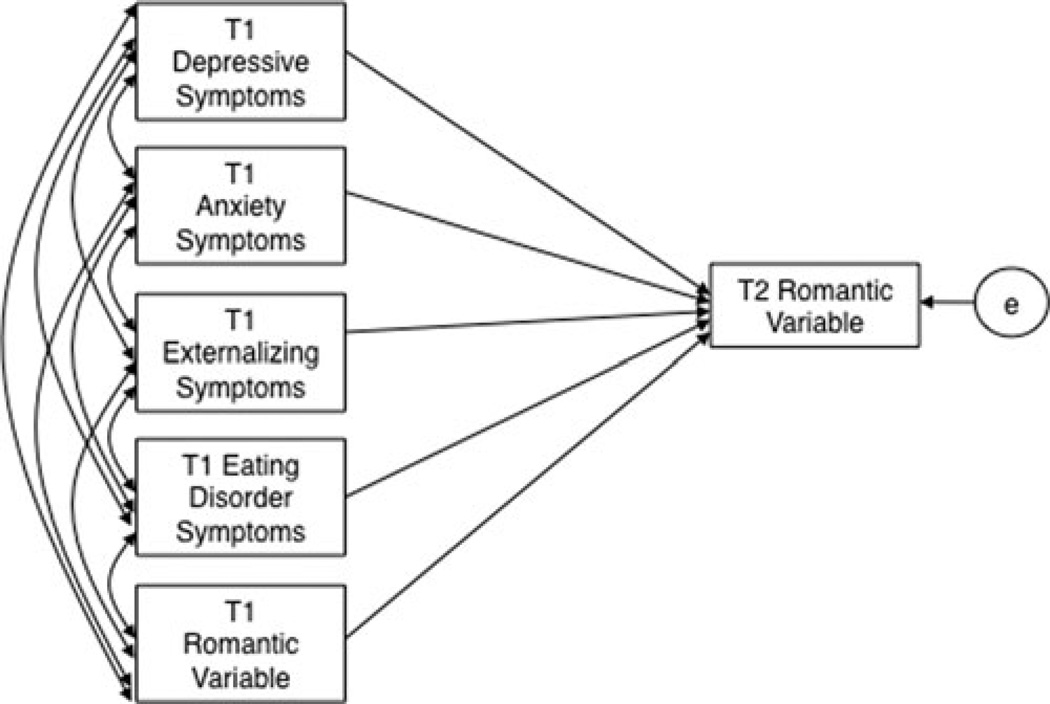
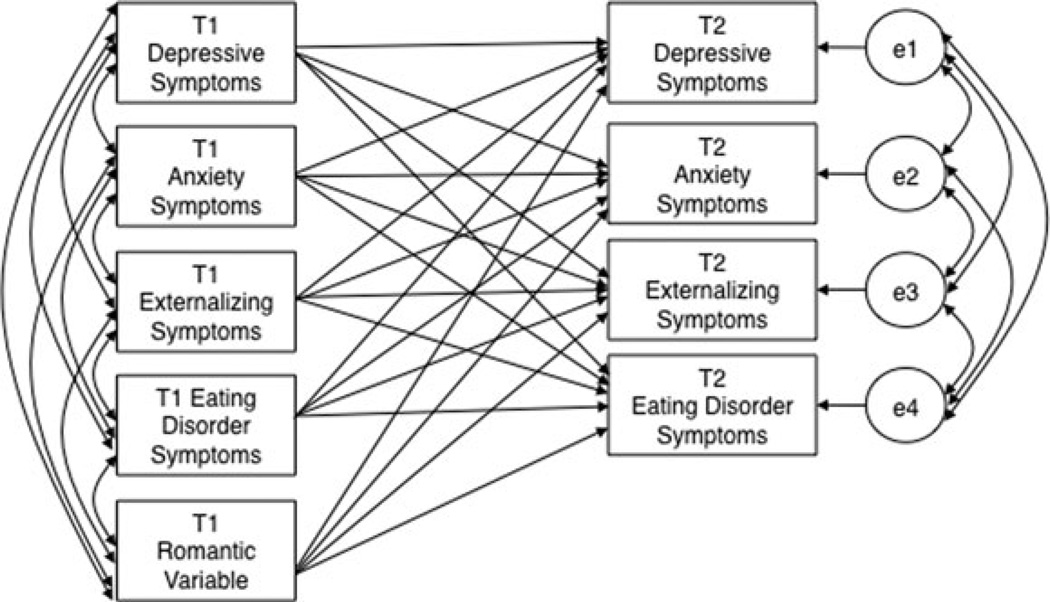
Research has linked adolescent romantic and sexual activities to depressive symptoms. The current study examines whether such activities are uniquely linked to depressive symptoms versus symptoms of other disorders (including anxiety, externalizing, and eating disorders), and whether co-occurring symptoms more precisely account for the association between depressive symptoms and romantic involvement.
Early adolescent girls (N = 83; mean age = 13.45) participated in baseline and 1-year follow up data collection.
Romantic (i.e., dating and sexual) activities were longitudinally related to numerous types of symptoms. The association between depressive symptoms and romantic variables remained when considering co-occurring symptoms. Girls with more comorbid disorders reported more romantic activities.
Results suggest that the maladaptive consequences and precipitants of adolescent romantic activities extend beyond depression, but also imply that this association is not secondary to comorbid symptoms. Future work should clarify causal pathways.
研究将青少年的恋爱和性行为与抑郁症状联系起来。本研究检验了这些活动是否与抑郁症状有独特的关联,而不是与其他疾病的症状(包括焦虑、外化和饮食失调)有独特的关联,以及共同出现的症状是否更能准确说明抑郁症状与恋爱关系之间的关联。
研究纳入了 83 名早期青春期女孩(平均年龄为 13.45 岁),并进行了基线和 1 年随访数据收集。
恋爱(即约会和性行为)活动与多种类型的症状呈纵向相关。当考虑到共同出现的症状时,抑郁症状与浪漫变量之间的关联仍然存在。患有更多共病障碍的女孩报告了更多的恋爱活动。
结果表明,青少年恋爱活动的适应不良后果和促成因素不仅超出了抑郁范围,而且还意味着这种关联不是继发于共病症状。未来的工作应该阐明因果途径。