Behjati Sam, Basu B Piku, Wallace Rebecca, Bier Nelly, Sebire Neil, Hasan Fyeza, Anderson John
Unit of Molecular Haematology and Cancer Biology, UCL Institute of Child Health, 30 Guilford Street, London WC1N 1EH, UK.
Sarcoma. 2012;2012:987239. doi: 10.1155/2012/987239. Epub 2012 Jan 18.
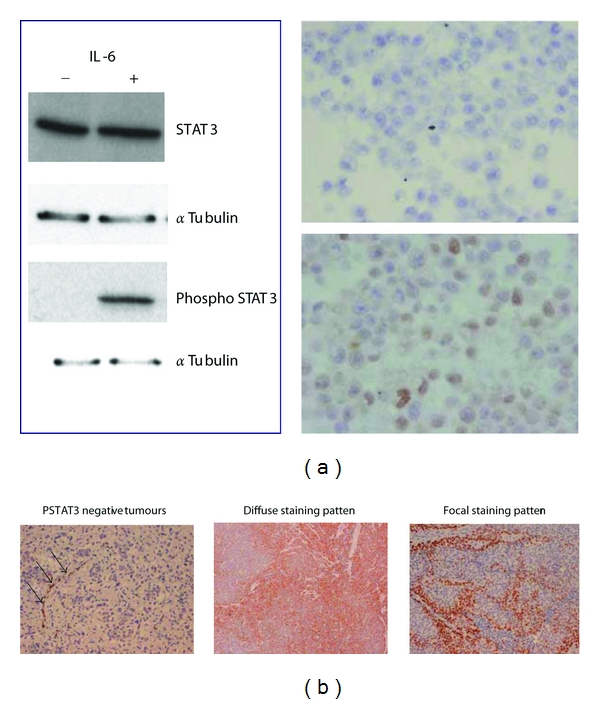
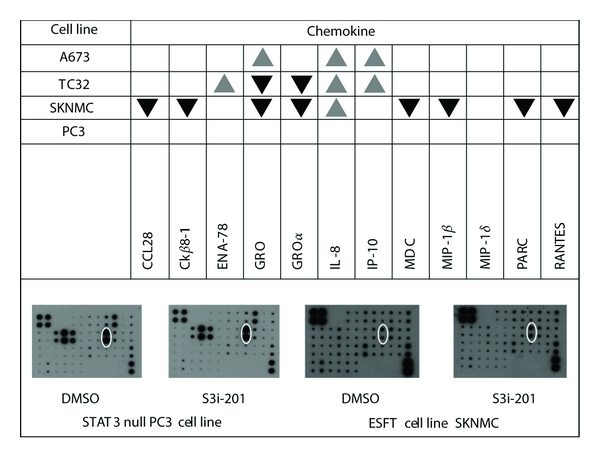
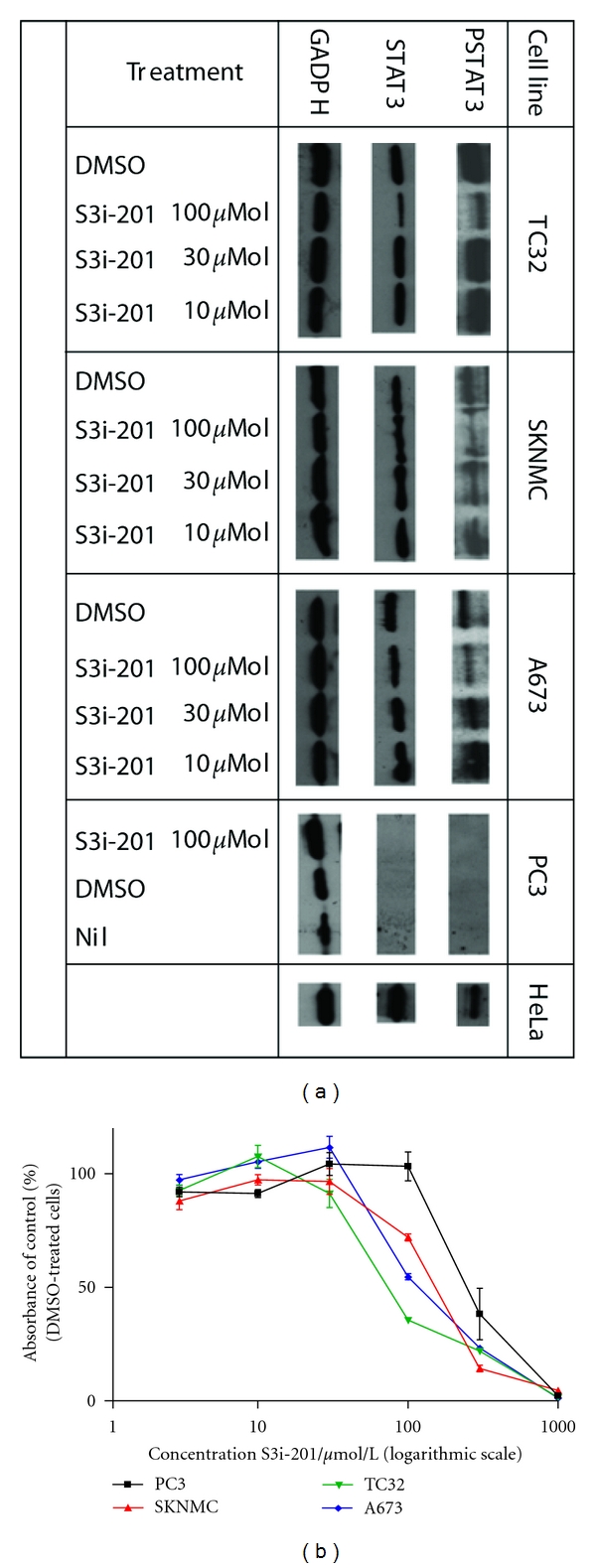
The Ewing sarcoma family of tumors (ESFT) represents an aggressive spectrum of malignant tumour types with common defining histological and cytogenetic features. To evaluate the functional activation of signal transducer and activator of transcription 3 (STAT3) in ESFT, we evaluated its activation in primary tissue sections and observed the functional consequences of its inhibition in ESFT cell lines. STAT3 was activated (tyrosine 705-phosphorylated) in 18 out of 31 primary tumours (58%), either diffusely (35%) or focally (23%). STAT3 was constitutively activated in 3 out of 3 ESFT cell lines tested, and its specific chemical inhibition resulted in complete loss of cell viability. STAT3 inhibition in ESFT cell lines was associated with several consistent changes in chemokine profile suggesting a role of STAT3 in ESFT in both cell survival and modification of the cellular immune environment. Together these data support the investigation of STAT3 inhibitors for the Ewing family of tumors.
尤因肉瘤家族性肿瘤(ESFT)是一组具有侵袭性的恶性肿瘤类型,具有共同的组织学和细胞遗传学特征。为了评估信号转导子和转录激活子3(STAT3)在ESFT中的功能激活情况,我们在原发性组织切片中评估了其激活情况,并观察了其在ESFT细胞系中抑制后的功能后果。在31例原发性肿瘤中有18例(58%)的STAT3被激活(酪氨酸705磷酸化),激活方式为弥漫性(35%)或局灶性(23%)。在所检测的3株ESFT细胞系中,有3株STAT3呈组成性激活,其特异性化学抑制导致细胞活力完全丧失。ESFT细胞系中STAT3的抑制与趋化因子谱的几种一致变化有关,这表明STAT3在ESFT的细胞存活和细胞免疫环境改变中均发挥作用。这些数据共同支持了对尤因家族性肿瘤使用STAT3抑制剂进行研究。