Division of Critical Care Medicine, Department of Pediatrics, Cincinnati Children's Hospital Medical Center, University of Cincinnati College of Medicine, Cincinnati, Ohio, USA.
Obesity (Silver Spring). 2012 Oct;20(10):1995-2002. doi: 10.1038/oby.2012.40. Epub 2012 Feb 15.
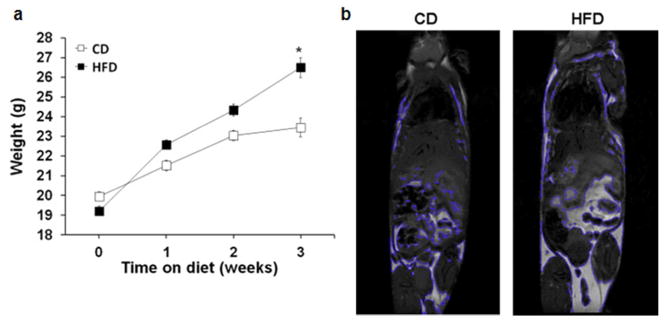
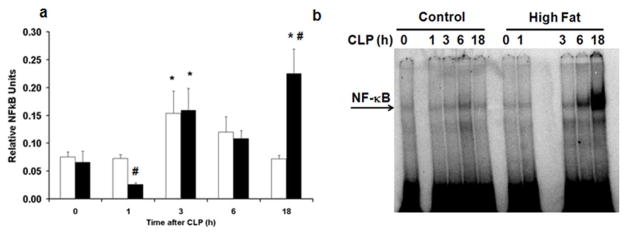
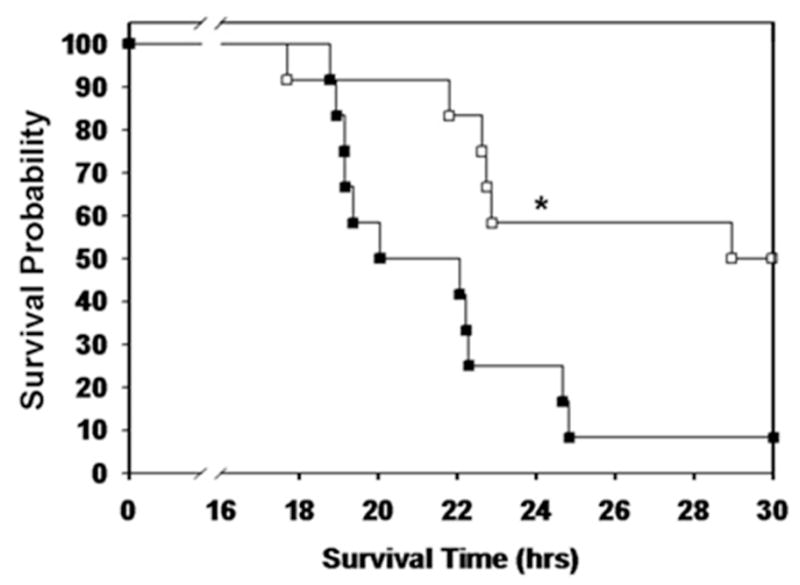
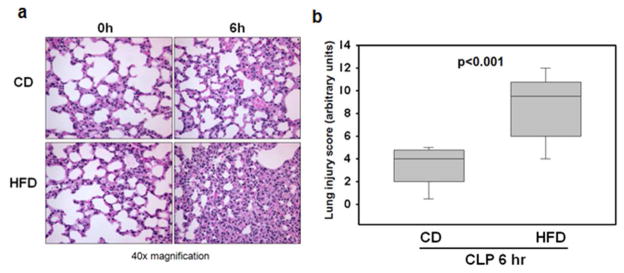
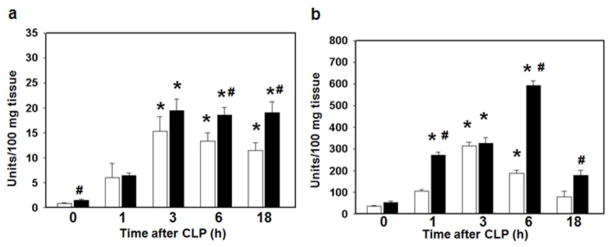
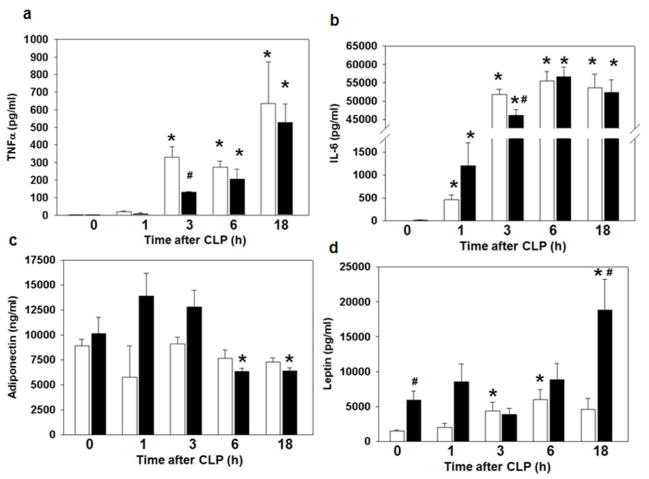
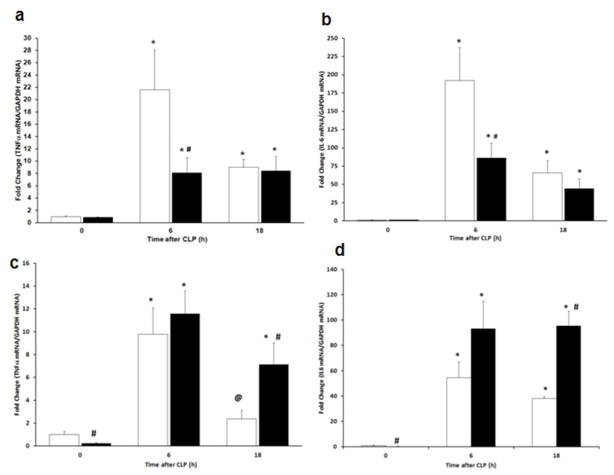
The purpose of this study was to examine the effect of short-term high fat feeding on the inflammatory response in polymicrobial sepsis. Male C57BL/6 mice at 6 weeks of age were randomized to a high-fat diet (HFD) (60% kcal fat) or control diet (CD) (16% kcal fat) for 3 weeks. After 3 weeks of feeding, sepsis was induced by cecal ligation and puncture (CLP) and animals were monitored for survival. In a separate experiment, after 3 weeks of feeding mice underwent CLP and were sacrificed at various time points thereafter. Tissue was collected for biochemical studies. Mice fed a HFD gained more weight and had a greater fat mass compared to CD-fed mice. Mice on a HFD had a lower probability of survival and more severe lung injury compared with CD-fed mice following sepsis. Myeloperoxidase (MPO) activity, an indicator of neutrophil infiltration, was increased in the lung and liver after CLP in HFD-fed mice compared with CD (P < 0.05). The plasma cytokines tumor necrosis factor-α (TNF-α) and interleukin (IL)-6 were increased in both groups after CLP, however, TNF-α and IL-6 levels were lower in HFD mice at 3 h after CLP compared with CD and consistent with lung, but not liver, messenger RNA (mRNA) expression. Leptin levels were higher in HFD-fed mice at 18 h after sepsis compared to baseline levels (P < 0.05). Polymicrobial sepsis increased hepatic nuclear factor-κB (NF-κB) activation in HFD-fed mice after CLP vs. CD-fed mice. Short duration high fat feeding increases mortality and organ injury following polymicrobial sepsis. These effects correspond to changes in NF-κB.
本研究旨在探讨短期高脂喂养对多微生物脓毒症炎症反应的影响。6 周龄雄性 C57BL/6 小鼠随机分为高脂饮食(HFD)组(60%卡路里脂肪)或对照饮食(CD)组(16%卡路里脂肪)喂养 3 周。喂养 3 周后,通过盲肠结扎和穿刺(CLP)诱导脓毒症,监测动物的生存情况。在另一项实验中,喂养 3 周后,小鼠进行 CLP 并在随后的不同时间点处死。收集组织进行生化研究。与 CD 喂养的小鼠相比,HFD 喂养的小鼠体重增加更多,体脂含量更高。与 CD 喂养的小鼠相比,HFD 喂养的小鼠在脓毒症后存活率更低,肺损伤更严重。与 CD 相比,HFD 喂养的小鼠 CLP 后肺和肝组织髓过氧化物酶(MPO)活性(中性粒细胞浸润的指标)增加(P<0.05)。CLP 后两组血浆细胞因子肿瘤坏死因子-α(TNF-α)和白细胞介素(IL)-6 均增加,但与 CD 相比,HFD 小鼠在 CLP 后 3 小时 TNF-α和 IL-6 水平较低,与肺而非肝 mRNA 表达一致。与基线水平相比,脓毒症后 18 小时 HFD 喂养的小鼠瘦素水平升高(P<0.05)。CLP 后,多微生物脓毒症增加了 HFD 喂养小鼠肝脏核因子-κB(NF-κB)的激活,与 CD 喂养的小鼠相比。短期高脂喂养增加了多微生物脓毒症后死亡率和器官损伤。这些影响与 NF-κB 的变化相对应。