Queen Mary University of London, School of Biological and Chemical Sciences, London, England.
PLoS Pathog. 2012 Feb;8(2):e1002531. doi: 10.1371/journal.ppat.1002531. Epub 2012 Feb 9.
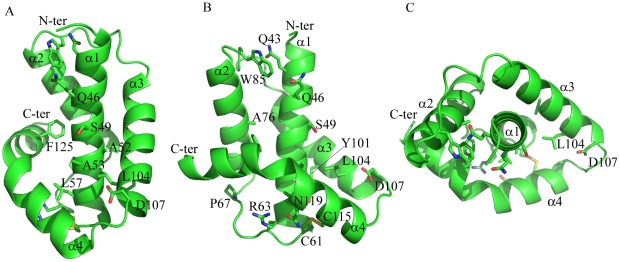
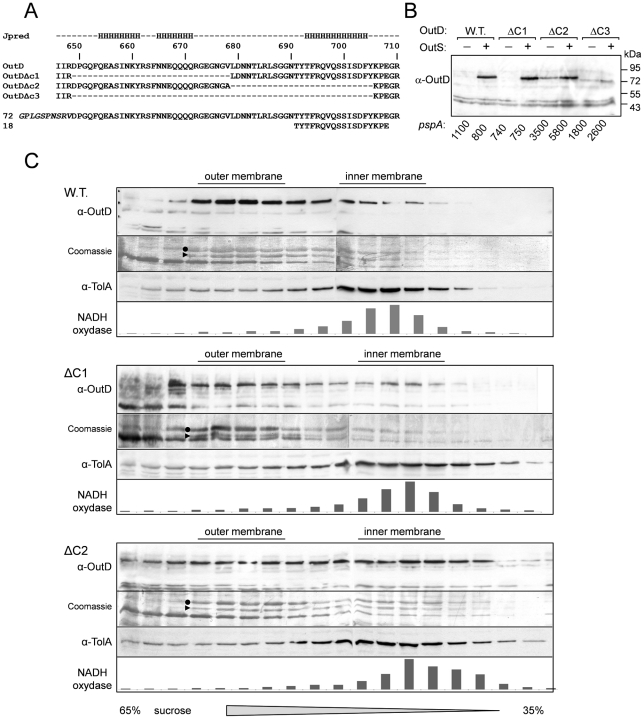
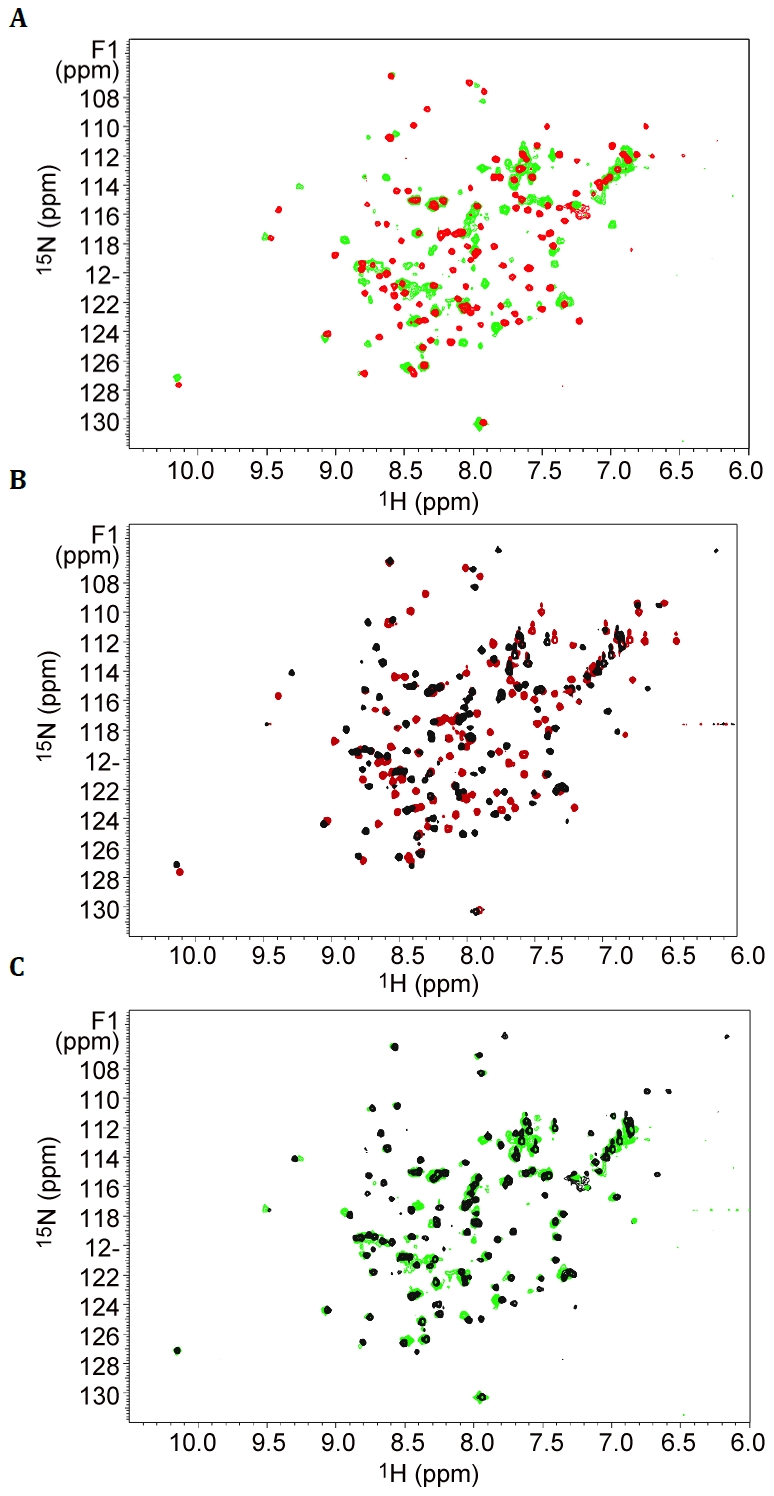
Gram-negative bacteria secrete virulence factors and assemble fibre structures on their cell surface using specialized secretion systems. Three of these, T2SS, T3SS and T4PS, are characterized by large outer membrane channels formed by proteins called secretins. Usually, a cognate lipoprotein pilot is essential for the assembly of the secretin in the outer membrane. The structures of the pilotins of the T3SS and T4PS have been described. However in the T2SS, the molecular mechanism of this process is poorly understood and its structural basis is unknown. Here we report the crystal structure of the pilotin of the T2SS that comprises an arrangement of four α-helices profoundly different from previously solved pilotins from the T3SS and T4P and known four α-helix bundles. The architecture can be described as the insertion of one α-helical hairpin into a second open α-helical hairpin with bent final helix. NMR, CD and fluorescence spectroscopy show that the pilotin binds tightly to 18 residues close to the C-terminus of the secretin. These residues, unstructured before binding to the pilotin, become helical on binding. Data collected from crystals of the complex suggests how the secretin peptide binds to the pilotin and further experiments confirm the importance of these C-terminal residues in vivo.
革兰氏阴性菌通过其细胞表面的专门分泌系统分泌毒力因子并组装纤维结构。其中三种,T2SS、T3SS 和 T4PS,其特征是由称为分泌蛋白的蛋白质形成的大型外膜通道。通常,同源脂肽启动子对于外膜中分泌蛋白的组装是必不可少的。已经描述了 T3SS 和 T4PS 的启动子的结构。然而,在 T2SS 中,该过程的分子机制理解甚少,其结构基础尚不清楚。在这里,我们报告了 T2SS 启动子的晶体结构,该结构由四个α-螺旋的排列组成,与之前从 T3SS 和 T4P 以及已知的四个α-螺旋束中解决的启动子有很大不同。该结构可以描述为一个α-螺旋发夹插入第二个开放的α-螺旋发夹中,最后一个螺旋弯曲。NMR、CD 和荧光光谱表明,启动子与接近分泌蛋白 C 末端的 18 个残基紧密结合。这些残基在与启动子结合之前没有结构,结合后变成螺旋。从复合物晶体中收集的数据表明了分泌蛋白如何与启动子结合,进一步的实验证实了这些 C 末端残基在体内的重要性。