Research Group Developmental Neuropsychopharmacology, Institute of Psychopharmacology, Central Institute of Mental Health, Medical Faculty Mannheim, University of Heidelberg, Mannheim, Germany.
PLoS One. 2012;7(2):e31169. doi: 10.1371/journal.pone.0031169. Epub 2012 Feb 8.
The aim of the present study was to examine if differences in the endocannabinoid (ECB) system might be linked to strain specific variations in reward-related behavior in Fischer344 (Fischer) and Wistar rats.
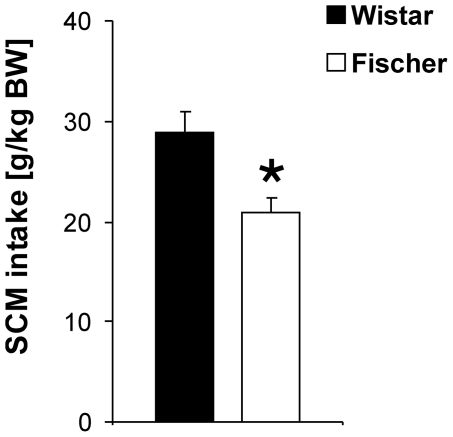
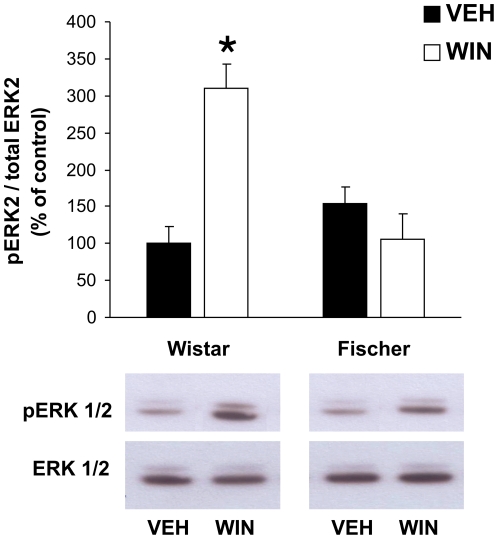
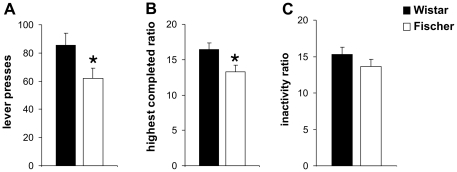
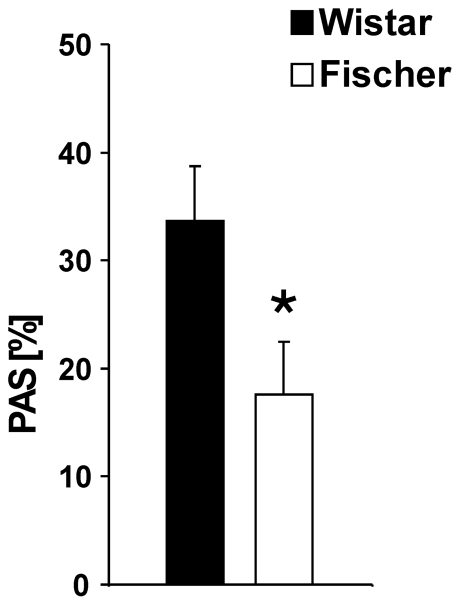
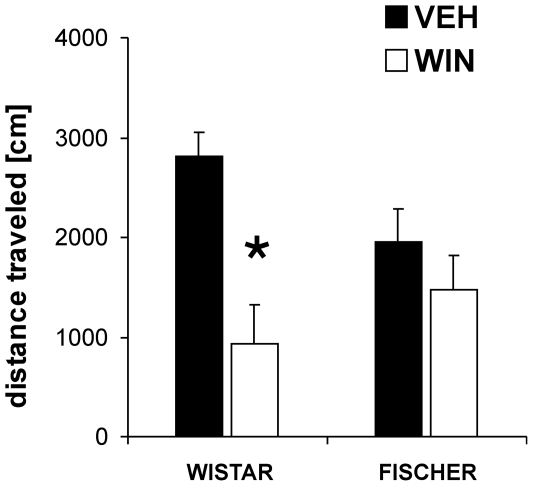
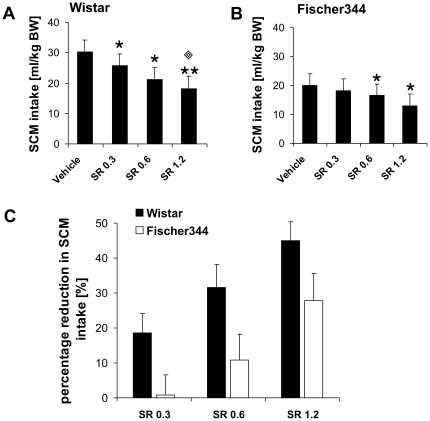
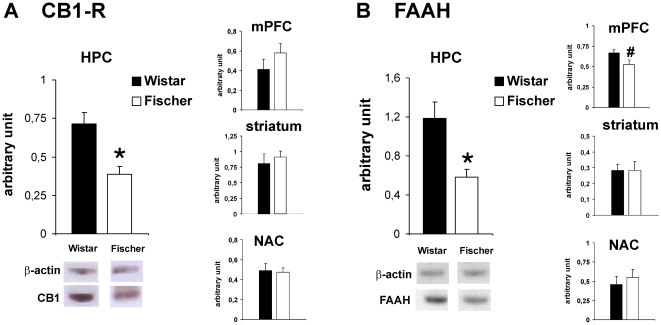
METHODOLOGY/PRINCIPAL FINDINGS: Two rat strains, the Fischer and the Wistar strain, were tested for different aspects of reward sensitivity for a palatable food reward (sweetened condensed milk, SCM) in a limited-access intake test, a progressive ratio (PR) schedule and the pleasure-attenuated startle (PAS) paradigm. Additionally, basic differences in the ECB system and cannabinoid pharmacology were examined in both rat strains. Fischer rats were found to express lower reward sensitivity towards SCM compared to Wistar rats. These differences were observed for consummatory, motivational and hedonic aspects of the palatable food reward. Western blot analysis for the CB1 receptor and the ECB degrading enzyme fatty acid amide hydrolase (FAAH) revealed a lower expression of both proteins in the hippocampus (HPC) of Fischer rats compared to the Wistar strain. Furthermore, increased cannabinoid-stimulated extracellular-regulated kinase (ERK) phosphorylation was detected in Wistar rats compared to the Fischer strain, indicating alterations in ECB signaling. These findings were further supported by the pharmacological results, where Fischer rats were found to be less sensitive towards the effects of the CB1 receptor antagonist/inverse agonist SR141716 and the cannabinoid agonist WIN 55,212-2.
CONCLUSIONS/SIGNIFICANCE: Our present findings indicate differences in the expression of the CB1 receptor and FAAH, as well as the activation of ECB signaling pathways between Fischer and Wistar rats. These basic differences in the ECB system might contribute to the pronounced differences observed in reward sensitivity between both rat strains.
本研究旨在探讨内源性大麻素(ECB)系统的差异是否与费希尔 344(费希尔)和 Wistar 大鼠与奖励相关行为的应变特异性变化有关。
方法/主要发现:两种大鼠品系,费希尔和 Wistar 品系,在有限访问摄入试验、递增比率(PR)方案和快感减弱的惊跳(PAS)范式中,对美味食物奖励(加糖炼乳,SCM)的不同奖励敏感性方面进行了测试。此外,还在两种大鼠品系中检查了 ECB 系统和大麻素药理学的基本差异。与 Wistar 大鼠相比,费希尔大鼠对 SCM 的奖励敏感性较低。这些差异在美味食物奖励的消费、动机和享乐方面均有观察到。CB1 受体和 ECB 降解酶脂肪酸酰胺水解酶(FAAH)的 Western blot 分析显示,与 Wistar 品系相比,费希尔大鼠的海马体(HPC)中这两种蛋白的表达水平较低。此外,与费希尔品系相比,Wistar 大鼠中大麻素刺激的细胞外调节激酶(ERK)磷酸化增加,表明 ECB 信号发生改变。这些发现进一步得到了药理学结果的支持,结果显示,与 Wistar 大鼠相比,费希尔大鼠对 CB1 受体拮抗剂/反向激动剂 SR141716 和大麻素激动剂 WIN 55,212-2 的作用不敏感。
结论/意义:我们目前的研究结果表明,在费希尔和 Wistar 大鼠之间,CB1 受体和 FAAH 的表达以及 ECB 信号转导途径的激活存在差异。ECB 系统的这些基本差异可能导致两种大鼠品系之间奖励敏感性的显著差异。