Shi Wei-Wei, Yang Yang, Shi Yun, Jiang Chun
Cardiothoracic Research Laboratory, Carlyle Fraser Heart Center, Emory University, Atlanta, GA 30308, USA.
Sheng Li Xue Bao. 2012 Feb 25;64(1):1-13.
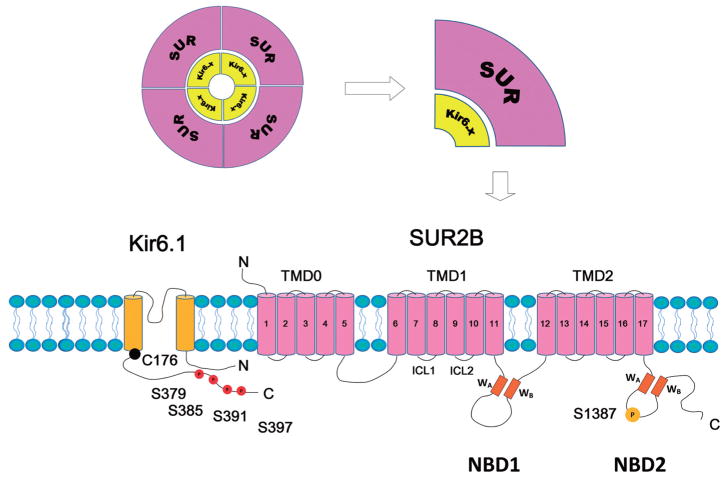
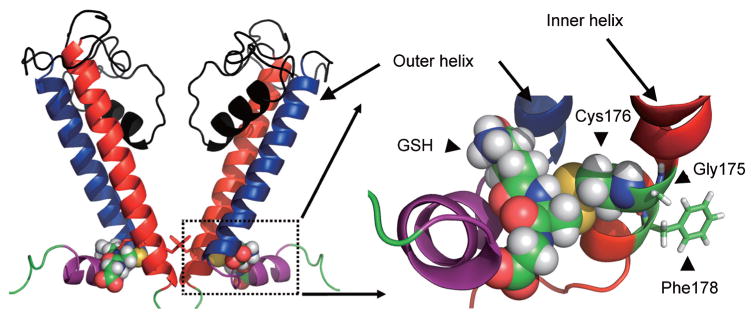
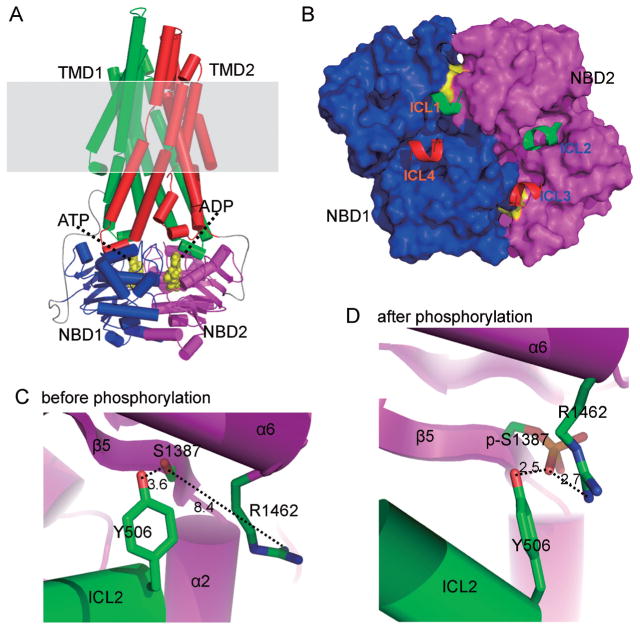
ATP-sensitive potassium (K(ATP)) channels are widely distributed in vasculatures, and play an important role in the vascular tone regulation. The K(ATP) channels consist of 4 pore-forming inward rectifier K(+) channel (Kir) subunits and 4 regulatory sulfonylurea receptors (SUR). The major vascular isoform of K(ATP) channels is composed of Kir6.1/SUR2B, although low levels of other subunits are also present in vascular beds. The observation from transgenic mice and humans carrying Kir6.1/SUR2B channel mutations strongly supports that normal activity of the Kir6.1/SUR2B channel is critical for cardiovascular function. The Kir6.1/SUR2B channel is regulated by intracellular ATP and ADP. The channel is a common target of several vasodilators and vasoconstrictors. Endogenous vasopressors such as arginine vasopressin and α-adrenoceptor agonists stimulate protein kinase C (PKC) and inhibit the K(ATP) channels, while vasodilators such as β-adrenoceptor agonists and vasoactive intestinal polypeptide increase K(ATP) channel activity by activating the adenylate cyclase-cAMP-protein kinase A (PKA) pathway. PKC phosphorylates a cluster of 4 serine residues at C-terminus of Kir6.1, whereas PKA acts on Ser1387 in the nucleotide binding domain 2 of SUR2B. The Kir6.1/SUR2B channel is also inhibited by oxidants including reactive oxygen species allowing vascular regulation in oxidative stress. The molecular basis underlying such a channel inhibition is likely to be mediated by S-glutathionylation at a few cysteine residues, especially Cys176, in Kir6.1. Furthermore, the channel activity is augmented in endotoxemia or septic shock, as a result of the upregulation of Kir6.1/SUR2B expression. Activation of the nuclear factor-κB dependent transcriptional mechanism contributes to the Kir6.1/SUR2B channel upregulation by lipopolysaccharides and perhaps other toll-like receptor ligands as well. In this review, we summarize the vascular K(ATP) channel regulation under physiological and pathophysiological conditions, and discuss the importance of K(ATP) channel as a potentially useful target in the treatment and prevention of cardiovascular diseases.
ATP 敏感性钾(K(ATP))通道广泛分布于血管系统中,在血管张力调节中发挥重要作用。K(ATP)通道由 4 个形成孔道的内向整流钾(Kir)亚基和 4 个调节性磺脲类受体(SUR)组成。K(ATP)通道的主要血管亚型由 Kir6.1/SUR2B 组成,尽管其他亚基在血管床中也有少量存在。对携带 Kir6.1/SUR2B 通道突变的转基因小鼠和人类的观察结果有力地支持了 Kir6.1/SUR2B 通道的正常活性对心血管功能至关重要。Kir6.1/SUR2B 通道受细胞内 ATP 和 ADP 的调节。该通道是多种血管舒张剂和血管收缩剂的共同靶点。内源性血管加压素如精氨酸血管加压素和α-肾上腺素能受体激动剂刺激蛋白激酶 C(PKC)并抑制 K(ATP)通道,而血管舒张剂如β-肾上腺素能受体激动剂和血管活性肠肽通过激活腺苷酸环化酶-cAMP-蛋白激酶 A(PKA)途径增加 K(ATP)通道活性。PKC 使 Kir6.1 羧基末端的一簇 4 个丝氨酸残基磷酸化,而 PKA 作用于 SUR2B 核苷酸结合结构域 2 中的 Ser1387。Kir6.1/SUR2B 通道也受到包括活性氧在内的氧化剂的抑制,从而在氧化应激中实现血管调节。这种通道抑制的分子基础可能是由 Kir6.1 中几个半胱氨酸残基(尤其是 Cys176)的 S-谷胱甘肽化介导的。此外,由于 Kir6.1/SUR2B 表达上调,在内毒素血症或脓毒性休克中通道活性增强。核因子-κB 依赖性转录机制的激活导致脂多糖以及可能其他 Toll 样受体配体对 Kir6.1/SUR2B 通道的上调。在本综述中,我们总结了生理和病理生理条件下血管 K(ATP)通道的调节,并讨论了 K(ATP)通道作为心血管疾病治疗和预防中潜在有用靶点的重要性。