Department of Mechanical Engineering, University of South Carolina, 300 Main Street, Columbia, South Carolina 29208, USA.
Sci Rep. 2011;1:148. doi: 10.1038/srep00148. Epub 2011 Nov 8.
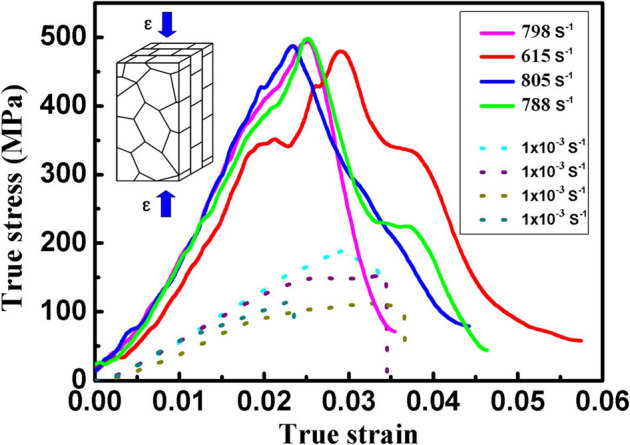
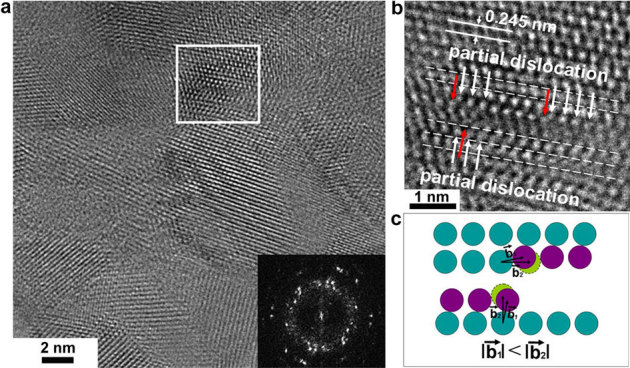
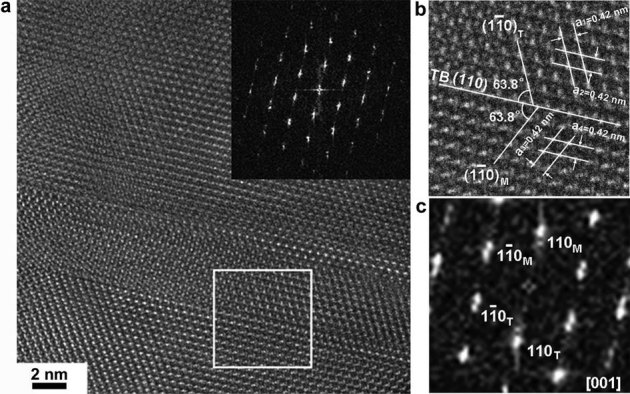
Under high-strain-rate compression (strain rate approximately 10(3) s(-1)), nacre (mother-of-pearl) exhibits surprisingly high fracture strength vis-à-vis under quasi-static loading (strain rate 10(-3) s(-1)). Nevertheless, the underlying mechanism responsible for such sharply different behaviors in these two loading modes remains completely unknown. Here we report a new deformation mechanism, adopted by nacre, the best-ever natural armor material, to protect itself against predatory penetrating impacts. It involves the emission of partial dislocations and the onset of deformation twinning that operate in a well-concerted manner to contribute to the increased high-strain-rate fracture strength of nacre. Our findings unveil that Mother Nature delicately uses an ingenious strain-rate-dependent stiffening mechanism with a purpose to fight against foreign attacks. These findings should serve as critical design guidelines for developing engineered body armor materials.
在高应变速率压缩下(应变速率约为 10(3) s(-1)),珍珠母(珍珠层)表现出令人惊讶的高断裂强度,与准静态加载下的断裂强度相比(应变速率为 10(-3) s(-1))。然而,导致这两种加载模式下截然不同行为的潜在机制仍然完全未知。在这里,我们报道了一种新的变形机制,被珍珠母采用,作为迄今为止最好的天然装甲材料,来保护自己免受掠食性穿透冲击。它涉及部分位错的发射和变形孪晶的开始,这些位错和孪晶以协调的方式运作,有助于提高珍珠母的高应变速率断裂强度。我们的发现揭示了大自然母亲巧妙地使用了一种巧妙的应变率相关的增强机制,目的是对抗外来攻击。这些发现应该为开发工程化的防弹材料提供关键的设计指导。