Department of Biochemistry, McGill University, Montreal, Canada.
PLoS One. 2012;7(2):e31012. doi: 10.1371/journal.pone.0031012. Epub 2012 Feb 21.
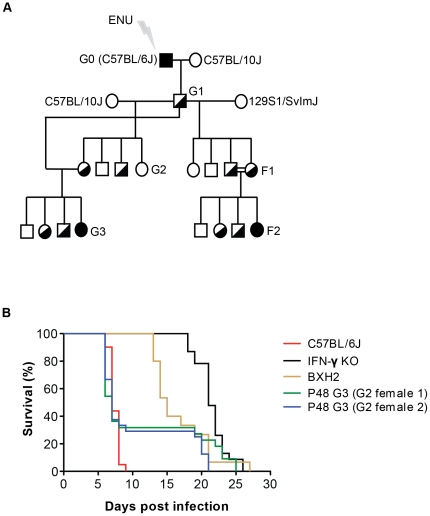
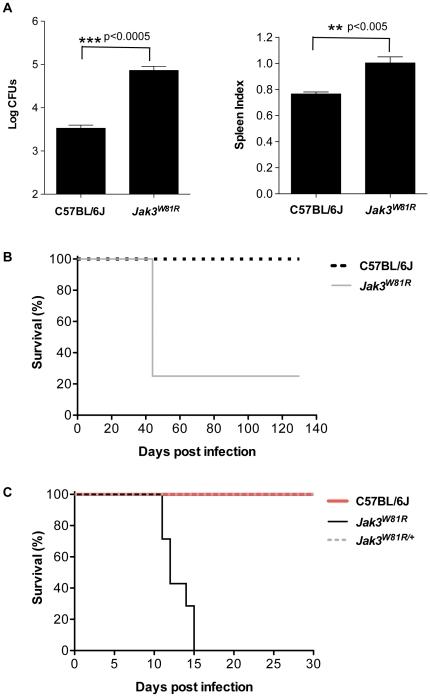
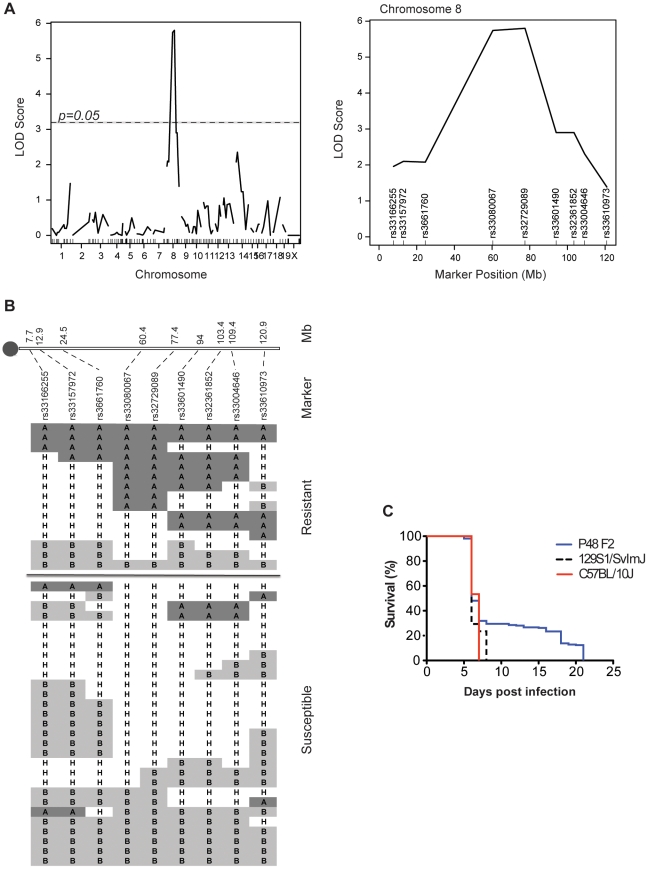
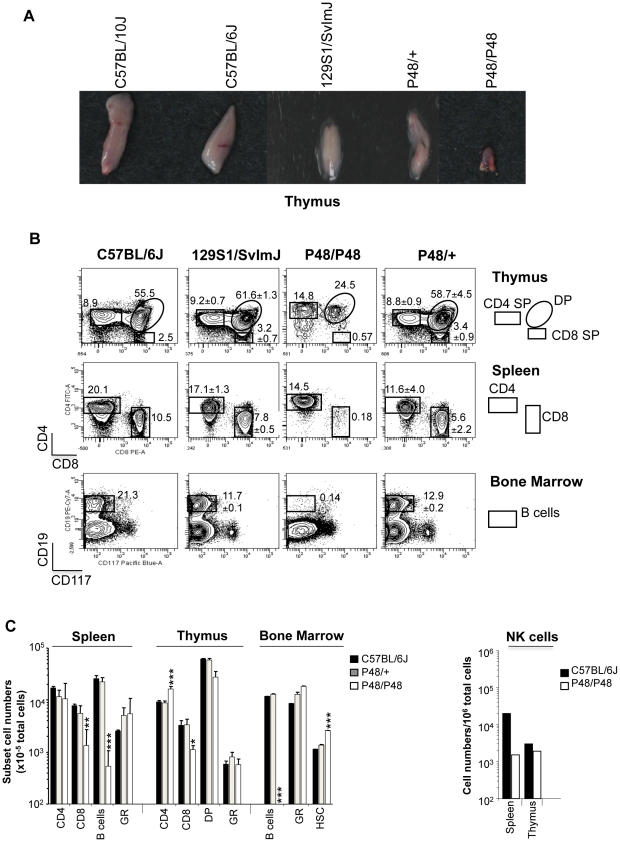
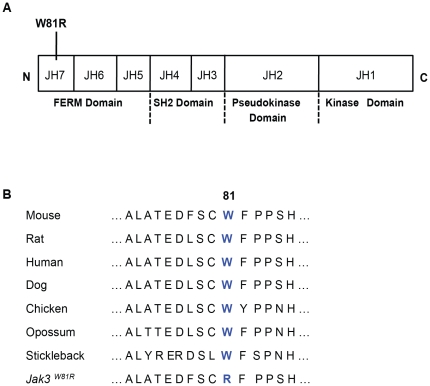
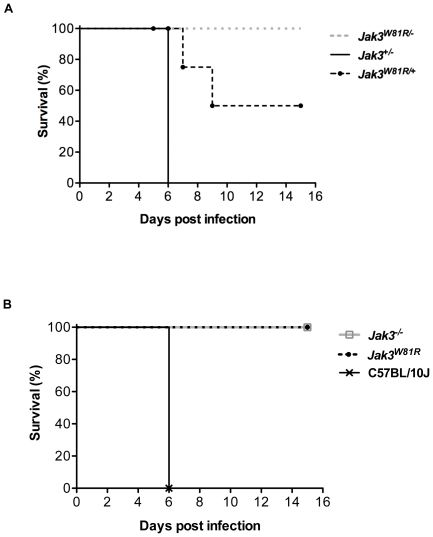
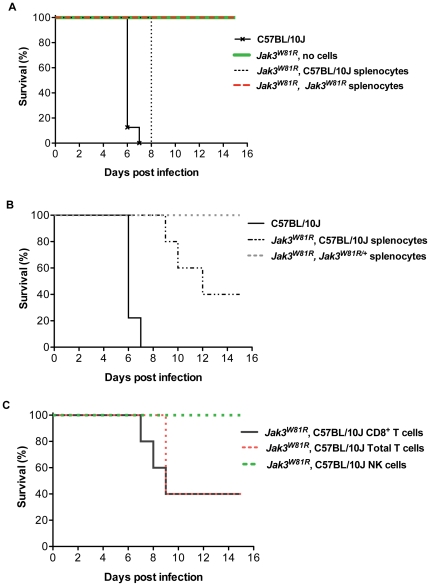
Cerebral malaria (CM) is a lethal neurological complication of malaria. We implemented a genome-wide screen in mutagenized mice to identify host proteins involved in CM pathogenesis and whose inhibition may be of therapeutic value. One pedigree (P48) segregated a resistance trait whose CM-protective effect was fully penetrant, mapped to chromosome 8, and identified by genome sequencing as homozygosity for a mis-sense mutation (W81R) in the FERM domain of Janus-associated kinase 3 (Jak3). The causative effect of Jak3(W81R) was verified by complementation testing in Jak3(W81R/-) double heterozygotes that were fully protected against CM. Jak3(W81R) homozygotes showed defects in thymic development with depletion of CD8(+) T cell, B cell, and NK cell compartments, and defective T cell-dependent production of IFN-γ. Adoptive transfer of normal splenocytes abrogates CM resistance in Jak3(W81R) homozygotes, an effect attributed to the CD8(+) T cells. Jak3(W81R) behaves as a dominant negative variant, with significant CM resistance of Jak3(W81R/+) heterozygotes, compared to CM-susceptible Jak3(+/+) and Jak3(+/-) controls. CM resistance in Jak3(W81R/+) heterozygotes occurs in presence of normal T, B and NK cell numbers. These findings highlight the pathological role of CD8(+) T cells and Jak3-dependent IFN-γ-mediated Th1 responses in CM pathogenesis.
脑型疟疾(CM)是疟疾的一种致命性神经并发症。我们在诱变小鼠中进行了全基因组筛选,以鉴定参与 CM 发病机制的宿主蛋白,这些蛋白的抑制作用可能具有治疗价值。一个家系(P48)分离出一种抗性特征,其 CM 保护作用完全穿透,定位于 8 号染色体,并通过基因组测序鉴定为 Janus 相关激酶 3(Jak3)FERM 结构域中错义突变(W81R)的纯合子。Jak3(W81R)的因果效应通过 Jak3(W81R/-)双杂合子的互补测试得到验证,这些杂合子完全免受 CM 的影响。Jak3(W81R)纯合子表现出胸腺发育缺陷,CD8(+)T 细胞、B 细胞和 NK 细胞区室耗竭,以及 T 细胞依赖性 IFN-γ产生缺陷。正常脾细胞的过继转移消除了 Jak3(W81R)纯合子的 CM 抗性,这种效应归因于 CD8(+)T 细胞。Jak3(W81R)表现为显性负变体,与 CM 易感的 Jak3(+/+)和 Jak3(+/-)对照相比,Jak3(W81R/+)杂合子具有显著的 CM 抗性。在 Jak3(W81R/+)杂合子中,存在正常的 T、B 和 NK 细胞数量时,CM 抗性就会发生。这些发现强调了 CD8(+)T 细胞和 Jak3 依赖性 IFN-γ介导的 Th1 反应在 CM 发病机制中的病理作用。