Genetics and Biochemistry Branch, National Institute of Diabetes, Digestive and Kidney Diseases, NIH, Bethesda, MD 20892, USA.
Genome Res. 2012 May;22(5):957-65. doi: 10.1101/gr.130583.111. Epub 2012 Feb 24.
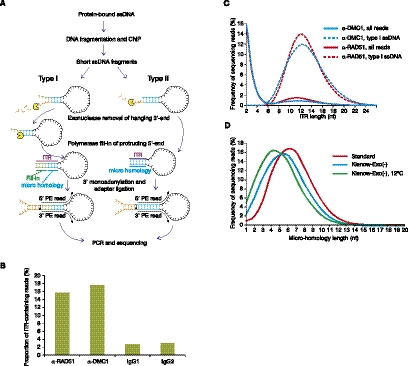
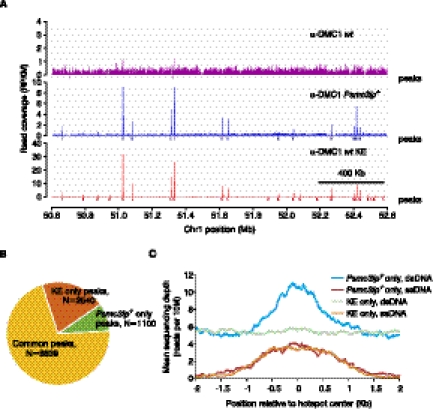
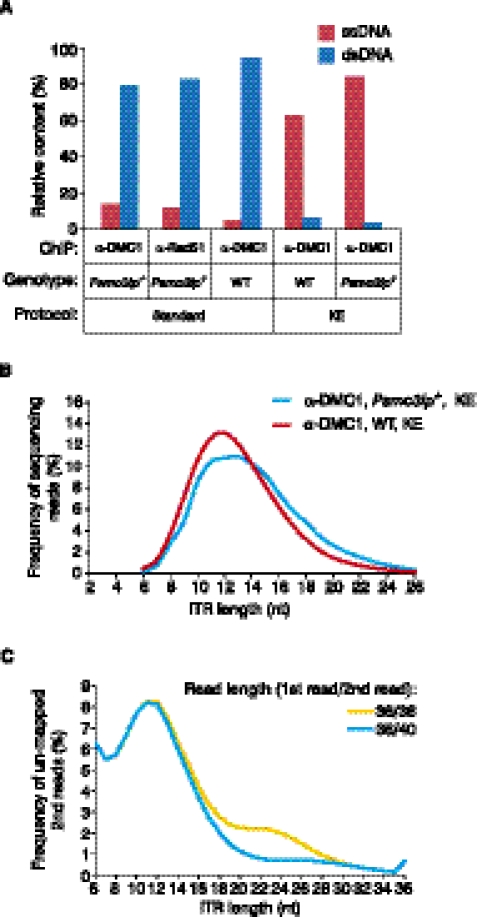
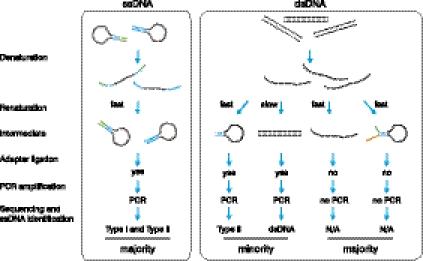
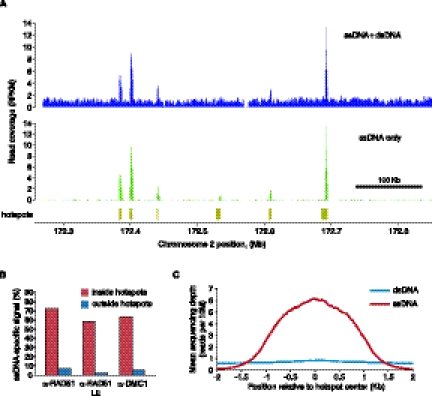
Meiotic DNA double-stranded breaks (DSBs) initiate genetic recombination in discrete areas of the genome called recombination hotspots. DSBs can be directly mapped using chromatin immunoprecipitation followed by sequencing (ChIP-seq). Nevertheless, the genome-wide mapping of recombination hotspots in mammals is still a challenge due to the low frequency of recombination, high heterogeneity of the germ cell population, and the relatively low efficiency of ChIP. To overcome these limitations we have developed a novel method--single-stranded DNA (ssDNA) sequencing (SSDS)--that specifically detects protein-bound single-stranded DNA at DSB ends. SSDS comprises a computational framework for the specific detection of ssDNA-derived reads in a sequencing library and a new library preparation procedure for the enrichment of fragments originating from ssDNA. The use of our technique reduces the nonspecific double-stranded DNA (dsDNA) background >10-fold. Our method can be extended to other systems where the identification of ssDNA or DSBs is desired.
减数分裂 DNA 双链断裂 (DSB) 在基因组的离散区域引发遗传重组,这些区域称为重组热点。可以使用染色质免疫沉淀 followed by sequencing (ChIP-seq) 直接对 DSB 进行定位。然而,由于重组频率低、生殖细胞群体异质性高以及 ChIP 效率相对较低,哺乳动物中重组热点的全基因组作图仍然是一个挑战。为了克服这些限制,我们开发了一种新方法——单链 DNA (ssDNA) 测序 (SSDS)——该方法专门检测 DSB 末端蛋白质结合的单链 DNA。SSDS 包括一个计算框架,用于在测序文库中特异性检测源自 ssDNA 的读取,以及一种新的文库制备程序,用于富集源自 ssDNA 的片段。我们的技术可将非特异性双链 DNA (dsDNA) 背景降低 >10 倍。我们的方法可以扩展到其他需要识别 ssDNA 或 DSB 的系统。