Geriatric Anesthesia Research Unit, Department of Anesthesia, Critical Care and Pain Medicine, Massachusetts General Hospital and Harvard Medical School, Charlestown, USA.
Ann Neurol. 2012 May;71(5):687-98. doi: 10.1002/ana.23536. Epub 2012 Feb 24.
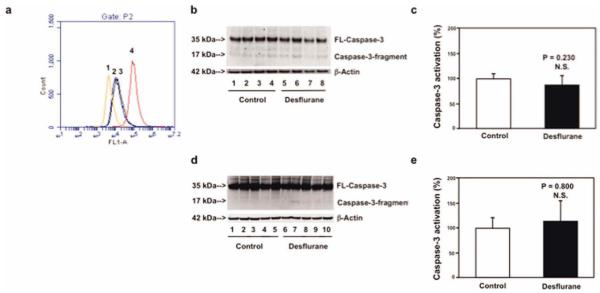
There are approximately 8.5 million Alzheimer disease (AD) patients who need anesthesia and surgery care every year. The inhalation anesthetic isoflurane, but not desflurane, has been shown to induce caspase activation and apoptosis, which are part of AD neuropathogenesis, through the mitochondria-dependent apoptosis pathway. However, the in vivo relevance, underlying mechanisms, and functional consequences of these findings remain largely to be determined.
We therefore set out to assess the effects of isoflurane and desflurane on mitochondrial function, cytotoxicity, learning, and memory using flow cytometry, confocal microscopy, Western blot analysis, immunocytochemistry, and the fear conditioning test.
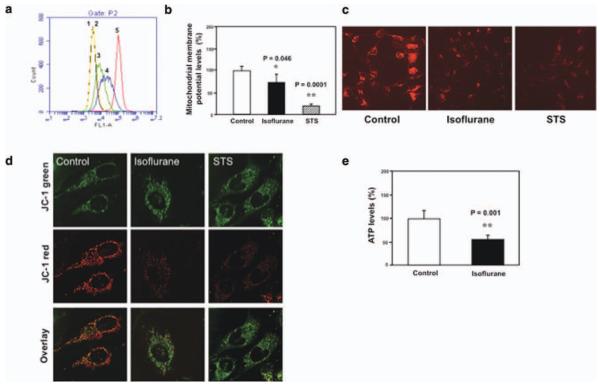
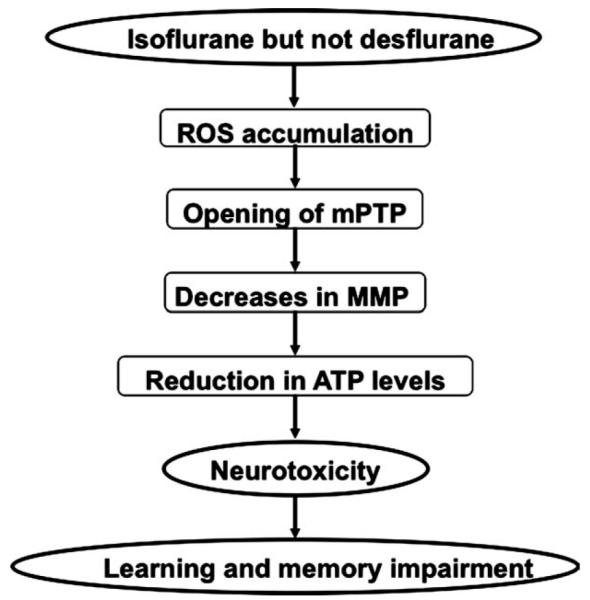
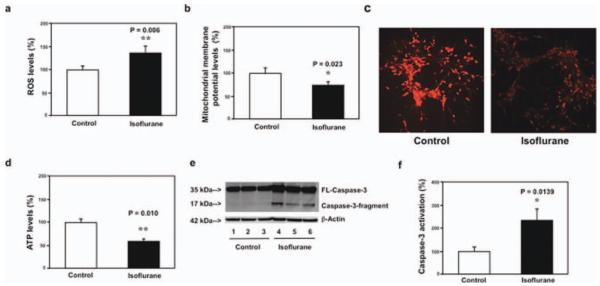
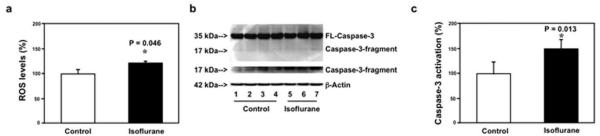
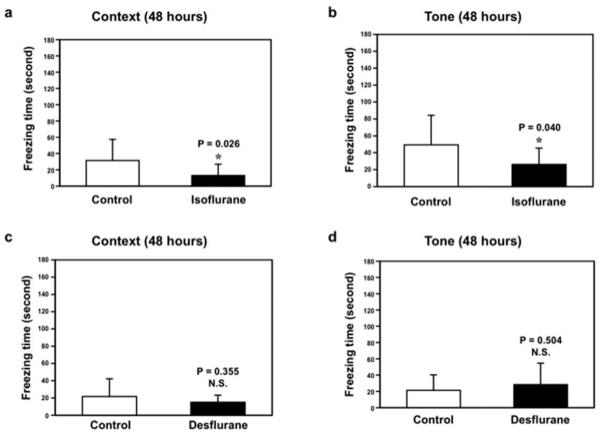
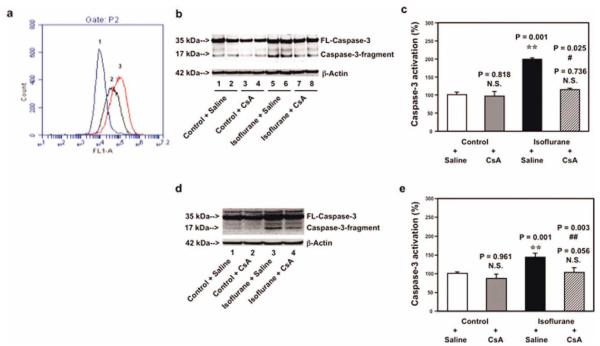
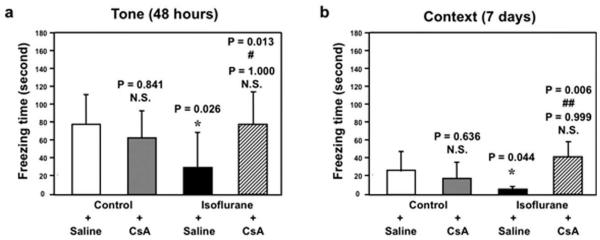
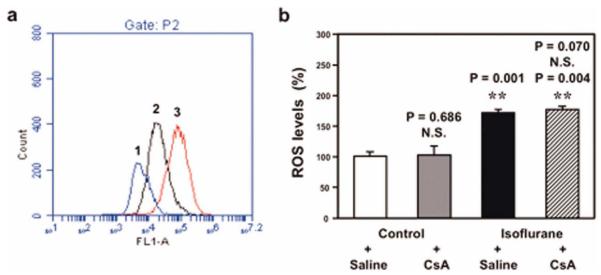
Here we show that isoflurane, but not desflurane, induces opening of mitochondrial permeability transition pore (mPTP), increase in levels of reactive oxygen species, reduction in levels of mitochondrial membrane potential and adenosine-5'-triphosphate, activation of caspase 3, and impairment of learning and memory in cultured cells, mouse hippocampus neurons, mouse hippocampus, and mice. Moreover, cyclosporine A, a blocker of mPTP opening, attenuates isoflurane-induced mPTP opening, caspase 3 activation, and impairment of learning and memory. Finally, isoflurane may induce the opening of mPTP via increasing levels of reactive oxygen species.
These findings suggest that desflurane could be a safer anesthetic for AD patients as compared to isoflurane, and elucidate the potential mitochondria-associated underlying mechanisms, and therefore have implications for use of anesthetics in AD patients, pending human study confirmation.
每年约有 850 万阿尔茨海默病(AD)患者需要接受麻醉和手术治疗。研究表明,吸入麻醉剂异氟烷而非地氟烷通过线粒体依赖性凋亡途径诱导半胱天冬酶激活和细胞凋亡,这是 AD 神经发病机制的一部分。然而,这些发现的体内相关性、潜在机制和功能后果在很大程度上仍有待确定。
因此,我们着手评估异氟烷和地氟烷对使用流式细胞术、共聚焦显微镜、Western blot 分析、免疫细胞化学和恐惧条件反射测试评估线粒体功能、细胞毒性、学习和记忆的影响。
在这里,我们表明异氟烷而非地氟烷可诱导线粒体通透性转换孔(mPTP)开放、活性氧水平升高、线粒体膜电位和三磷酸腺苷水平降低、半胱天冬酶 3 激活以及培养细胞、小鼠海马神经元、小鼠海马和小鼠的学习和记忆受损。此外,mPTP 开放阻断剂环孢菌素 A 可减轻异氟烷诱导的 mPTP 开放、半胱天冬酶 3 激活和学习记忆障碍。最后,异氟烷可能通过增加活性氧水平诱导 mPTP 开放。
这些发现表明,与异氟烷相比,地氟烷可能是 AD 患者更安全的麻醉剂,并阐明了潜在的与线粒体相关的潜在机制,因此对 AD 患者使用麻醉剂具有重要意义,有待人体研究证实。