Department of Neuroscience, Georgetown University Medical Center, Washington, DC, USA.
J Neuroinflammation. 2012 Feb 28;9:43. doi: 10.1186/1742-2094-9-43.
Traumatic brain injury initiates biochemical processes that lead to secondary neurodegeneration. Imaging studies suggest that tissue loss may continue for months or years after traumatic brain injury in association with chronic microglial activation. Recently we found that metabotropic glutamate receptor 5 (mGluR5) activation by (RS)-2-chloro-5-hydroxyphenylglycine (CHPG) decreases microglial activation and release of associated pro-inflammatory factors in vitro, which is mediated in part through inhibition of reduced nicotinamide adenine dinucleotide phosphate (NADPH) oxidase. Here we examined whether delayed CHPG administration reduces chronic neuroinflammation and associated neurodegeneration after experimental traumatic brain injury in mice.
One month after controlled cortical impact traumatic brain injury, C57Bl/6 mice were randomly assigned to treatment with single dose intracerebroventricular CHPG, vehicle or CHPG plus a selective mGluR5 antagonist, 3-((2-Methyl-4-thiazolyl)ethynyl)pyridine. Lesion volume, white matter tract integrity and neurological recovery were assessed over the following three months.
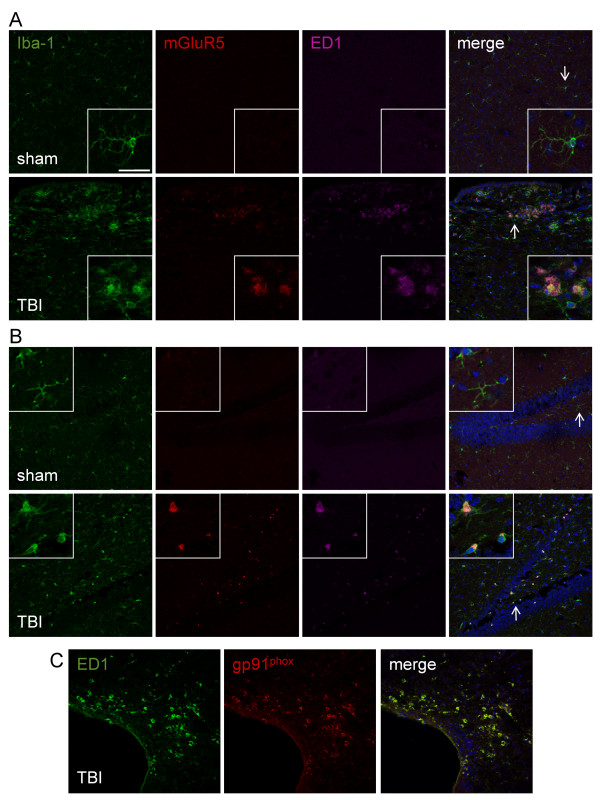
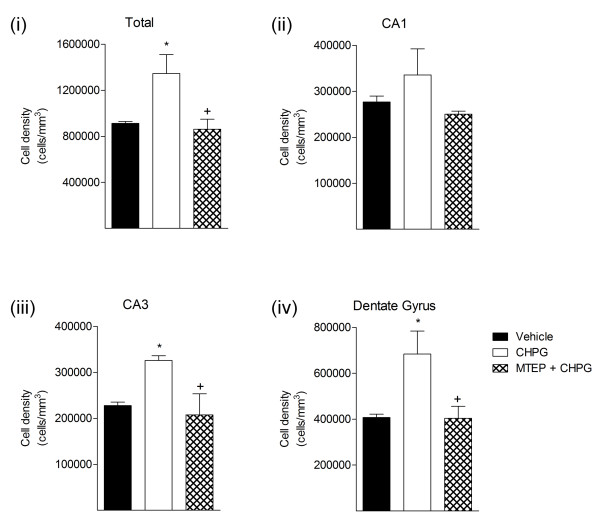
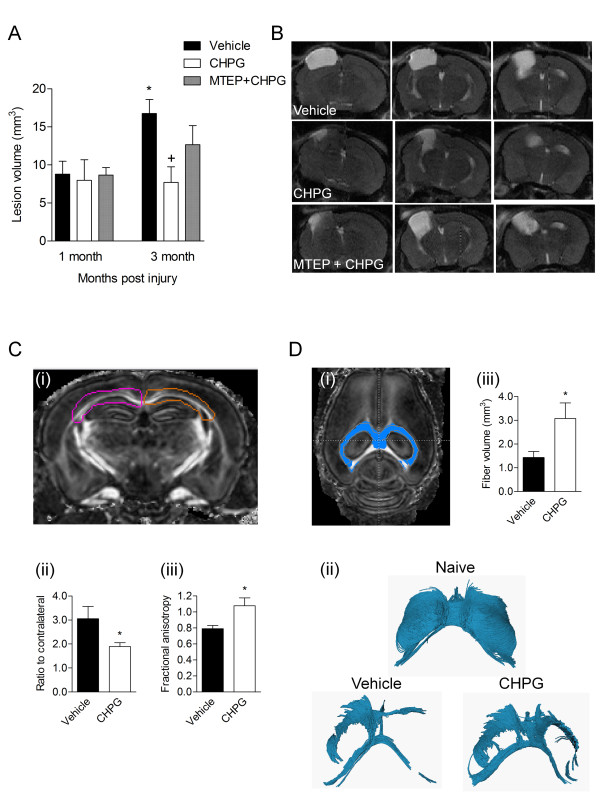
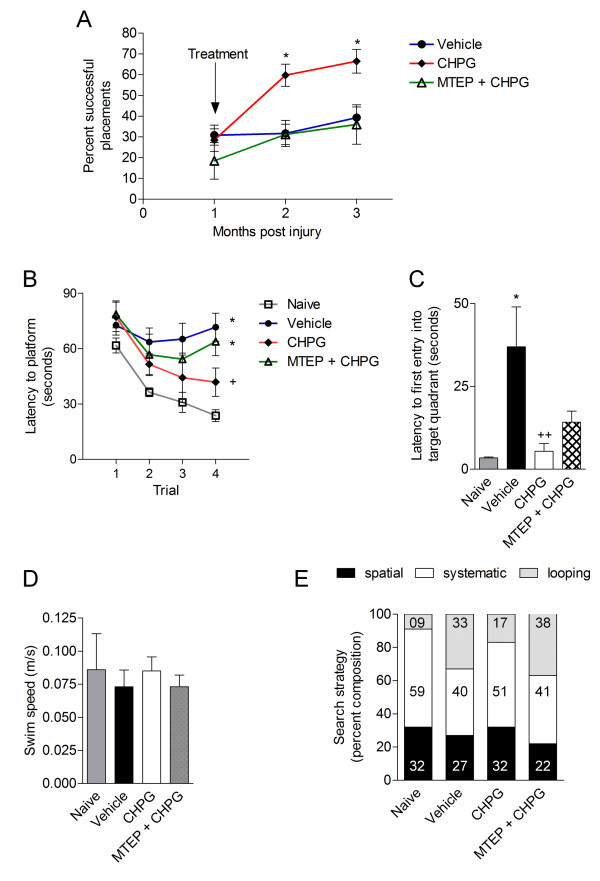
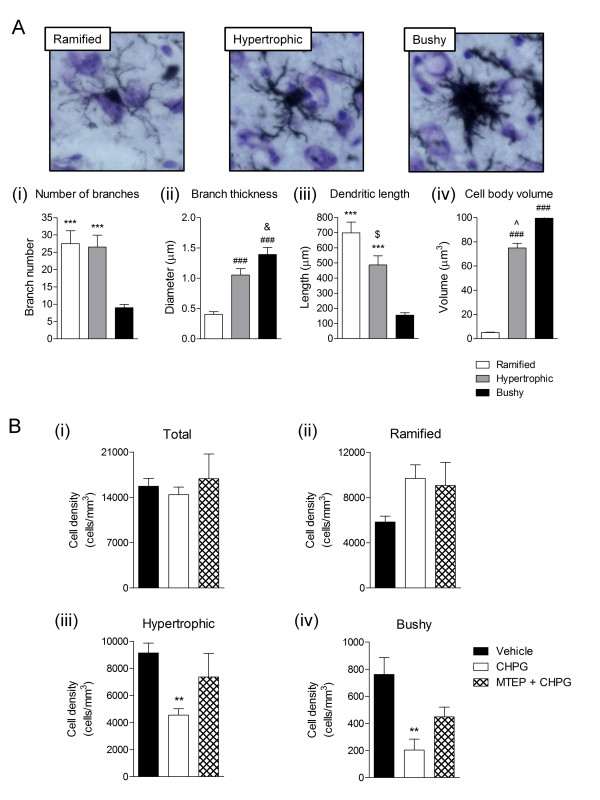
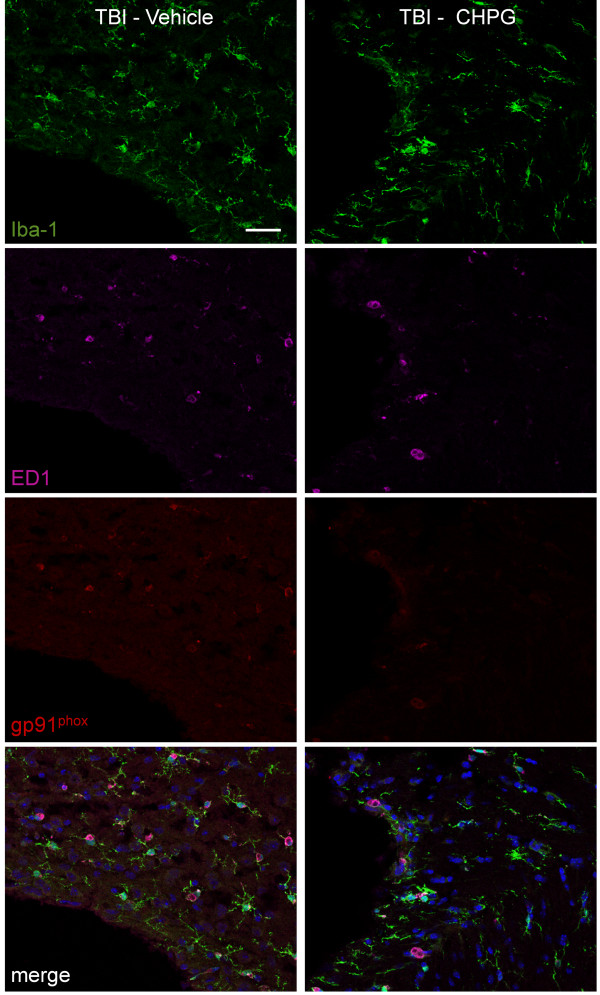
Traumatic brain injury resulted in mGluR5 expression in reactive microglia of the cortex and hippocampus at one month post-injury. Delayed CHPG treatment reduced expression of reactive microglia expressing NADPH oxidase subunits; decreased hippocampal neuronal loss; limited lesion progression, as measured by repeated T2-weighted magnetic resonance imaging (at one, two and three months) and white matter loss, as measured by high field ex vivo diffusion tensor imaging at four months; and significantly improved motor and cognitive recovery in comparison to the other treatment groups.
Markedly delayed, single dose treatment with CHPG significantly improves functional recovery and limits lesion progression after experimental traumatic brain injury, likely in part through actions at mGluR5 receptors that modulate neuroinflammation.
创伤性脑损伤会引发一系列生化过程,导致继发性神经退行性病变。影像学研究表明,创伤性脑损伤后,慢性小胶质细胞激活与组织丢失可能会持续数月甚至数年。最近我们发现,代谢型谷氨酸受体 5(mGluR5)激动剂(RS)-2-氯-5-羟苯基甘氨酸(CHPG)可减少体外小胶质细胞的激活和相关促炎因子的释放,其部分机制是通过抑制还原型烟酰胺腺嘌呤二核苷酸磷酸(NADPH)氧化酶。在此,我们研究了在实验性创伤性脑损伤后,延迟给予 CHPG 是否能减轻慢性神经炎症和相关的神经退行性病变。
在皮质撞击伤性脑损伤后 1 个月,C57Bl/6 小鼠被随机分为鞘内单次给予 CHPG、载体或 CHPG 加选择性 mGluR5 拮抗剂 3-((2-甲基-4-噻唑基)乙炔基)吡啶治疗组。在接下来的三个月内,评估了损伤体积、白质束完整性和神经功能恢复情况。
创伤性脑损伤导致皮质和海马区反应性小胶质细胞中 mGluR5 的表达在损伤后 1 个月时增加。延迟给予 CHPG 治疗可降低 NADPH 氧化酶亚单位表达的反应性小胶质细胞的表达;减少海马神经元丢失;通过反复 T2 加权磁共振成像(1、2 和 3 个月)和 4 个月时高场离体弥散张量成像测量的白质丢失来限制损伤进展;与其他治疗组相比,明显改善了运动和认知功能的恢复。
明显延迟的单次 CHPG 治疗可显著改善实验性创伤性脑损伤后的功能恢复并限制损伤进展,可能部分通过作用于调节神经炎症的 mGluR5 受体来实现。