Department of Cancer Biology, Vanderbilt Center for Bone Biology, Vanderbilt University, Nashville, Tennessee, USA.
Cancer Res. 2012 May 1;72(9):2183-9. doi: 10.1158/0008-5472.CAN-11-2067. Epub 2012 Feb 28.
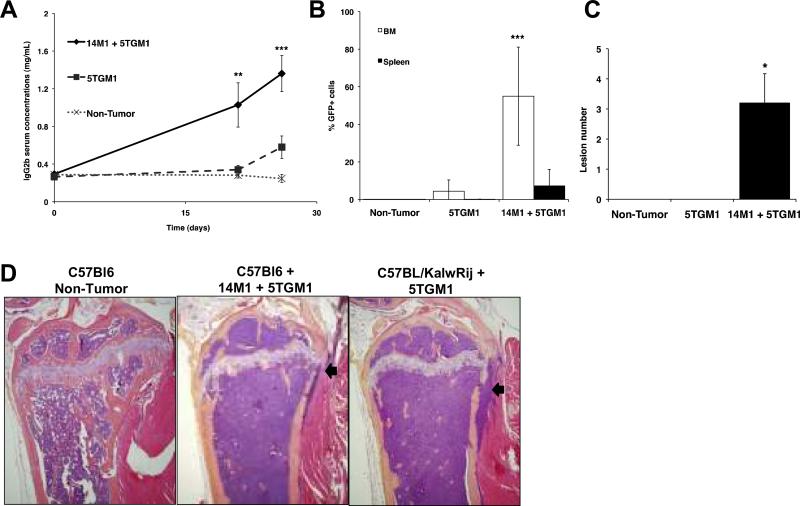
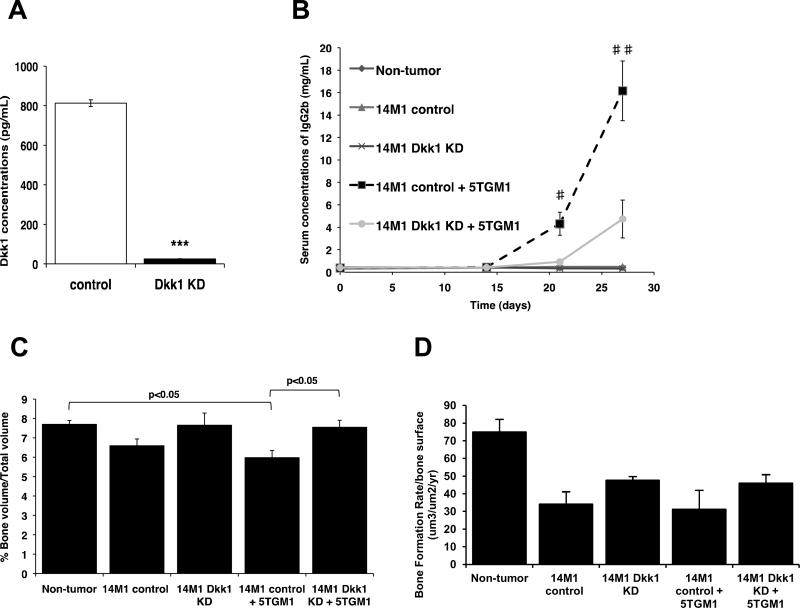
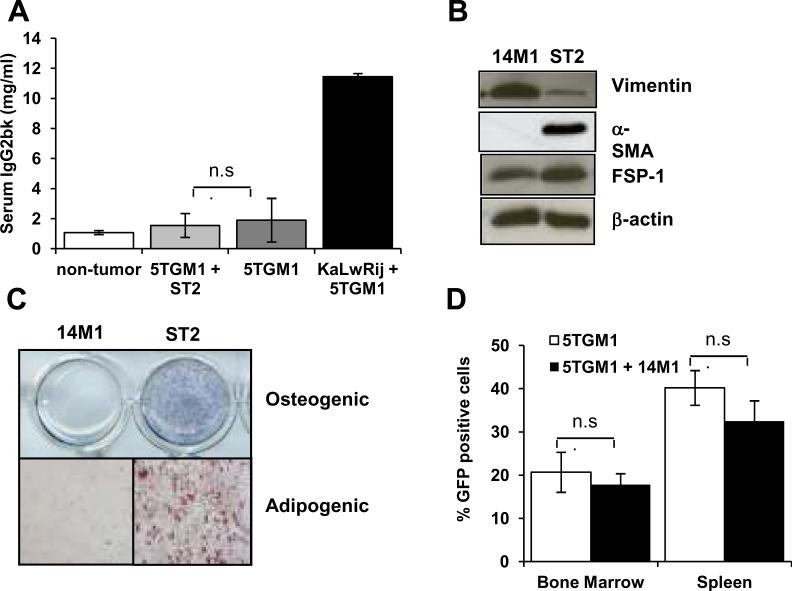
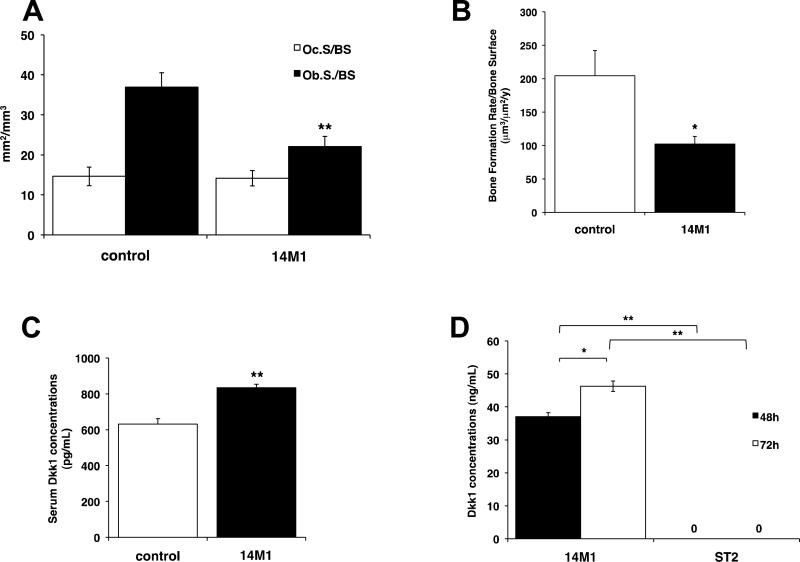
The rapid progression of multiple myeloma is dependent upon cellular interactions within the bone marrow microenvironment. In vitro studies suggest that bone marrow stromal cells (BMSC) can promote myeloma growth and survival and osteolytic bone disease. However, it is not possible to recreate all cellular aspects of the bone marrow microenvironment in an in vitro system, and the contributions of BMSCs to myeloma pathogenesis in an intact, immune competent, in vivo system are unknown. To investigate this, we used a murine myeloma model that replicates many features of the human disease. Coinoculation of myeloma cells and a BMSC line, isolated from myeloma-permissive mice, into otherwise nonpermissive mice resulted in myeloma development, associated with tumor growth within bone marrow and osteolytic bone disease. In contrast, inoculation of myeloma cells alone did not result in myeloma. BMSCs inoculated alone induced osteoblast suppression, associated with an increase in serum concentrations of the Wnt signaling inhibitor, Dkk1. Dkk1 was highly expressed in BMSCs and in myeloma-permissive bone marrow. Knockdown of Dkk1 expression in BMSCs decreased their ability to promote myeloma and the associated bone disease in mice. Collectively, our results show novel roles of BMSCs and BMSC-derived Dkk1 in the pathogenesis of multiple myeloma in vivo.
多发性骨髓瘤的快速进展依赖于骨髓微环境中的细胞相互作用。体外研究表明,骨髓基质细胞(BMSC)可以促进骨髓瘤的生长和存活以及溶骨性骨病。然而,在体外系统中不可能重现骨髓微环境的所有细胞方面,并且 BMSC 对完整的、免疫功能正常的体内骨髓瘤发病机制的贡献尚不清楚。为了研究这一点,我们使用了一种鼠骨髓瘤模型,该模型复制了人类疾病的许多特征。将骨髓瘤细胞和从骨髓瘤允许的小鼠中分离的 BMSC 系共同接种到否则不允许的小鼠中,导致骨髓瘤的发展,与骨髓内肿瘤生长和溶骨性骨病相关。相比之下,单独接种骨髓瘤细胞不会导致骨髓瘤。单独接种 BMSC 会诱导成骨细胞抑制,与 Wnt 信号抑制剂 Dkk1 的血清浓度增加相关。Dkk1 在 BMSC 中和骨髓瘤允许的骨髓中高表达。在 BMSC 中敲低 Dkk1 的表达降低了它们在小鼠中促进骨髓瘤和相关骨病的能力。总之,我们的研究结果表明 BMSC 和 BMSC 衍生的 Dkk1 在体内多发性骨髓瘤发病机制中的新作用。