Veterans Affairs San Diego Healthcare System, San Diego, California, United Sates of America.
PLoS One. 2012;7(2):e32091. doi: 10.1371/journal.pone.0032091. Epub 2012 Feb 22.
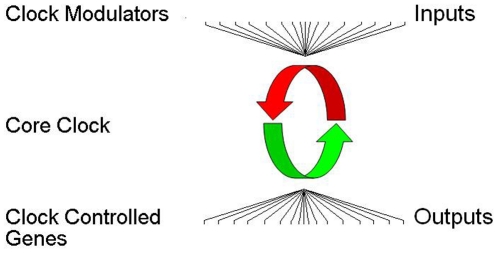
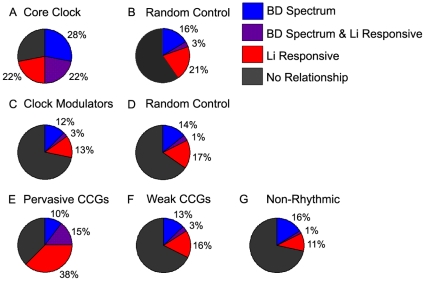
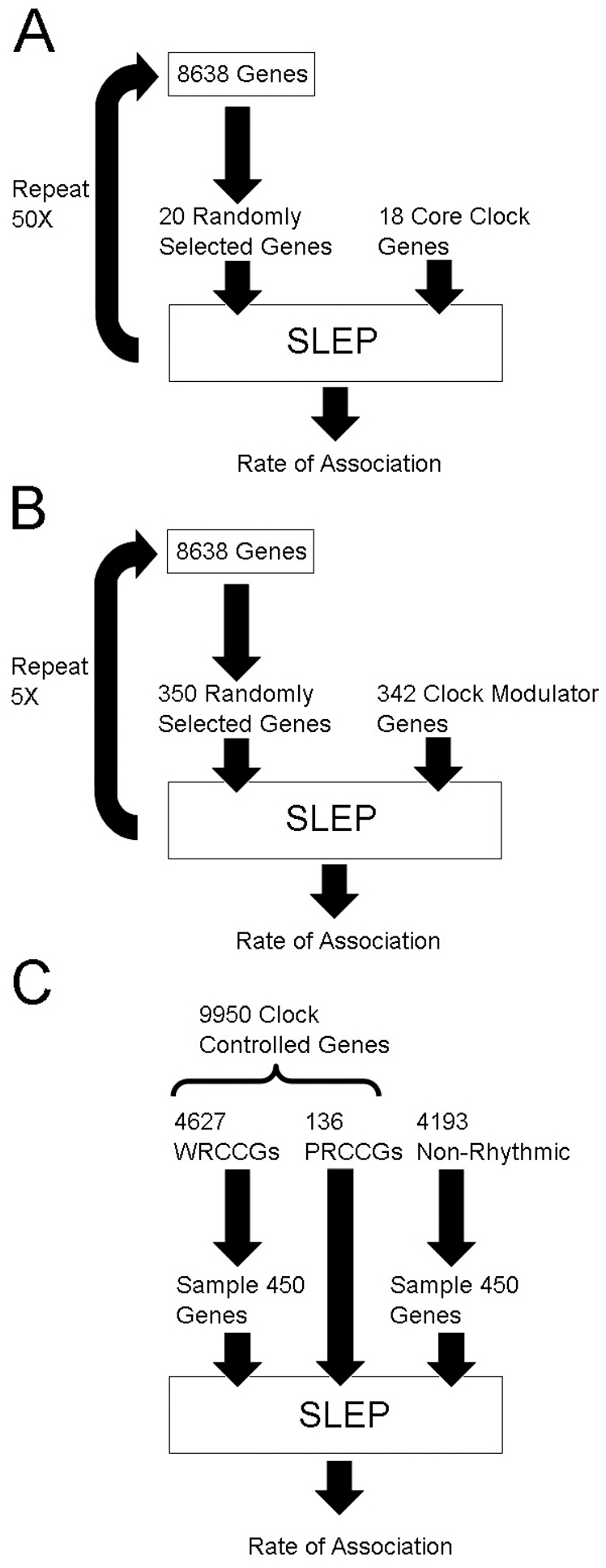
Circadian rhythm abnormalities in bipolar disorder (BD) have led to a search for genetic abnormalities in circadian "clock genes" associated with BD. However, no significant clock gene findings have emerged from genome-wide association studies (GWAS). At least three factors could account for this discrepancy: complex traits are polygenic, the organization of the clock is more complex than previously recognized, and/or genetic risk for BD may be shared across multiple illnesses. To investigate these issues, we considered the clock gene network at three levels: essential "core" clock genes, upstream circadian clock modulators, and downstream clock controlled genes. Using relaxed thresholds for GWAS statistical significance, we determined the rates of clock vs. control genetic associations with BD, and four additional illnesses that share clinical features and/or genetic risk with BD (major depression, schizophrenia, attention deficit/hyperactivity). Then we compared the results to a set of lithium-responsive genes. Associations with BD-spectrum illnesses and lithium-responsiveness were both enriched among core clock genes but not among upstream clock modulators. Associations with BD-spectrum illnesses and lithium-responsiveness were also enriched among pervasively rhythmic clock-controlled genes but not among genes that were less pervasively rhythmic or non-rhythmic. Our analysis reveals previously unrecognized associations between clock genes and BD-spectrum illnesses, partly reconciling previously discordant results from past GWAS and candidate gene studies.
双相情感障碍(BD)中的昼夜节律异常导致人们寻找与 BD 相关的昼夜“时钟基因”中的遗传异常。然而,全基因组关联研究(GWAS)并未发现显著的时钟基因发现。至少有三个因素可以解释这种差异:复杂性状是多基因的,时钟的组织比以前认识的更复杂,以及/或 BD 的遗传风险可能与多种疾病共享。为了研究这些问题,我们考虑了时钟基因网络的三个层次:基本的“核心”时钟基因、上游昼夜节律时钟调节剂和下游时钟控制基因。使用 GWAS 统计显着性的宽松阈值,我们确定了时钟与 BD 和其他四种与 BD 具有共同临床特征和/或遗传风险的疾病(重度抑郁症、精神分裂症、注意缺陷/多动障碍)的遗传关联的比率。然后,我们将结果与一组锂反应性基因进行了比较。与 BD 谱疾病和锂反应性相关的关联在核心时钟基因中丰富,但在上游时钟调节剂中没有。与 BD 谱疾病和锂反应性相关的关联也在广泛节律性时钟控制基因中丰富,但在不那么普遍节律性或非节律性基因中没有。我们的分析揭示了时钟基因与 BD 谱疾病之间以前未被认识到的关联,部分调和了过去 GWAS 和候选基因研究中先前不一致的结果。