Univerisity of Maryland, School of Pharmacy, Baltimore, MD 21201, USA.
Eur J Pharm Sci. 2012 May 12;46(1-2):86-99. doi: 10.1016/j.ejps.2012.02.012. Epub 2012 Mar 3.
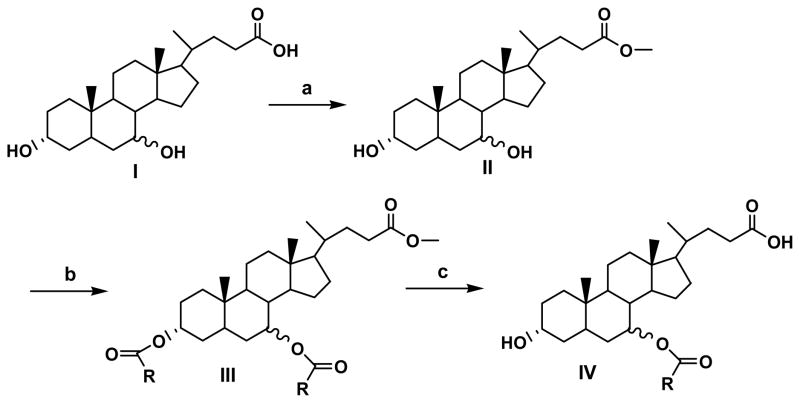
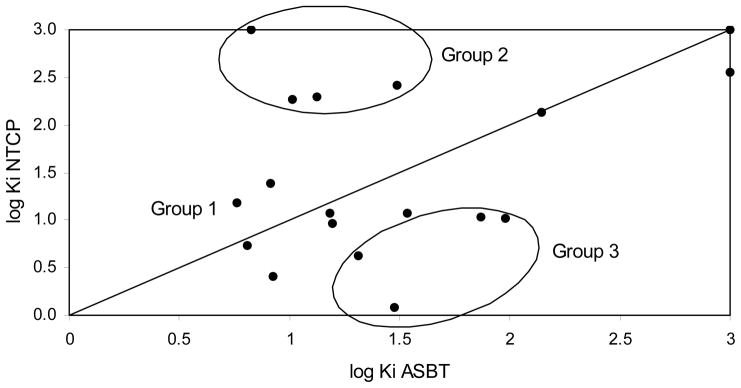
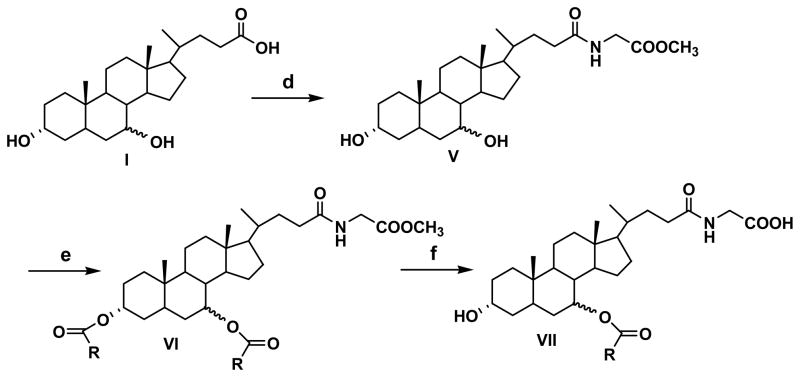
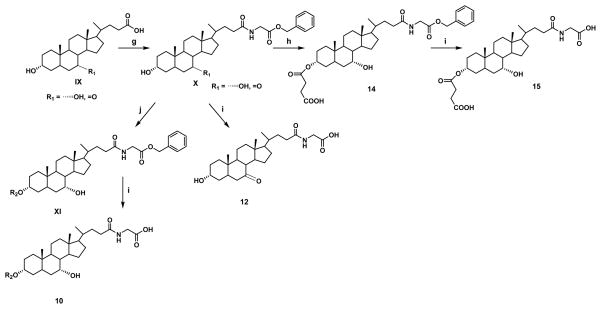
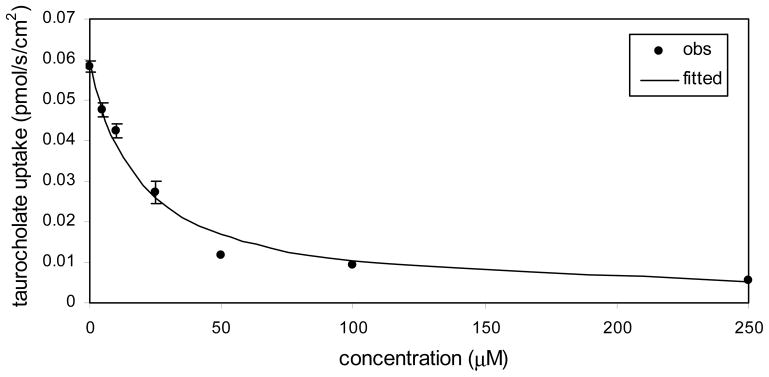
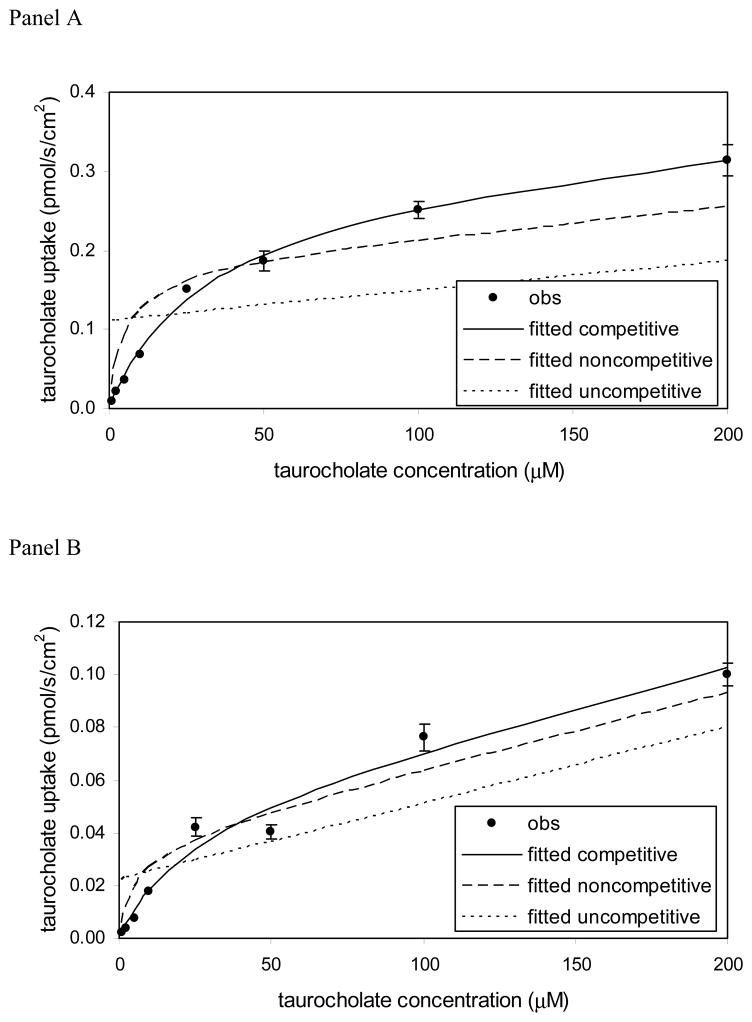
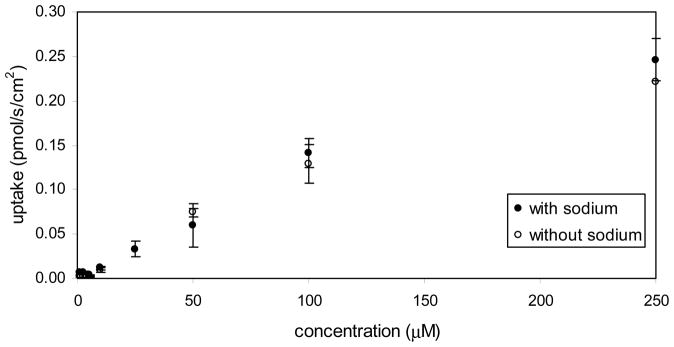
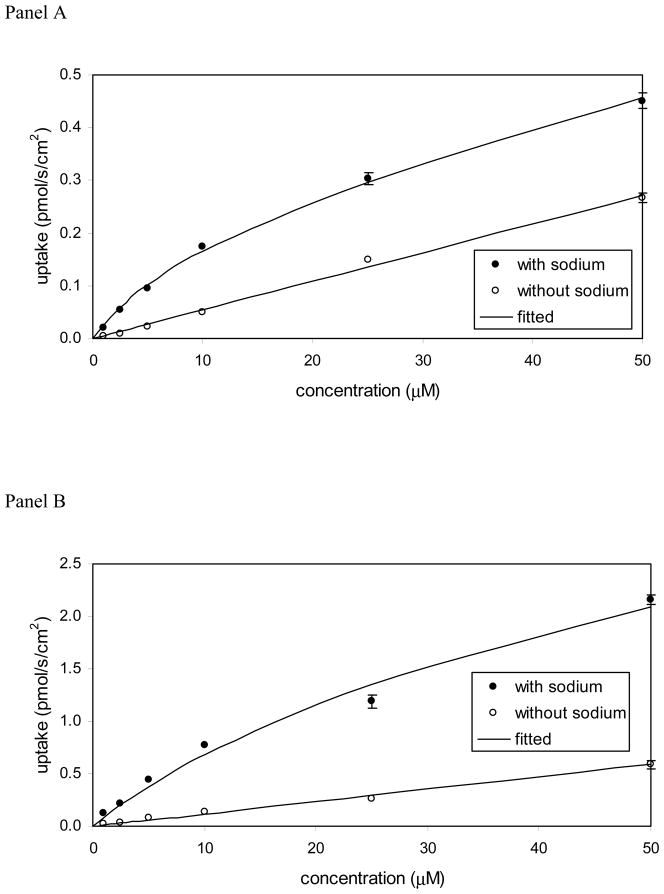
The apical sodium dependent bile acid transporter (ASBT) and sodium-taurocholate cotransporting polypeptide (NTCP) are potential prodrug targets, but the structural requirements for these transporters are incompletely defined. The objective of this study was to evaluate the effect of C-3 and C-7 substitution on bile acid interaction with these bile acid transporters. Nineteen bile acid analogs were tested against ASBT and NTCP for binding, as well as translocation. Results indicated that ASBT and NTCP accommodated a wide range of substituents for binding, but all major C-7 modifications resulted in analogs that did not demonstrate active uptake by either ASBT or NTCP. A C-3 modification that was not tolerated at C-7 still afforded translocation via ASBT and NTCP, confirming the relative unacceptability of C-7 modification. Both ASBT and NTCP demonstrated a generally similar binding potency. Results suggest that drug conjugation to the C-3 hydroxyl group, rather than C-7, has potential to lead to a successful prodrug targeting ASBT and NTCP.
顶端钠依赖性胆汁酸转运蛋白(ASBT)和钠-牛磺胆酸共转运蛋白(NTCP)是潜在的前药靶点,但这些转运蛋白的结构要求尚未完全确定。本研究旨在评估 C-3 和 C-7 取代对胆汁酸与这些胆汁酸转运蛋白相互作用的影响。19 种胆汁酸类似物针对 ASBT 和 NTCP 进行了结合和转运测试。结果表明,ASBT 和 NTCP 能够结合广泛的取代基,但所有主要的 C-7 修饰均导致类似物不能通过 ASBT 或 NTCP 进行主动摄取。C-7 上不能耐受的 C-3 修饰仍能通过 ASBT 和 NTCP 进行转运,证实了 C-7 修饰的相对不可接受性。ASBT 和 NTCP 均表现出相似的结合效力。结果表明,药物与 C-3 羟基的缀合而不是 C-7,有可能导致针对 ASBT 和 NTCP 的成功前药。