Department of Pharmacology, Tongji Medical College, Huazhong University of Science and Technology, Wuhan 430030, China.
Molecules. 2012 Mar 6;17(3):2725-37. doi: 10.3390/molecules17032725.
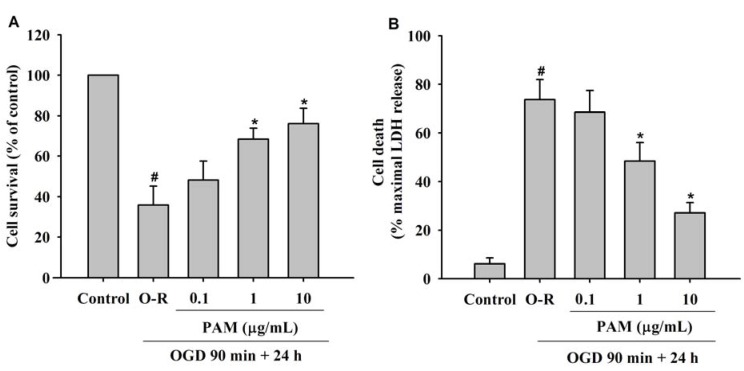
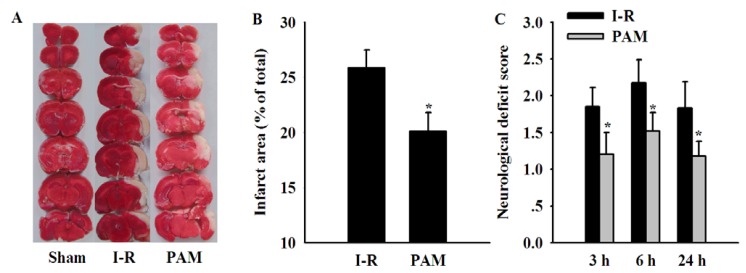
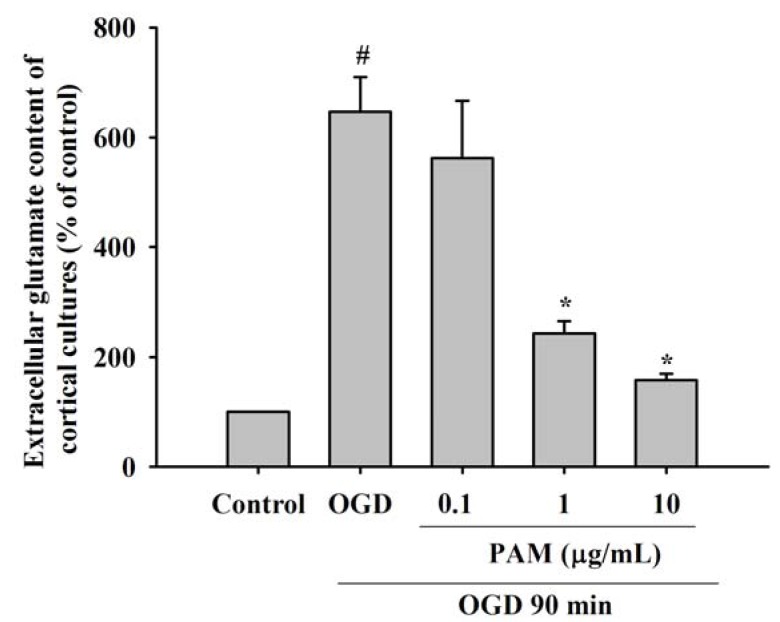
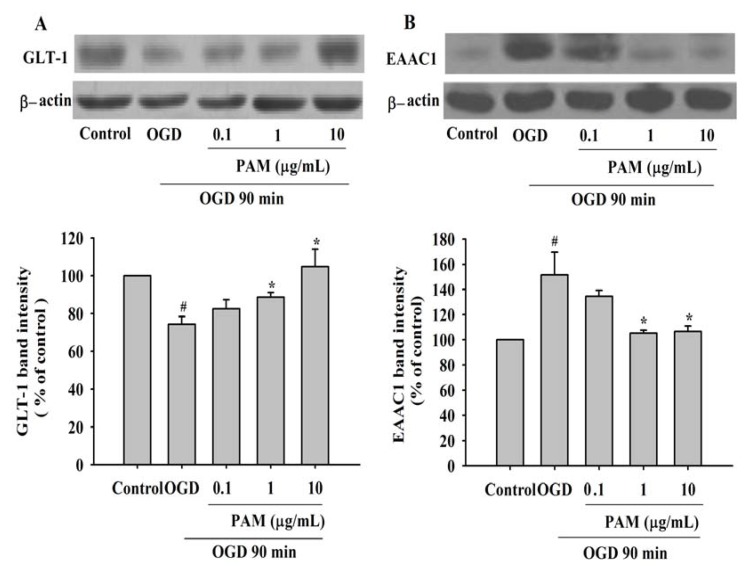
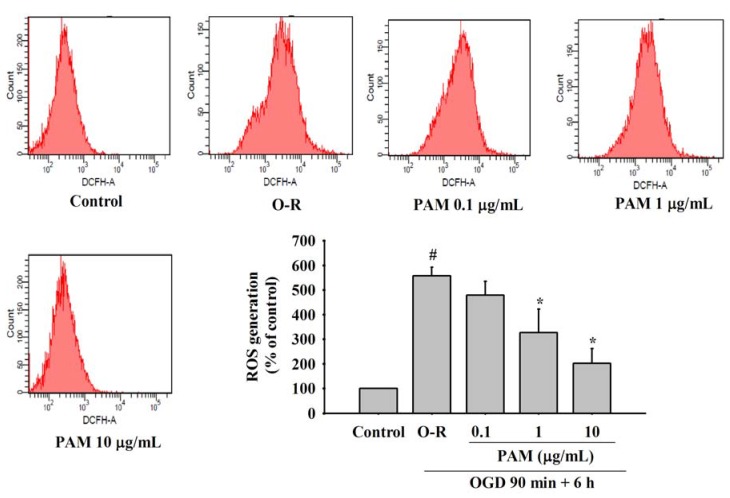
Menispermum dauricum rhizome has been widely used in China to treat various cardiovascular and thrombosis disorders. Some studies have reported that the phenolic alkaloids of Menispermum dauricum rhizome (PAM) have protective effects against brain ischemia injury, but the mechanism of this action remains to be clarified. In the present study, we investigated the possible mechanisms of action of PAM on experimental brain ischemia injury. Oxygen and glucose deprivation (OGD) in rat primary cortical cultures and middle cerebral artery occlusion in rats were used to mimic ischemia-reperfusion injury, respectively. The results suggested that PAM protected rat primary cortical cultures against OGD-reoxygenation induced cytotoxicity. PAM decreased extracellular glutamate content and markedly prevented the effects induced by OGD on protein level of GLT-1 and EAAC1 glutamate transporters. In addition, it reduced intracellular ROS generation. In vivo, PAM significantly reduced cerebral infarct area and ameliorated neurological functional deficits at different time points. Our findings revealed that the possible mechanism of action of PAM protected against brain ischemia injury involves regulation of GLT-1, EAAC1 and ROS generation.
防己科植物蝙蝠葛根茎在中国被广泛用于治疗各种心血管和血栓疾病。一些研究报道称,防己科植物蝙蝠葛根茎中的酚性生物碱(PAM)对脑缺血损伤具有保护作用,但作用机制尚不清楚。本研究旨在探讨 PAM 对实验性脑缺血损伤的作用机制。采用氧葡萄糖剥夺(OGD)诱导大鼠原代皮质培养神经元损伤和大脑中动脉阻塞(MCAO)模型分别模拟缺血再灌注损伤。结果表明,PAM 可减轻 OGD 再复氧诱导的大鼠原代皮质培养神经元的细胞毒性。PAM 降低了细胞外谷氨酸含量,并显著抑制了 OGD 对谷氨酸转运体 GLT-1 和 EAAC1 蛋白水平的影响。此外,它还减少了细胞内 ROS 的产生。在体内,PAM 可显著减少脑梗死面积,并在不同时间点改善神经功能缺损。我们的研究结果表明,PAM 防治脑缺血损伤的作用机制可能与调节 GLT-1、EAAC1 和 ROS 生成有关。