Department of Biology, Stanford University, Stanford, California 94305, USA.
Nature. 2012 Mar 7;484(7392):115-9. doi: 10.1038/nature10956.
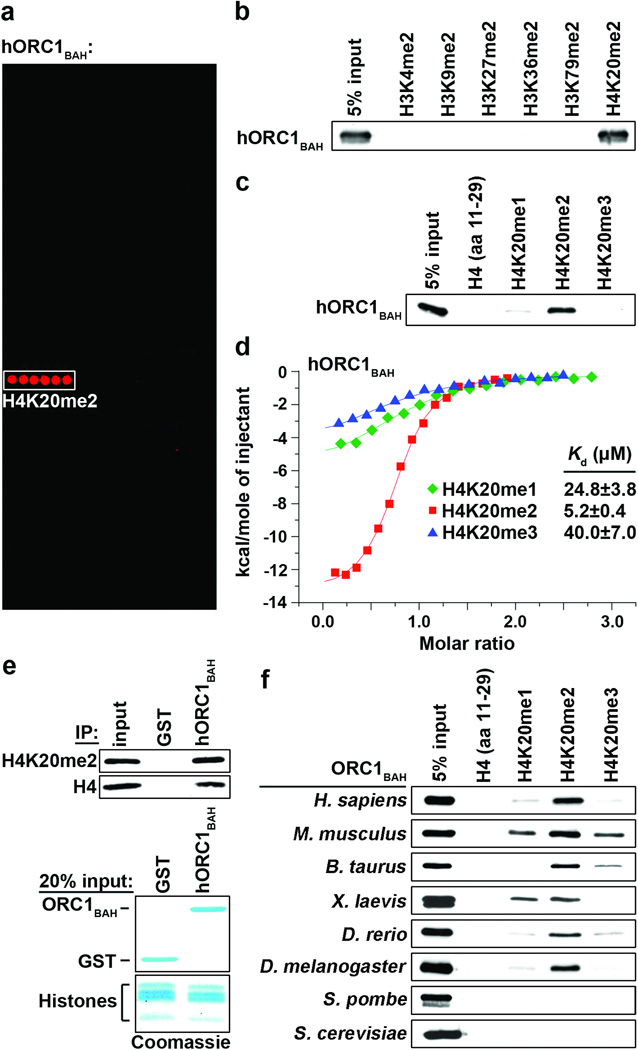
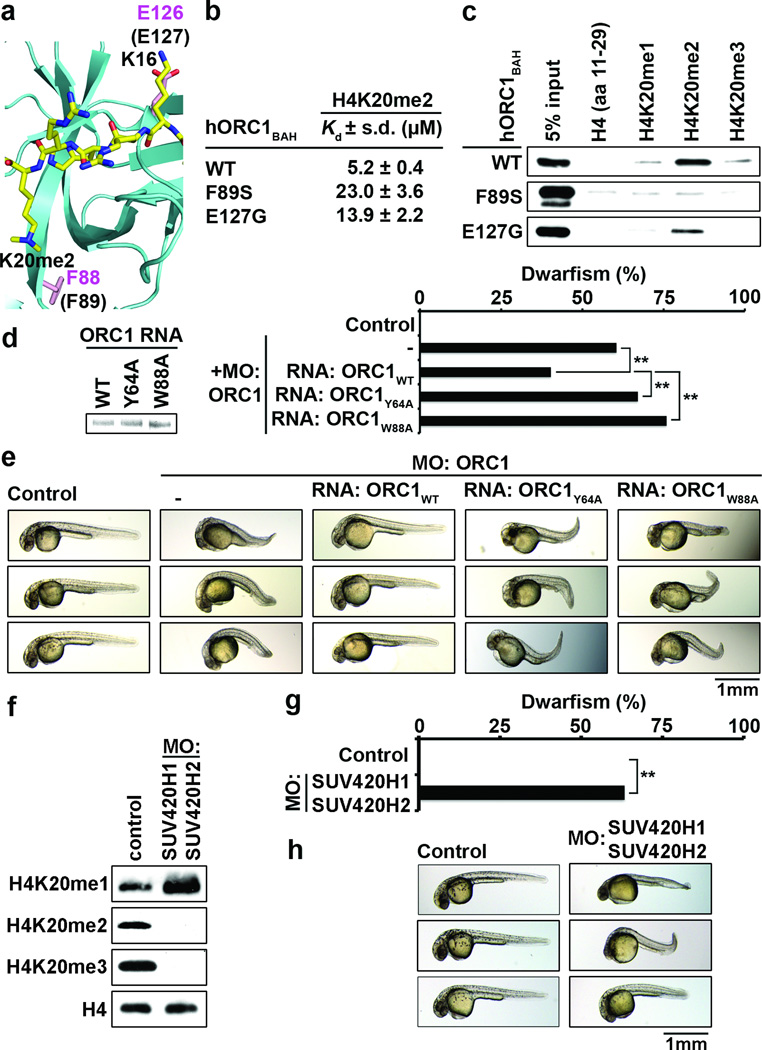
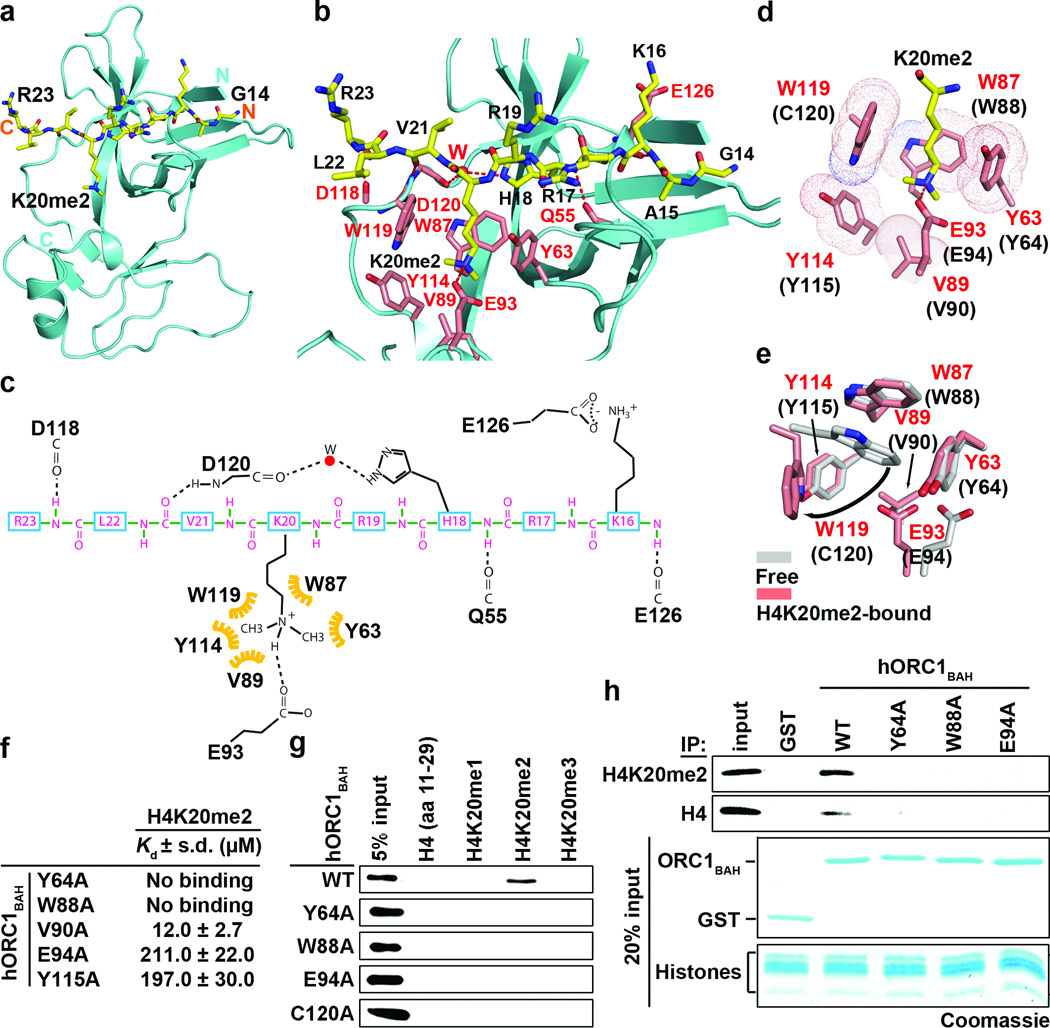
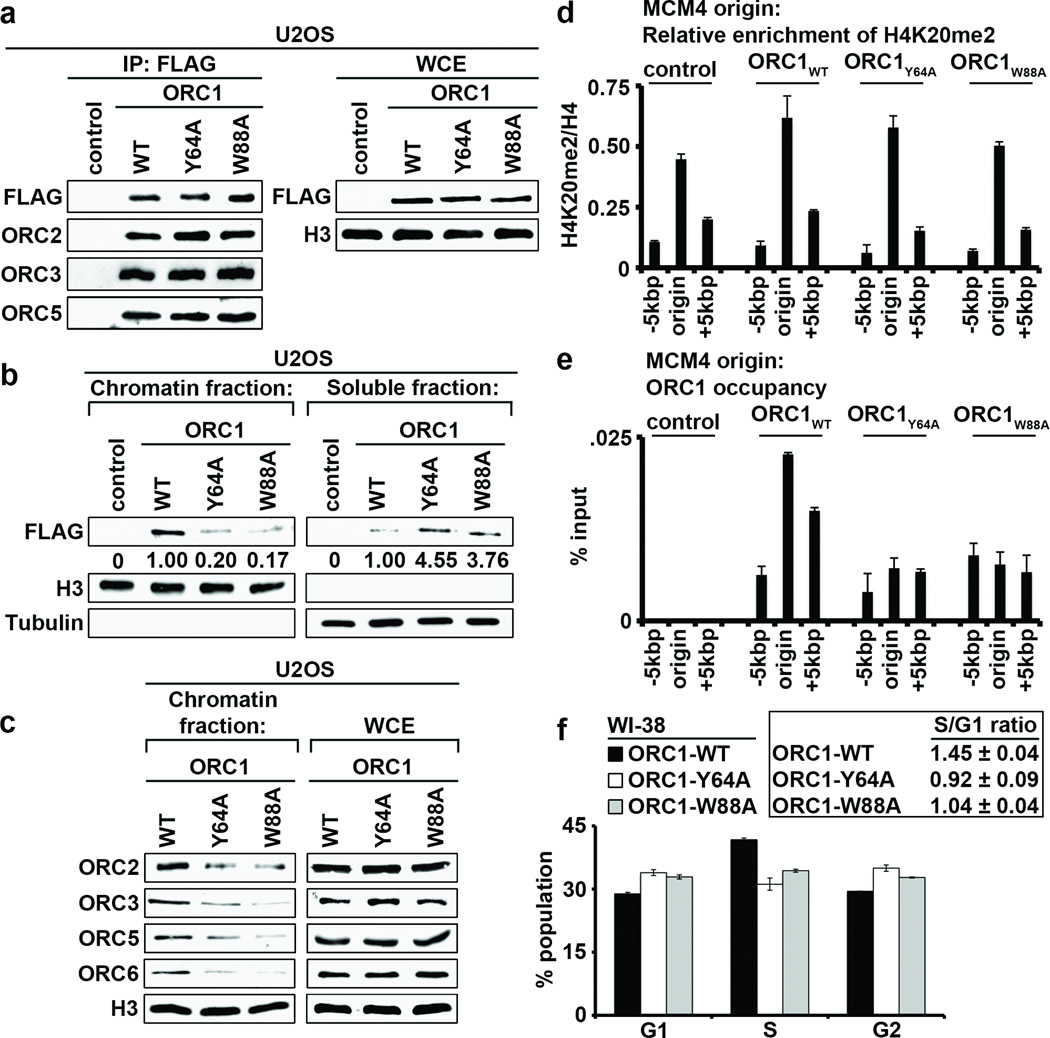
The recognition of distinctly modified histones by specialized 'effector' proteins constitutes a key mechanism for transducing molecular events at chromatin to biological outcomes. Effector proteins influence DNA-templated processes, including transcription, DNA recombination and DNA repair; however, no effector functions have yet been identified within the mammalian machinery that regulate DNA replication. Here we show that ORC1--a component of ORC (origin of replication complex), which mediates pre-DNA replication licensing--contains a bromo adjacent homology (BAH) domain that specifically recognizes histone H4 dimethylated at lysine 20 (H4K20me2). Recognition of H4K20me2 is a property common to BAH domains present within diverse metazoan ORC1 proteins. Structural studies reveal that the specificity of the BAH domain for H4K20me2 is mediated by a dynamic aromatic dimethyl-lysine-binding cage and multiple intermolecular contacts involving the bound peptide. H4K20me2 is enriched at replication origins, and abrogating ORC1 recognition of H4K20me2 in cells impairs ORC1 occupancy at replication origins, ORC chromatin loading and cell-cycle progression. Mutation of the ORC1 BAH domain has been implicated in the aetiology of Meier-Gorlin syndrome (MGS), a form of primordial dwarfism, and ORC1 depletion in zebrafish results in an MGS-like phenotype. We find that wild-type human ORC1, but not ORC1-H4K20me2-binding mutants, rescues the growth retardation of orc1 morphants. Moreover, zebrafish depleted of H4K20me2 have diminished body size, mirroring the phenotype of orc1 morphants. Together, our results identify the BAH domain as a novel methyl-lysine-binding module, thereby establishing the first direct link between histone methylation and the metazoan DNA replication machinery, and defining a pivotal aetiological role for the canonical H4K20me2 mark, via ORC1, in primordial dwarfism.
专门的“效应”蛋白识别明显修饰的组蛋白是将染色质上的分子事件转导为生物学结果的关键机制。效应蛋白影响 DNA 模板过程,包括转录、DNA 重组和 DNA 修复;然而,在调节 DNA 复制的哺乳动物机制中,尚未鉴定出任何效应功能。在这里,我们表明 ORC1(复制起点复合物 ORC 的一个组成部分,介导预 DNA 复制许可)含有一个溴相邻同源(BAH)结构域,该结构域特异性识别赖氨酸 20 二甲基化的组蛋白 H4(H4K20me2)。BAH 结构域识别 H4K20me2 是存在于各种后生动物 ORC1 蛋白中的 BAH 结构域的共同特性。结构研究表明,BAH 结构域对 H4K20me2 的特异性是由动态芳香二甲基赖氨酸结合笼和涉及结合肽的多个分子间接触介导的。H4K20me2 在复制起点处富集,并且在细胞中废除 ORC1 对 H4K20me2 的识别会损害 ORC1 在复制起点处的占据、ORC 染色质加载和细胞周期进程。ORC1 BAH 结构域的突变与 Meier-Gorlin 综合征(MGS)的病因有关,MGS 是一种原始侏儒症形式,而斑马鱼中的 ORC1 耗竭会导致 MGS 样表型。我们发现野生型人 ORC1,但不是 ORC1-H4K20me2 结合突变体,可以挽救 orc1 形态发生体的生长迟缓。此外,缺乏 H4K20me2 的斑马鱼体型较小,与 orc1 形态发生体的表型相似。总之,我们的结果将 BAH 结构域鉴定为一种新的甲基赖氨酸结合模块,从而首次在组蛋白甲基化和后生动物 DNA 复制机制之间建立了直接联系,并通过 ORC1 确定了经典 H4K20me2 标记在原始侏儒症中的关键病因作用。