Department of Oral and Maxillofacial Surgery, Ninth People's Hospital, Shanghai Jiao Tong University School of Medicine, Shanghai, China.
PLoS One. 2012;7(3):e31601. doi: 10.1371/journal.pone.0031601. Epub 2012 Mar 5.
Approximately 60-80% of patients with advanced head and neck squamous cell carcinoma (HNSCC) die within five years after diagnosis. Cisplatin-based chemotherapy is the most commonly used palliative treatment for these patients. To evaluate the prognostic value of X-linked inhibitor of apoptosis (XIAP) level as a potential biomarker in these patients, we investigated the relationship between XIAP expression and cisplatin response of these patients and their prognosis.
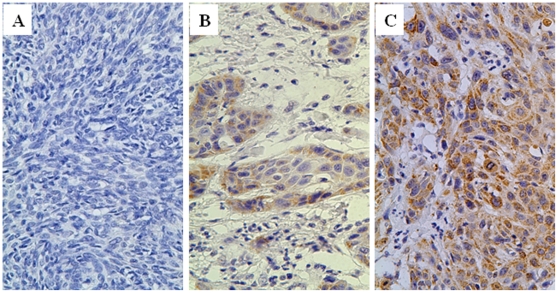
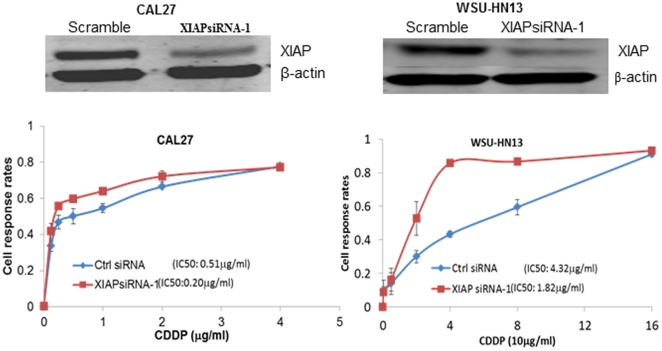
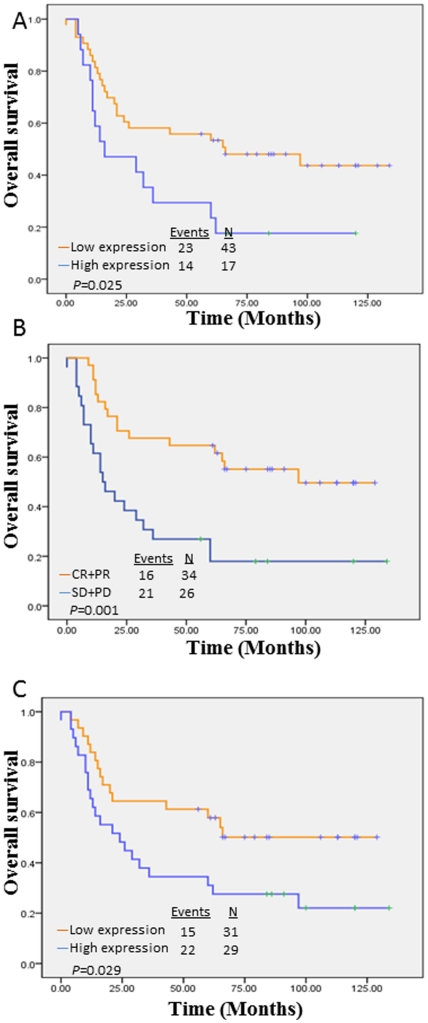
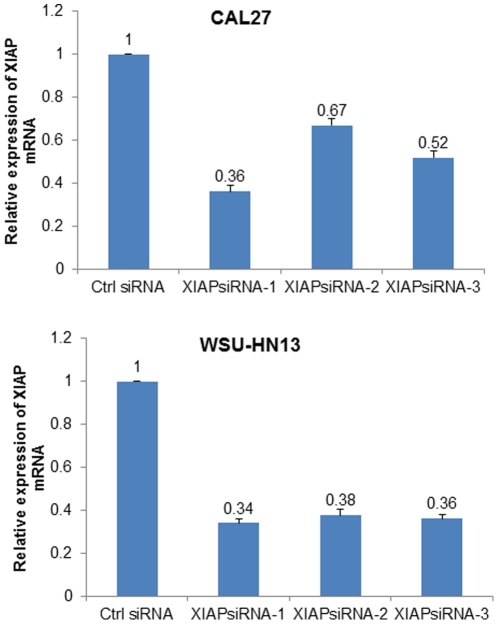
METHODOLOGY/PRINCIPAL FINDINGS: Sixty patients with advanced HNSCC were recruited in this study. Expression of XIAP was examined both before and after chemotherapy and was correlated with chemotherapy response, clinicopathology parameters and clinical outcomes of the patients. We found that XIAP was expressed in 17 (20.83%) of the 60 advanced HNSCC samples and the expression was significantly associated with cisplatin resistance (P = 0.036) and poor clinical outcome (P = 0.025). Cisplatin-based chemotherapy induced XIAP expression in those post-chemotherapy samples (P = 0.011), was further associated with poorer clinical outcome (P = 0.029). Multivariate analysis demonstrated that only alcohol consumption, lymph node metastasis and XIAP level were independently associated with the prognosis of advanced HNSCC patients. Inhibiting XIAP expression with siRNA in XIAP overexpressed HNSCC cells remarkably increased their sensitivity to cisplatin treatment to nearly a 3 fold difference.
CONCLUSIONS/SIGNIFICANCE: Our results demonstrate that XIAP overexpression plays an important role in the disease course and cisplatin-resistance of advanced HNSCC. XIAP is a valuable predictor of cisplatin-response and prognosis for patients with advanced head and neck cancer. Down-regulation of XIAP might be a promising adjuvant therapy for those patients of advanced HNSCC.
大约 60-80%的晚期头颈部鳞状细胞癌(HNSCC)患者在诊断后五年内死亡。顺铂为基础的化疗是这些患者最常用的姑息治疗方法。为了评估 X 连锁凋亡抑制剂(XIAP)水平作为这些患者潜在生物标志物的预后价值,我们研究了 XIAP 表达与这些患者顺铂反应及其预后的关系。
方法/主要发现:本研究纳入了 60 例晚期 HNSCC 患者。在化疗前后检测 XIAP 的表达,并与化疗反应、临床病理参数和患者的临床结局相关联。我们发现,在 60 例晚期 HNSCC 样本中,有 17 例(20.83%)表达 XIAP,其表达与顺铂耐药(P=0.036)和不良临床结局显著相关(P=0.025)。顺铂为基础的化疗诱导了那些化疗后样本中 XIAP 的表达(P=0.011),与更差的临床结局进一步相关(P=0.029)。多变量分析表明,只有饮酒、淋巴结转移和 XIAP 水平与晚期 HNSCC 患者的预后独立相关。用 siRNA 抑制 XIAP 过表达的 HNSCC 细胞的 XIAP 表达,显著增加了它们对顺铂治疗的敏感性,差异接近 3 倍。
结论/意义:我们的研究结果表明,XIAP 过表达在晚期 HNSCC 的疾病进程和顺铂耐药中起着重要作用。XIAP 是预测晚期头颈部癌患者对顺铂反应和预后的一个有价值的指标。下调 XIAP 可能是晚期 HNSCC 患者有前途的辅助治疗方法。